Etched Decorative Stainless Steel — Pattern Engineered into the Surface.
- Share

Etched Decorative Stainless Steel
Pattern Engineered into the Surface.
Decorative stainless steel surfaces developed through controlled etched patterns, transforming graphics, geometry and visual rhythm into architectural metal.
When Graphics Become Material.
Etched stainless steel introduces controlled pattern and contrast directly into the metal surface.
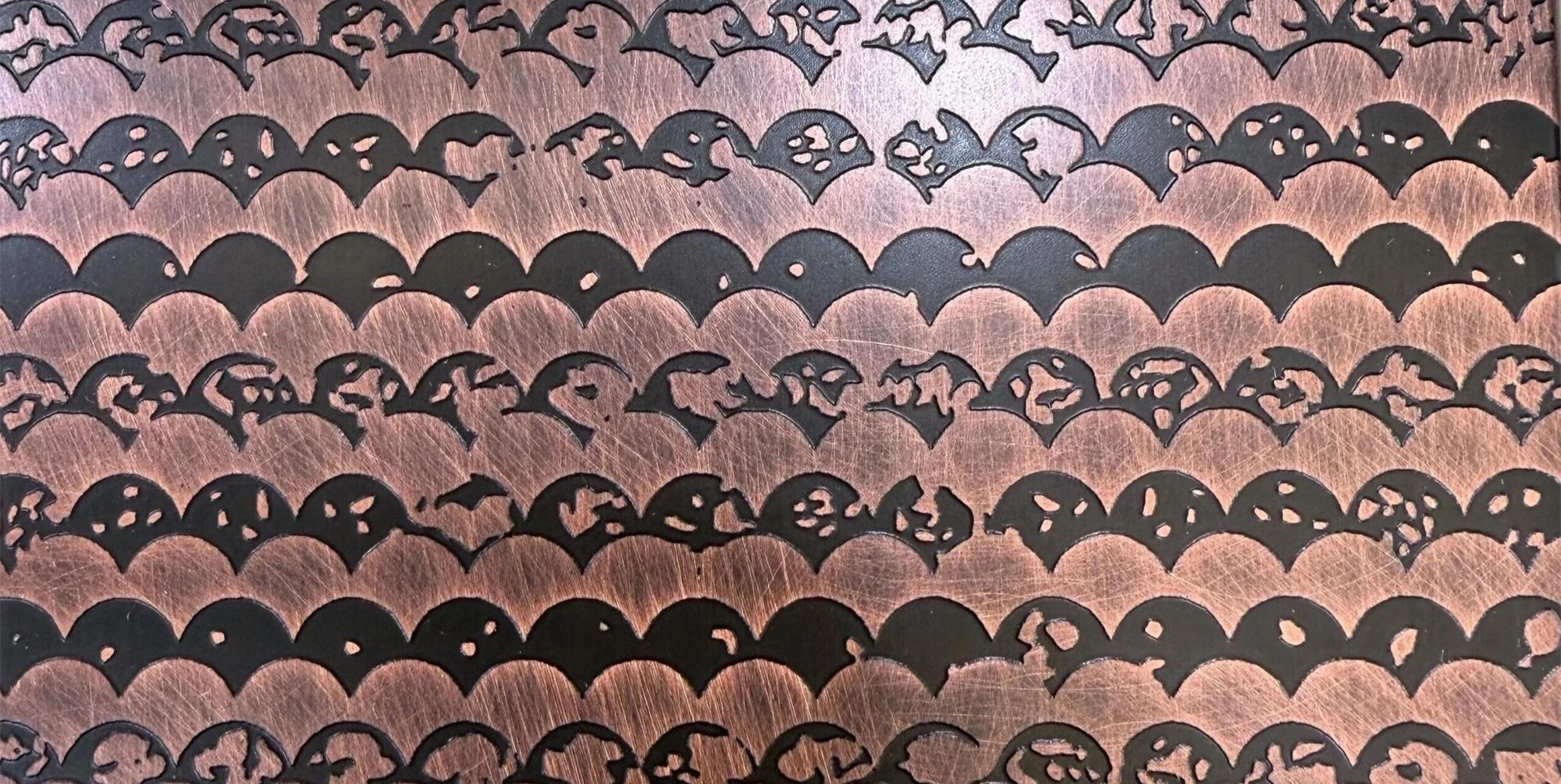
Rather than relying on physical relief alone, etched designs use lines, fields, geometry and tonal relationships to create a graphic layer within the stainless steel.
Read at any distance the same surface behaves differently: line and surface up close, the complete pattern across a full sheet, and a graphic plane once installed.
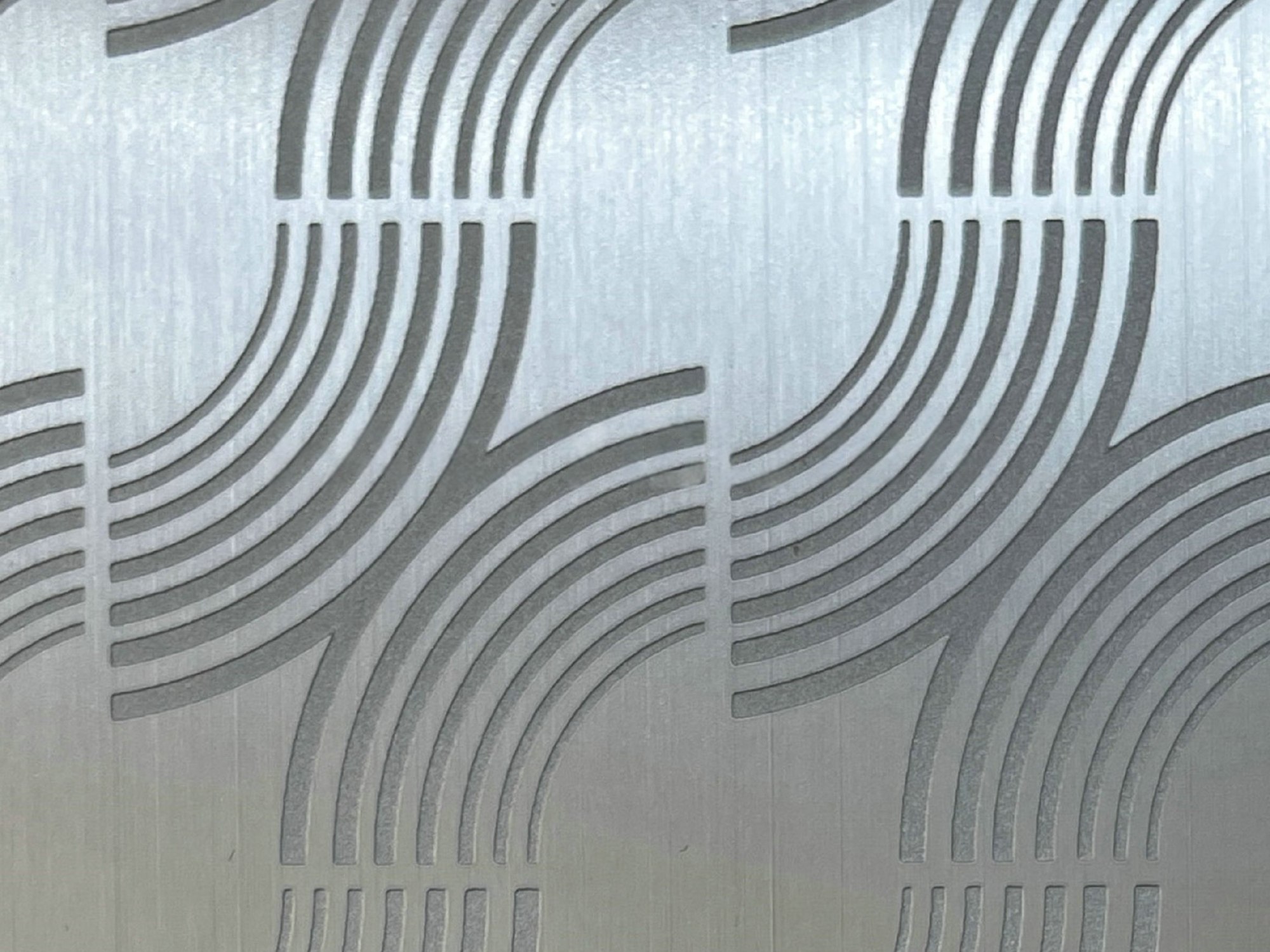
From Quiet Geometry to Custom Graphics.
These are design languages, not stock item numbers. A direction describes how the pattern behaves on the metal; the final pattern is developed for the project.
Architectural Rhythm
Repeated lines create controlled direction and visual order across the metal surface.
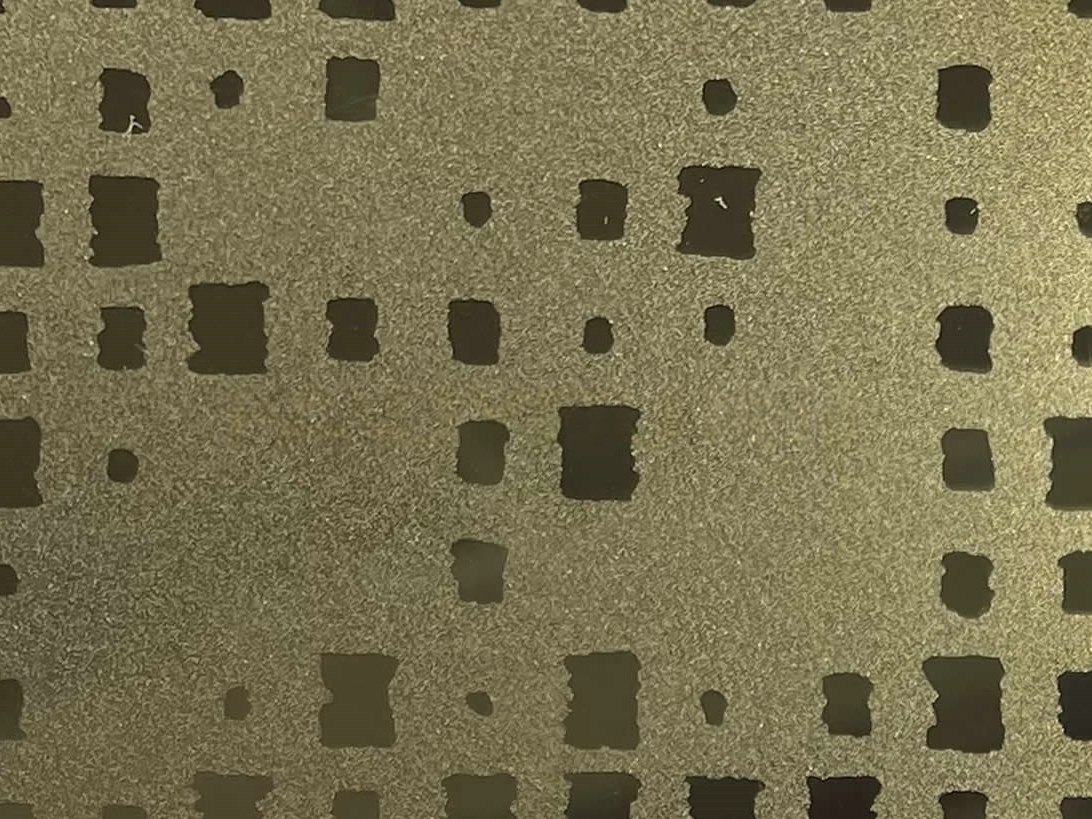
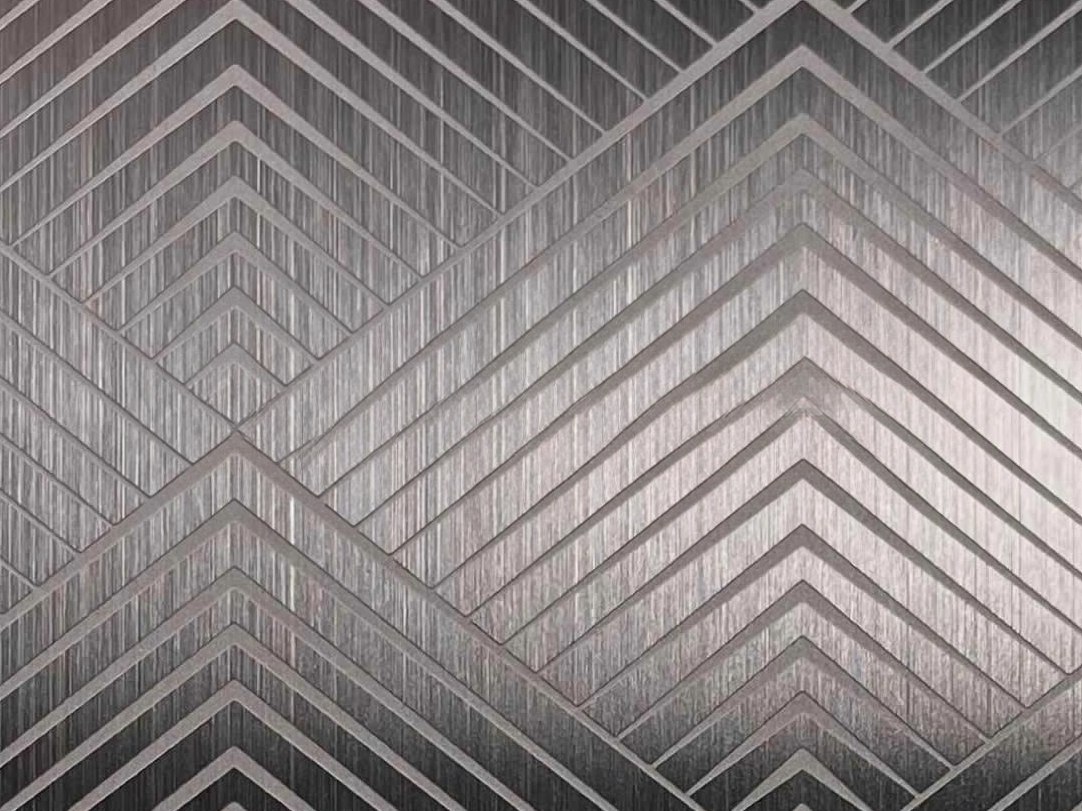
Structured Pattern
Grids, angles and repeated geometry create a more defined architectural expression.
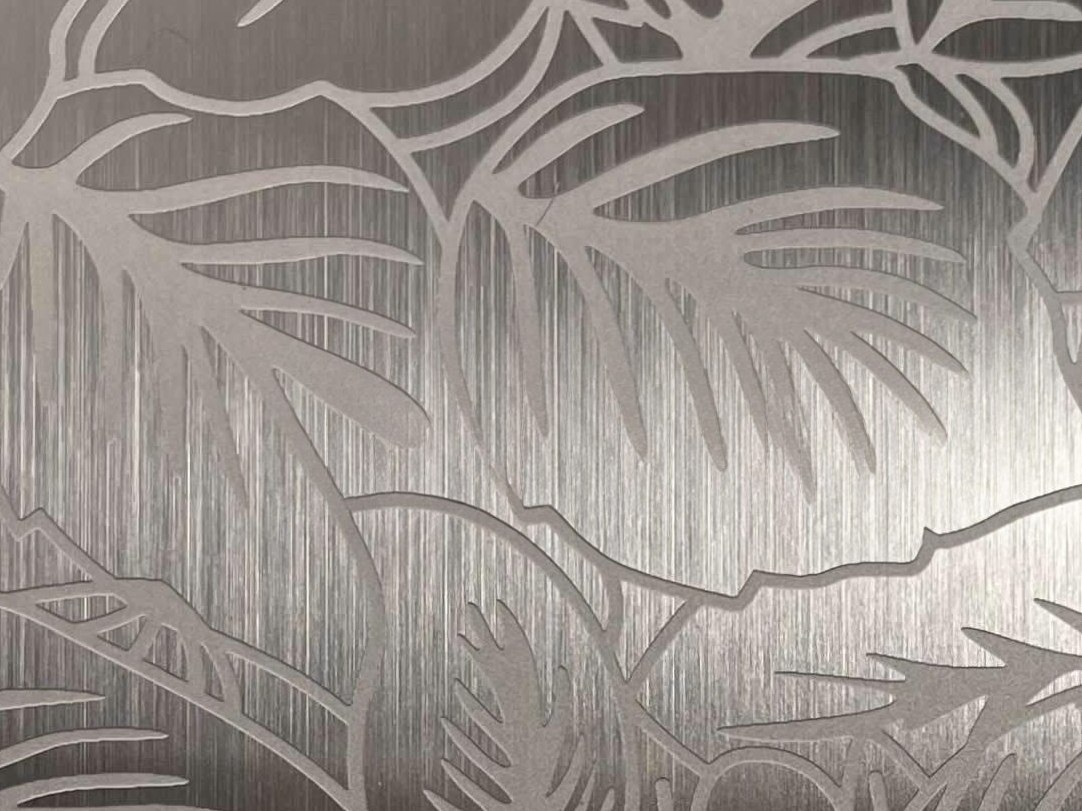
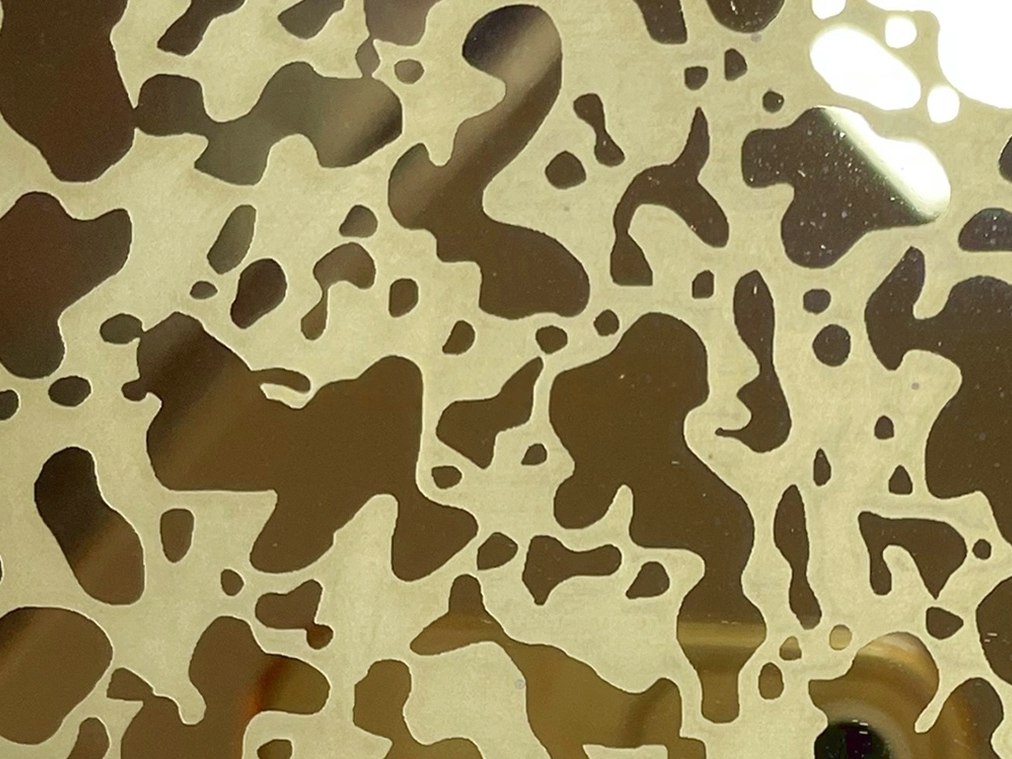
Fluid Pattern
Curves and irregular forms introduce a softer and more expressive visual language.
Project-Specific Design
Project artwork, geometric studies or visual references can be developed into a stainless steel pattern for evaluation.
Pattern directions indicate a design language rather than a fixed catalogue. Scale, repeat, line weight and contrast are all adjustable, and the approved direction is confirmed against a physical sample.
Pattern Is Defined by Contrast.
An etched pattern becomes visible through the relationship between treated and untreated areas, surface character, metallic tone and light. The first decision is not how deep the etch is — it is how strongly the pattern should be present.
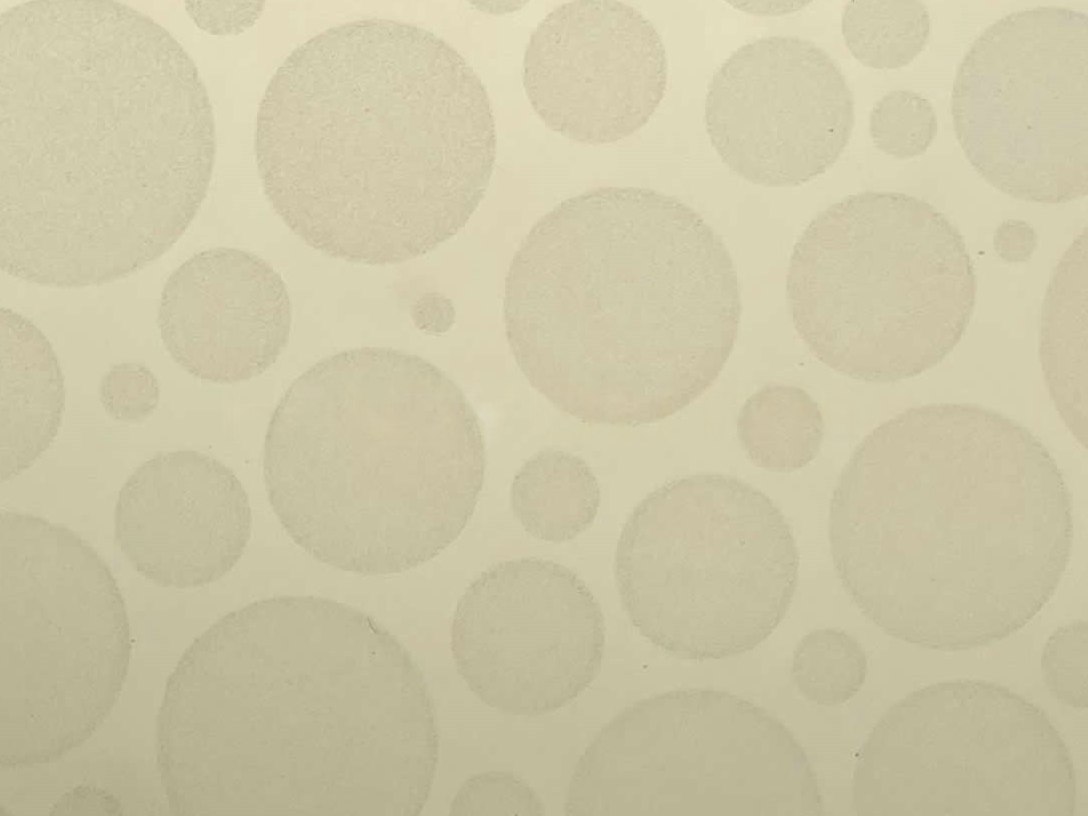
Quiet Pattern
Low visual contrast allows the pattern to emerge softly across the surface.
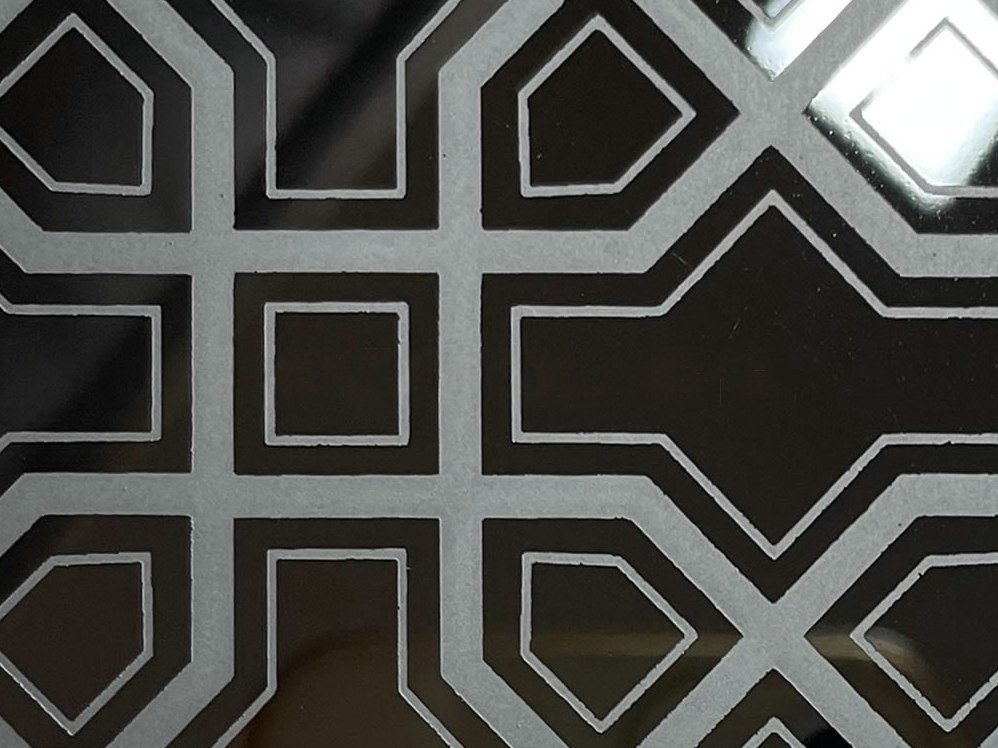
Clear Geometry
Stronger differentiation gives lines and shapes greater visual presence.
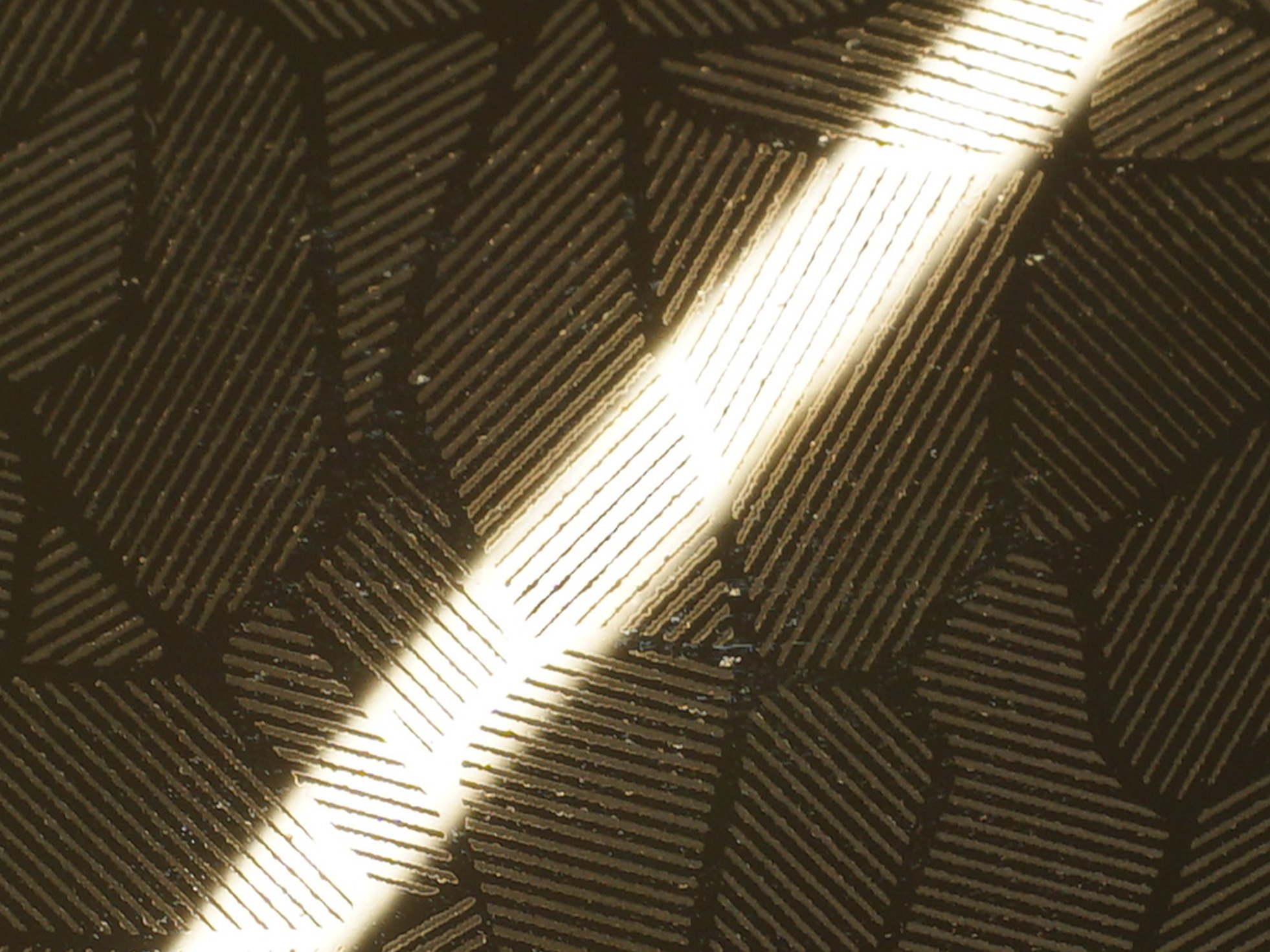
Pattern + Surface + Color
Combining pattern with different surface characters or metallic tones creates a richer decorative expression.
Contrast is read together with light. The same pattern can appear almost quiet under diffuse light and clearly graphic under a raking wash — which is why the intended viewing condition matters as much as the pattern itself.
From Drawing to Stainless Steel.
A decorative pattern does not have to begin with an existing catalogue. Share a drawing, geometric study, artwork or visual reference, and the design can be evaluated for development as an etched stainless steel surface.
Design Input
Drawing · artwork · geometry · reference.
Pattern Development
Scale · repeat · proportion · contrast.
Sample Panel
Material · surface · color · pattern.
Architectural Panel
Approved pattern into production.
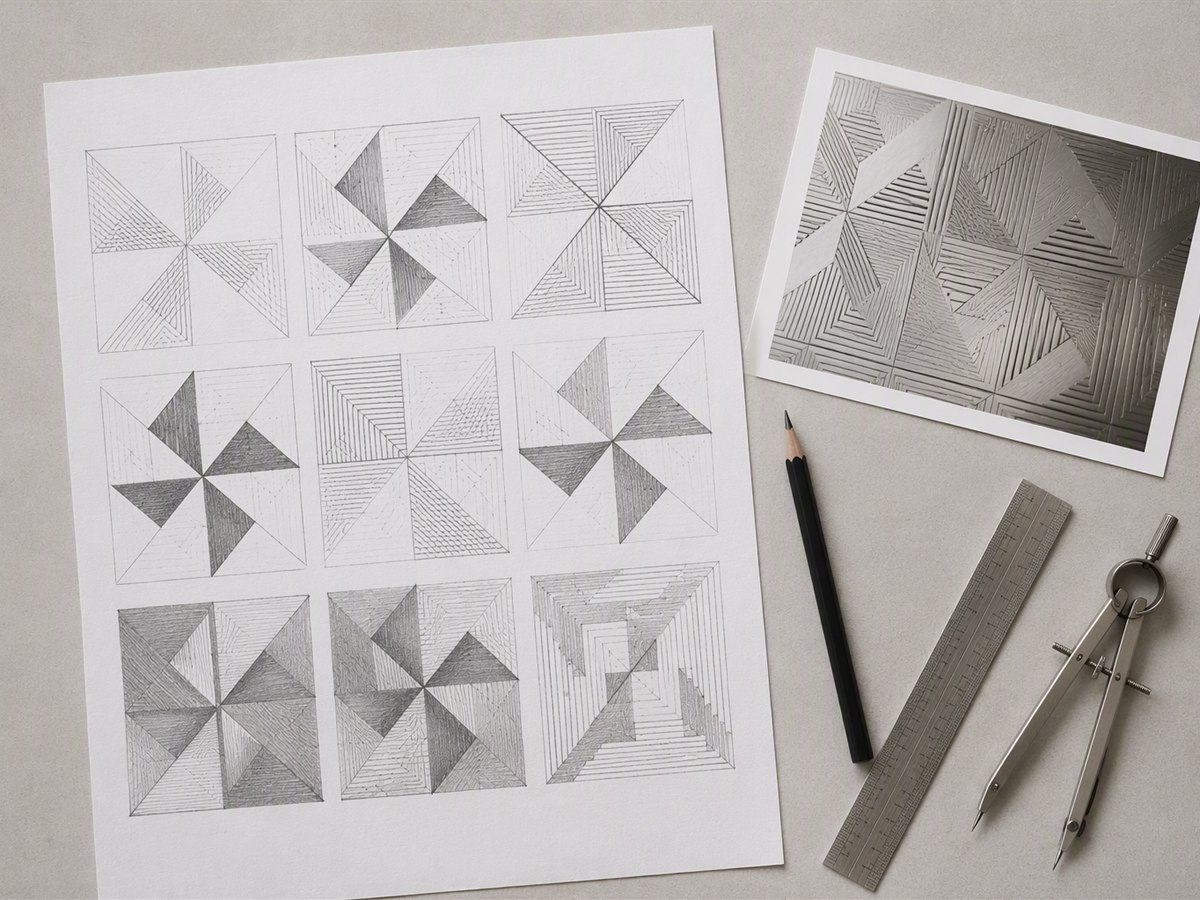
Drawing
The starting point is the project drawing, artwork or reference.
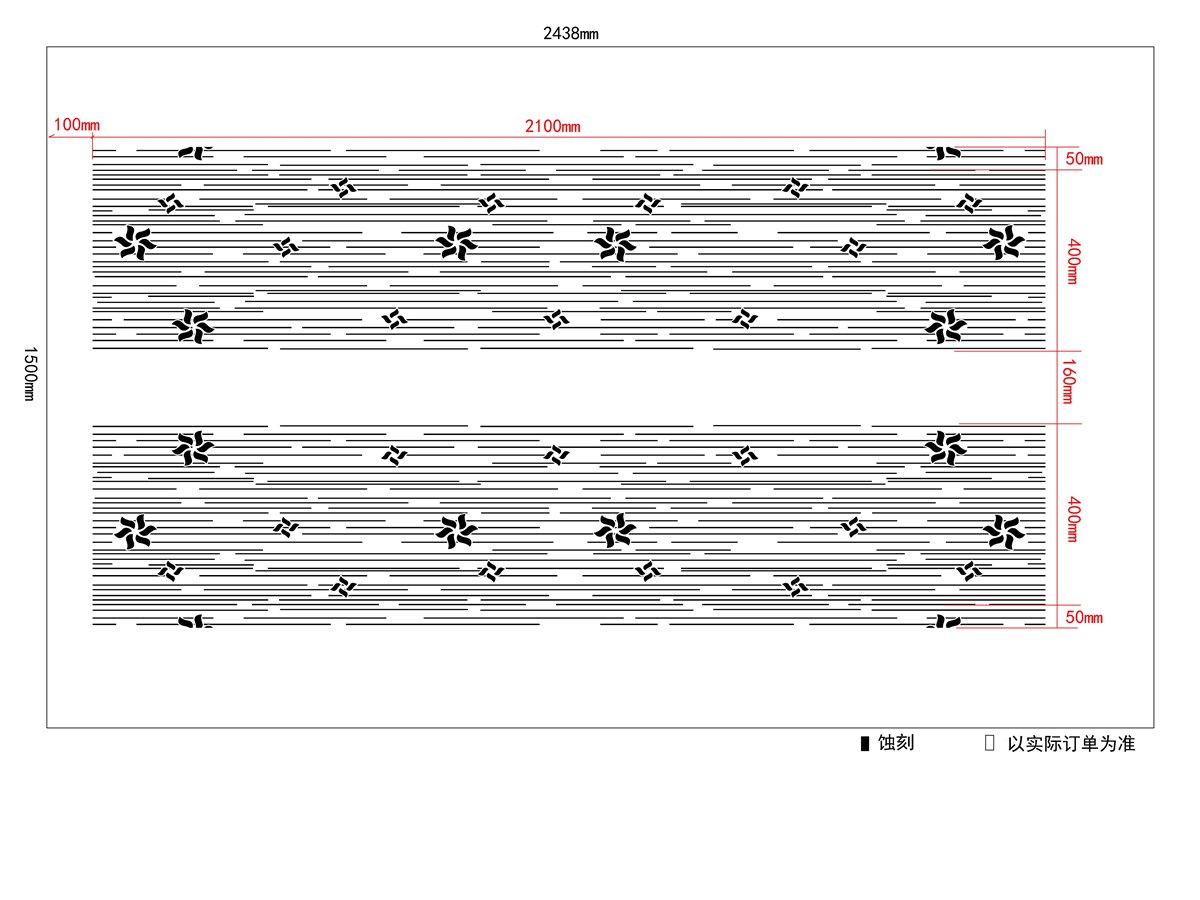
Scale & Repeat
Scale, repeat, proportion and contrast are resolved against the panel geometry.
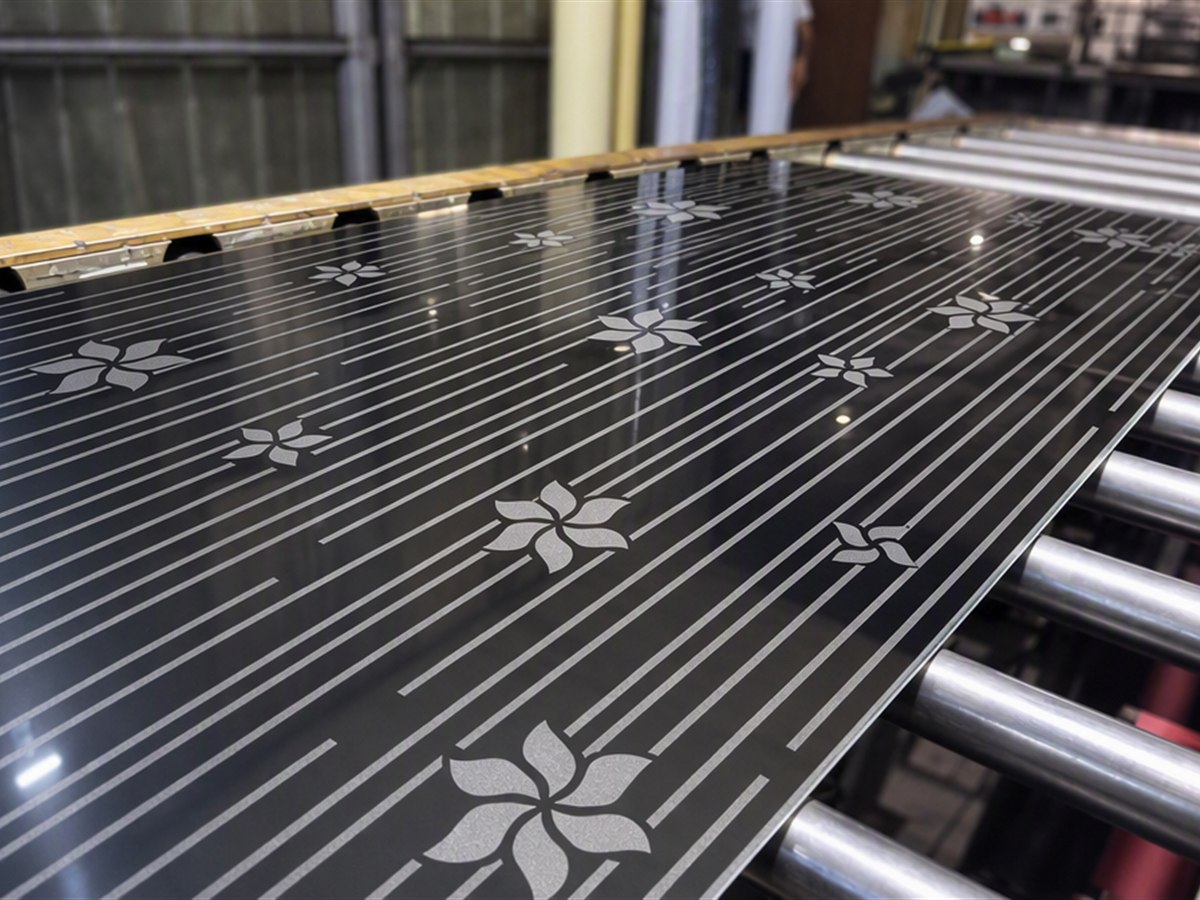
Evaluated in Metal
The pattern is evaluated in stainless steel, not on screen.
Into Production
The approved pattern moves into fabrication as an architectural component.
Design → Material → Architecture. Each step is confirmed before the next begins, so the pattern that reaches the wall is the pattern that was approved.
Pattern Changes with Metallic Tone.
Etched patterns can be coordinated with metallic color and base surface character to create different levels of contrast, warmth and visual depth.
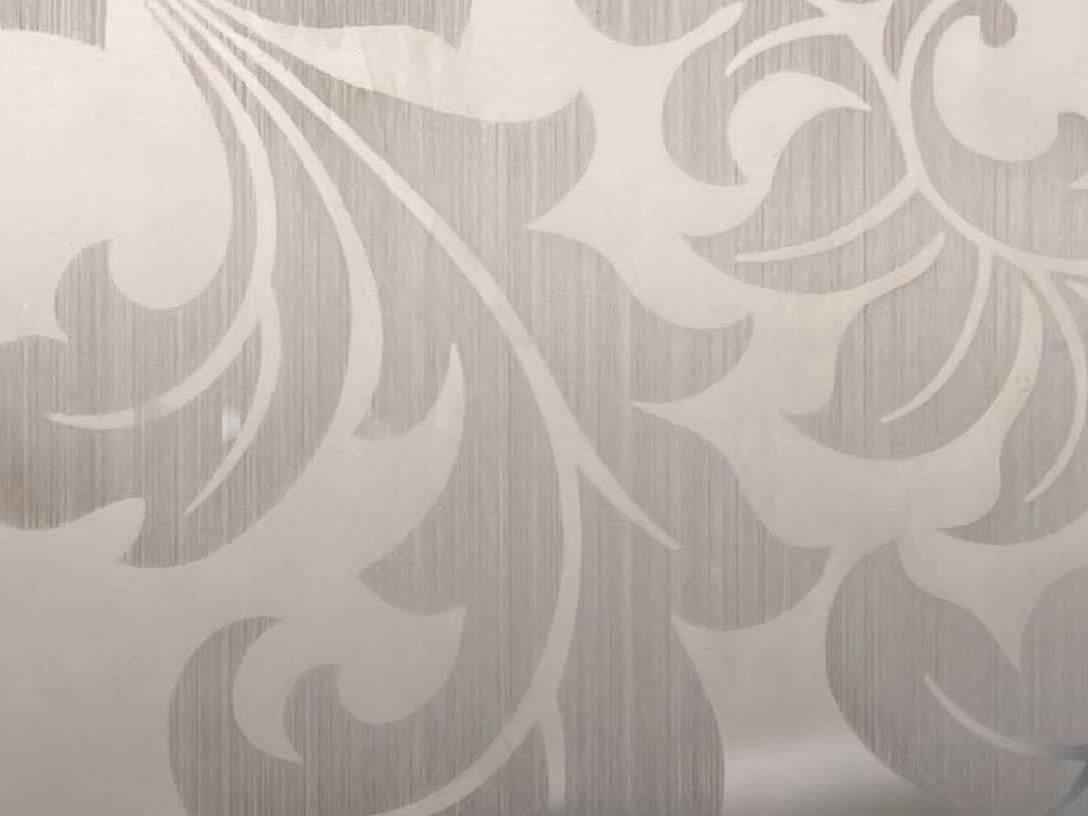
Pure Graphic Expression
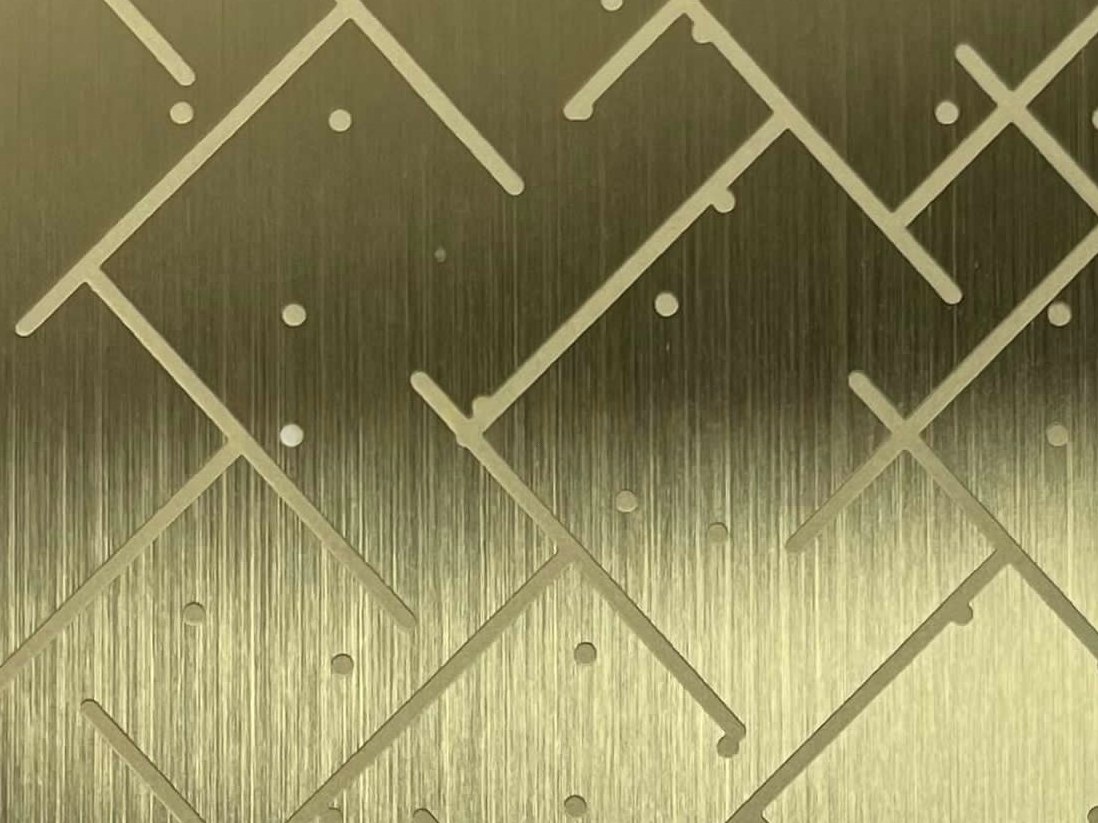
Warm & Refined
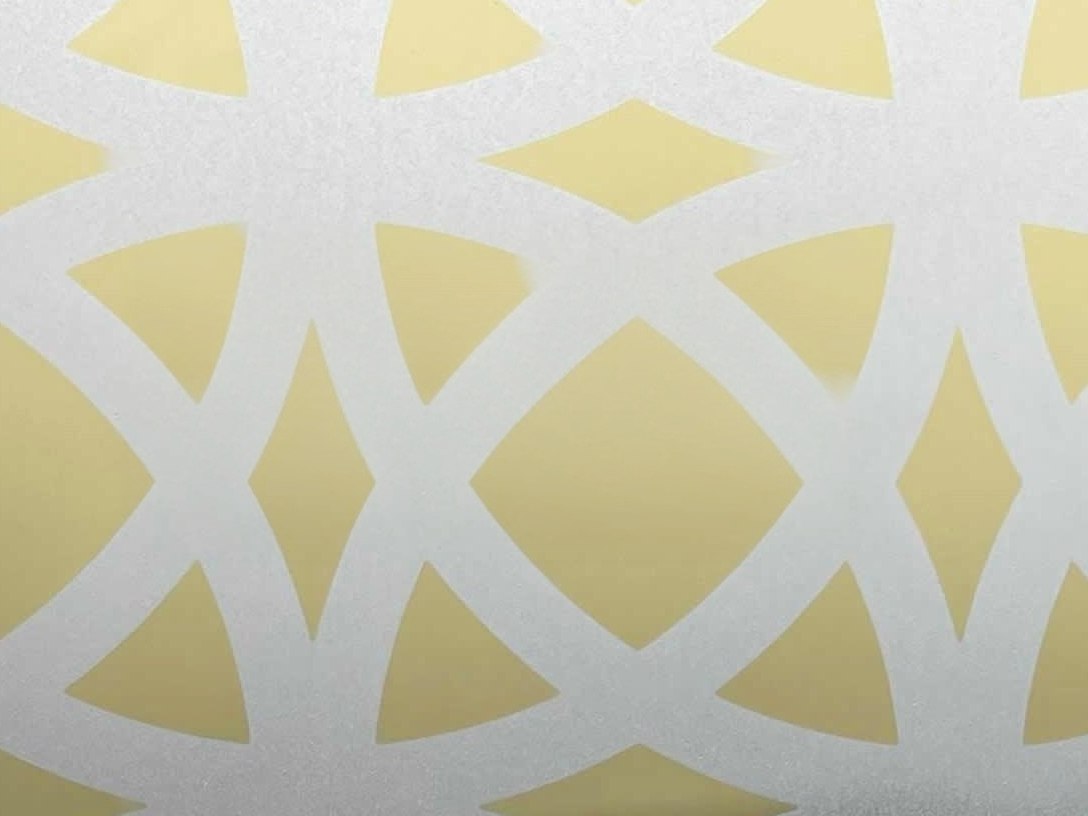
Decorative Presence
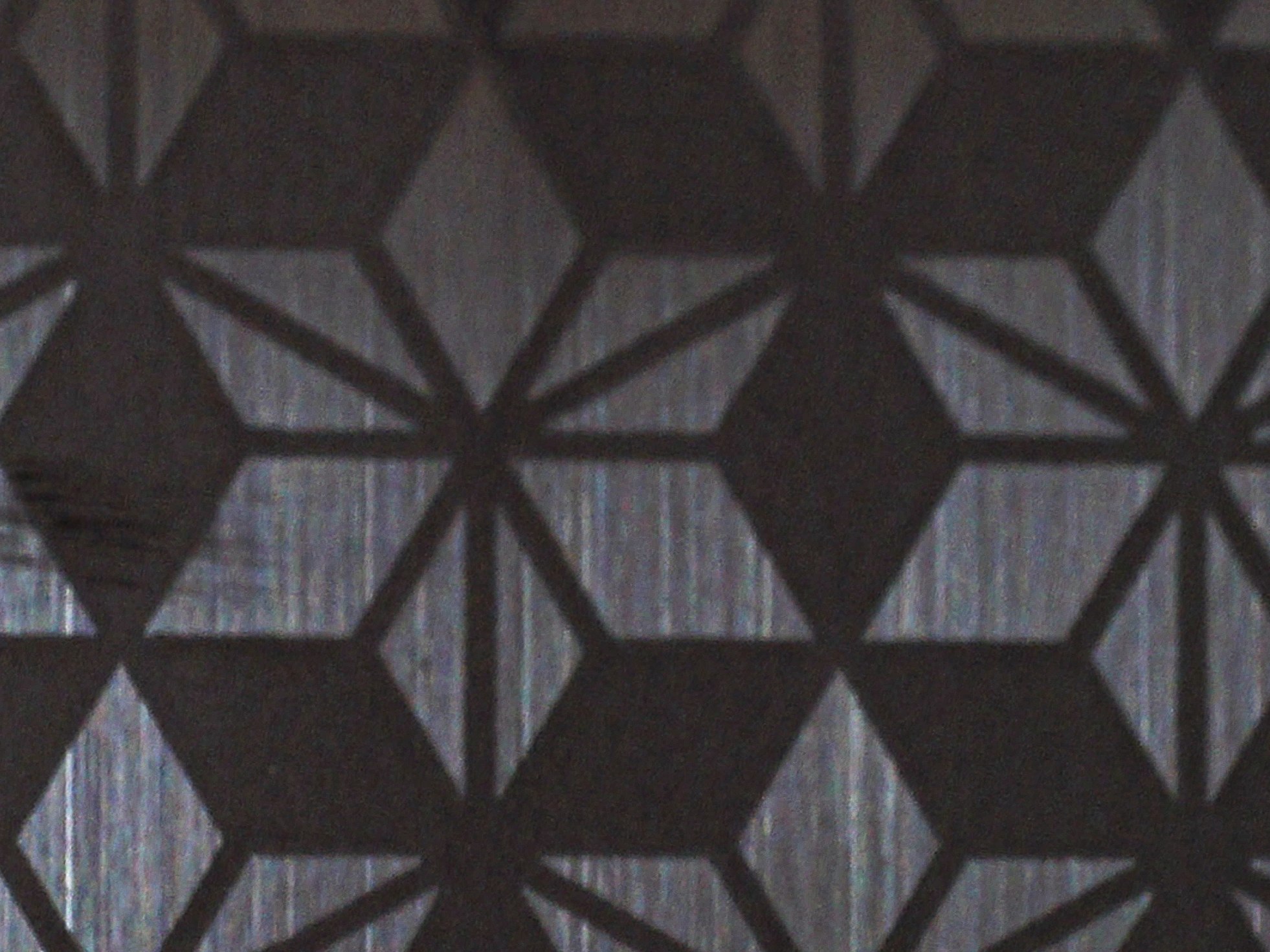
Deep Contrast
Custom development — pattern × surface × color. Additional combinations can be evaluated according to project requirements and approved physical sample. Color directions are shown to indicate visual character, not to define fixed colour codes.
Mirror-rich etched surfaces are normally considered for limited interior accent areas. For large architectural surfaces, etched patterns are more commonly developed on brushed, bead blasted or matte bases, or combined with PVD color.
Final pattern, color and contrast should be confirmed by approved physical sample.
Design the Pattern for the Viewing Distance.
A pattern that reads well on an A4 sample does not automatically hold together once it is installed. The same pattern is shown below at three viewing distances.
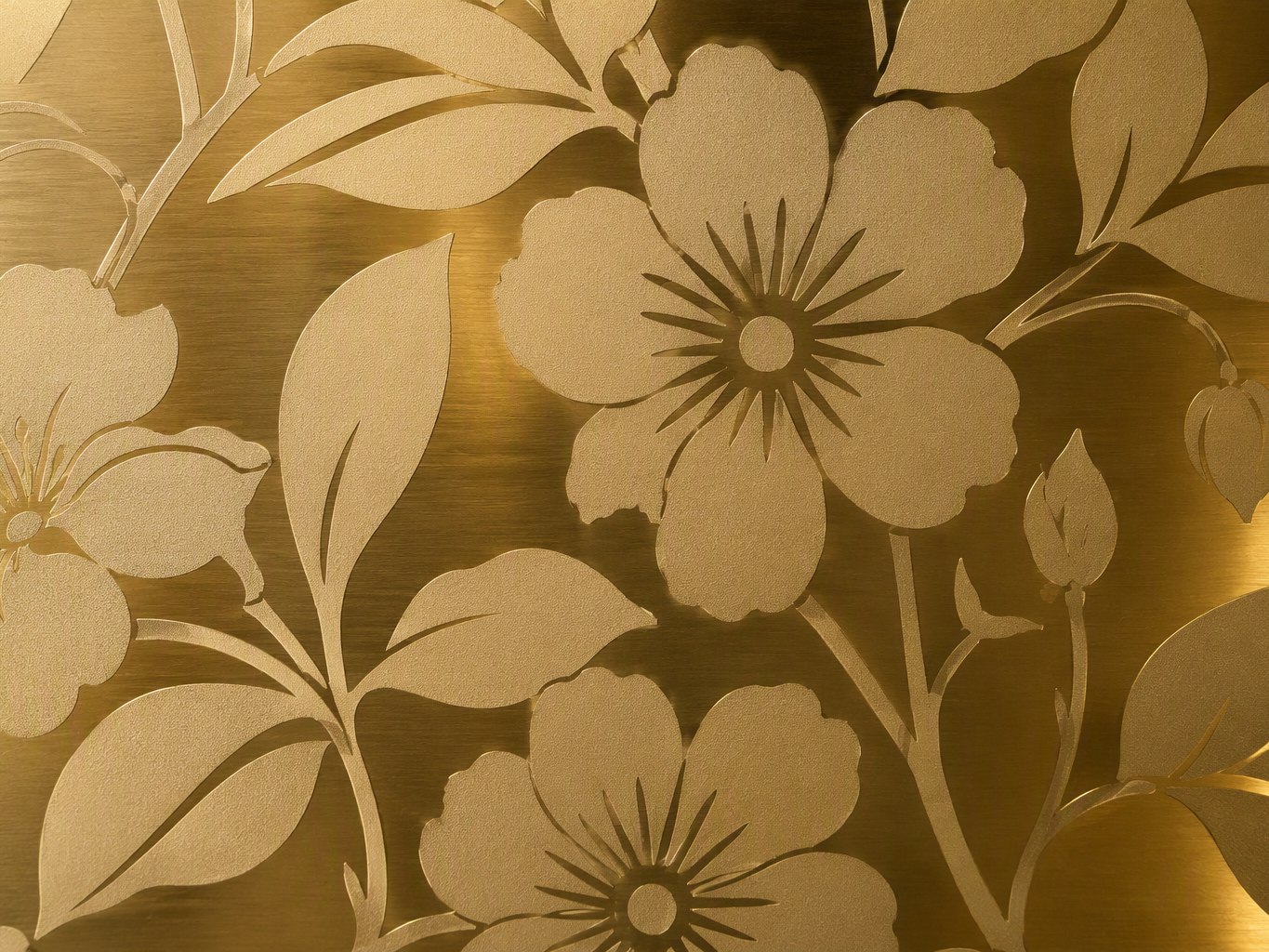
Graphic Detail
Fine lines and small-scale pattern become visible at close viewing distances.
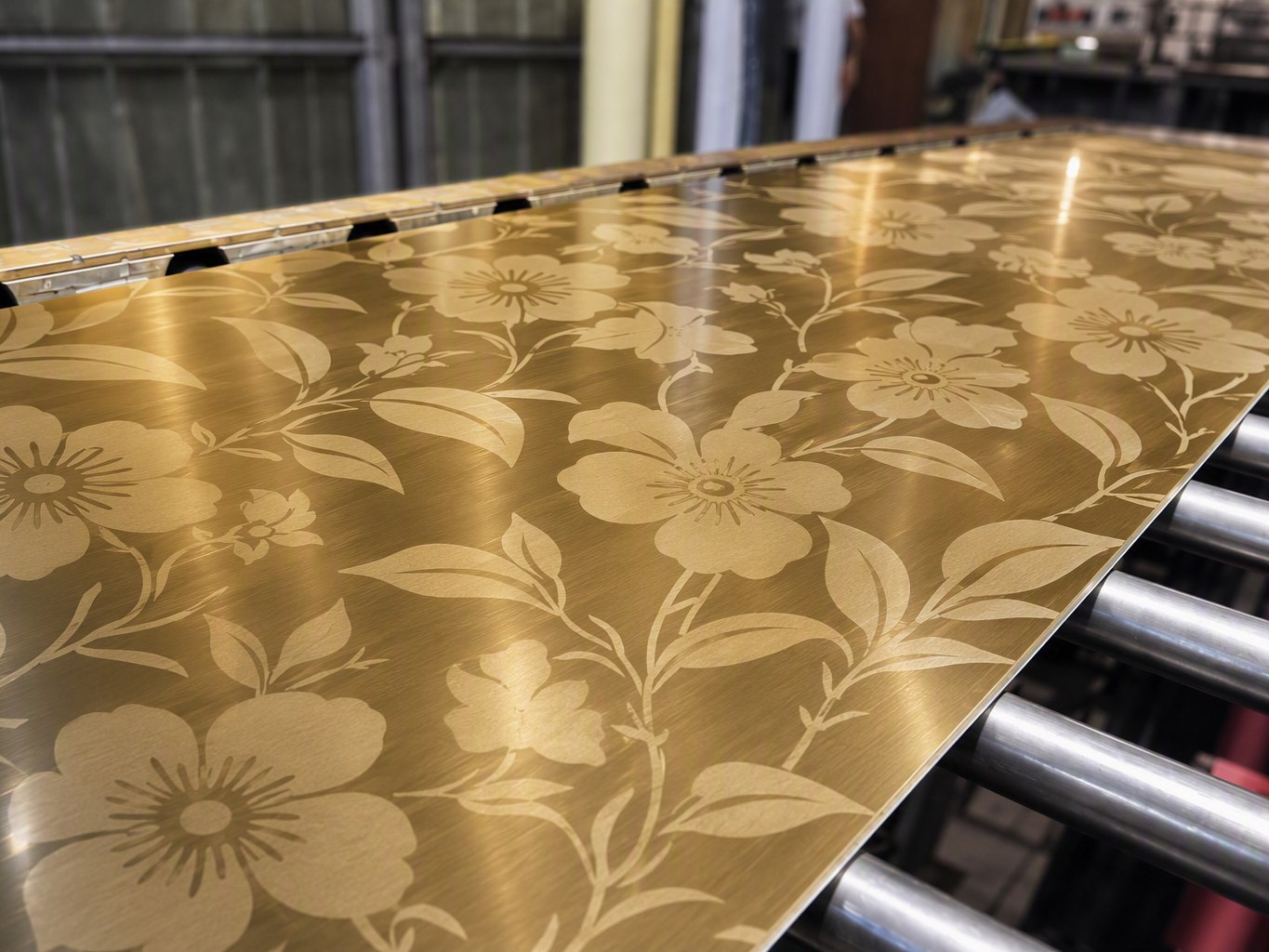
Pattern Rhythm
Repeat, proportion and spacing determine how the design reads across a complete sheet.
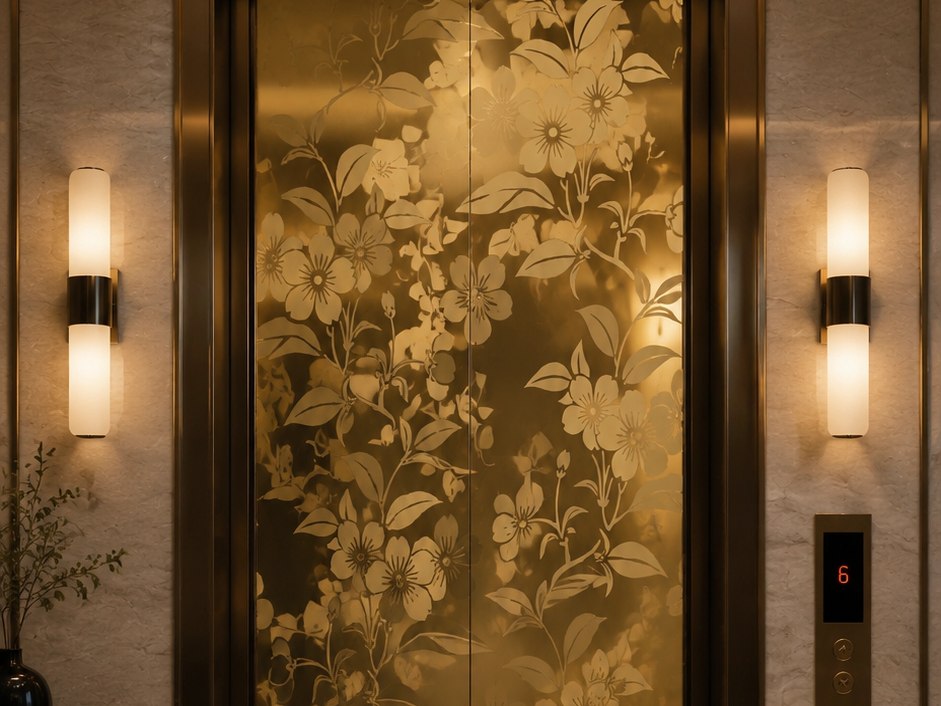
Overall Composition
Across multiple panels, pattern alignment and repetition become part of the architectural elevation.
Detail → one panel → built installation. Reviewing the pattern at all three distances is what keeps a design from falling apart between the sample plate and the finished work.
Pattern Becomes Part of the Space.
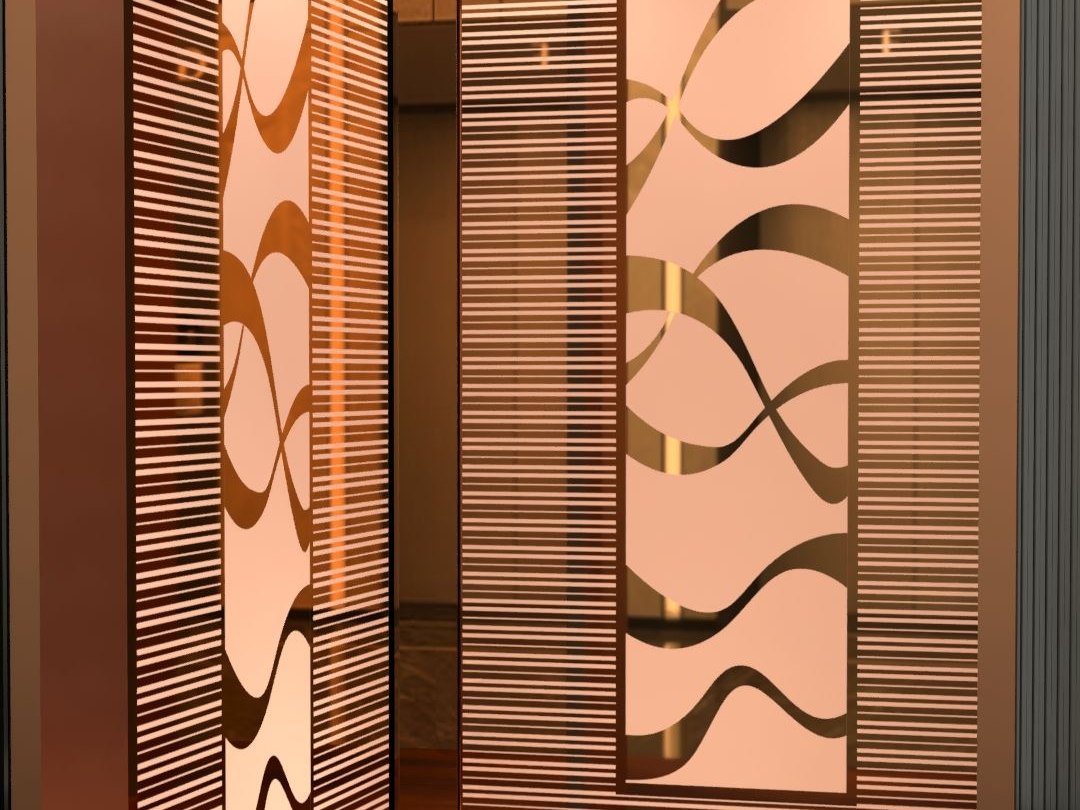
Controlled Detail
Etched patterns create close-range visual identity across cabin walls and decorative panels.
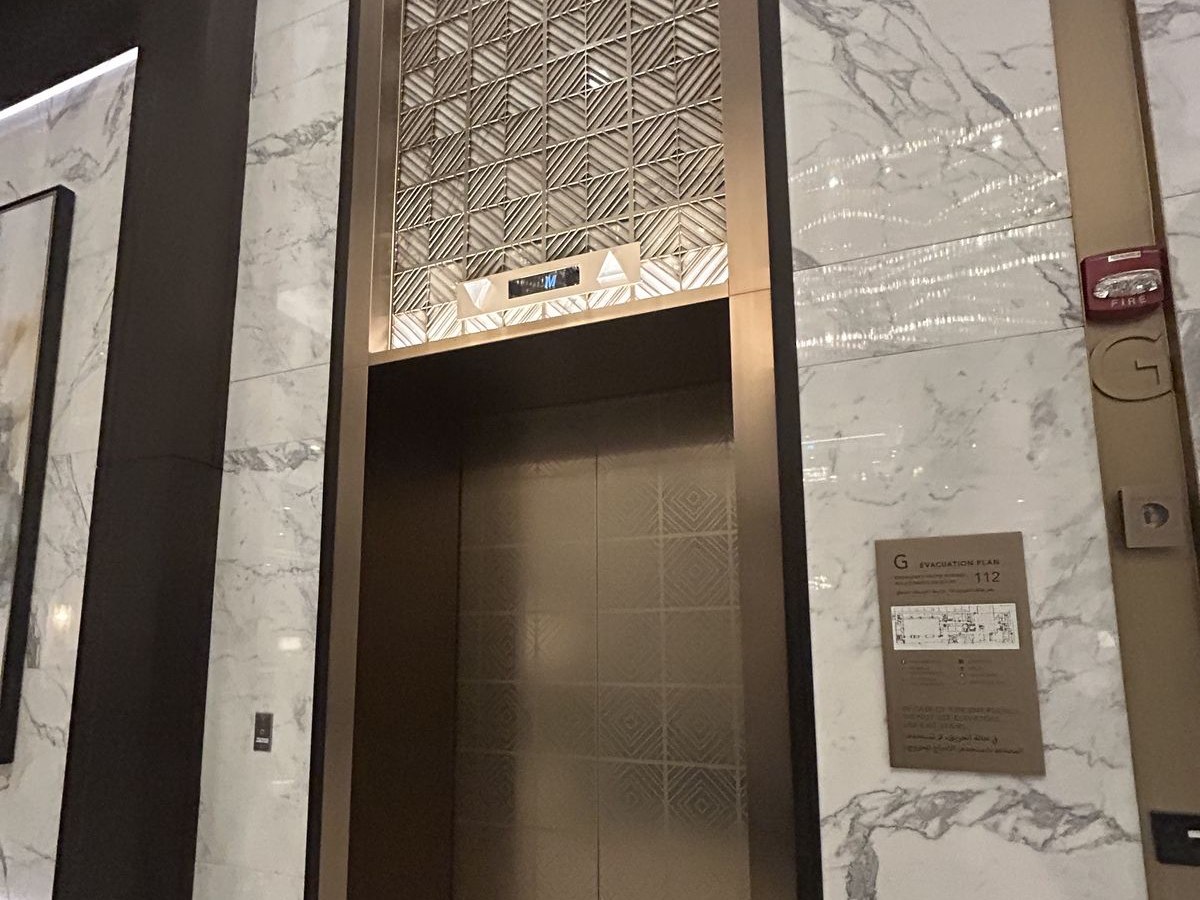
Material Identity
Pattern can coordinate doors, portals and surrounding architectural surfaces.
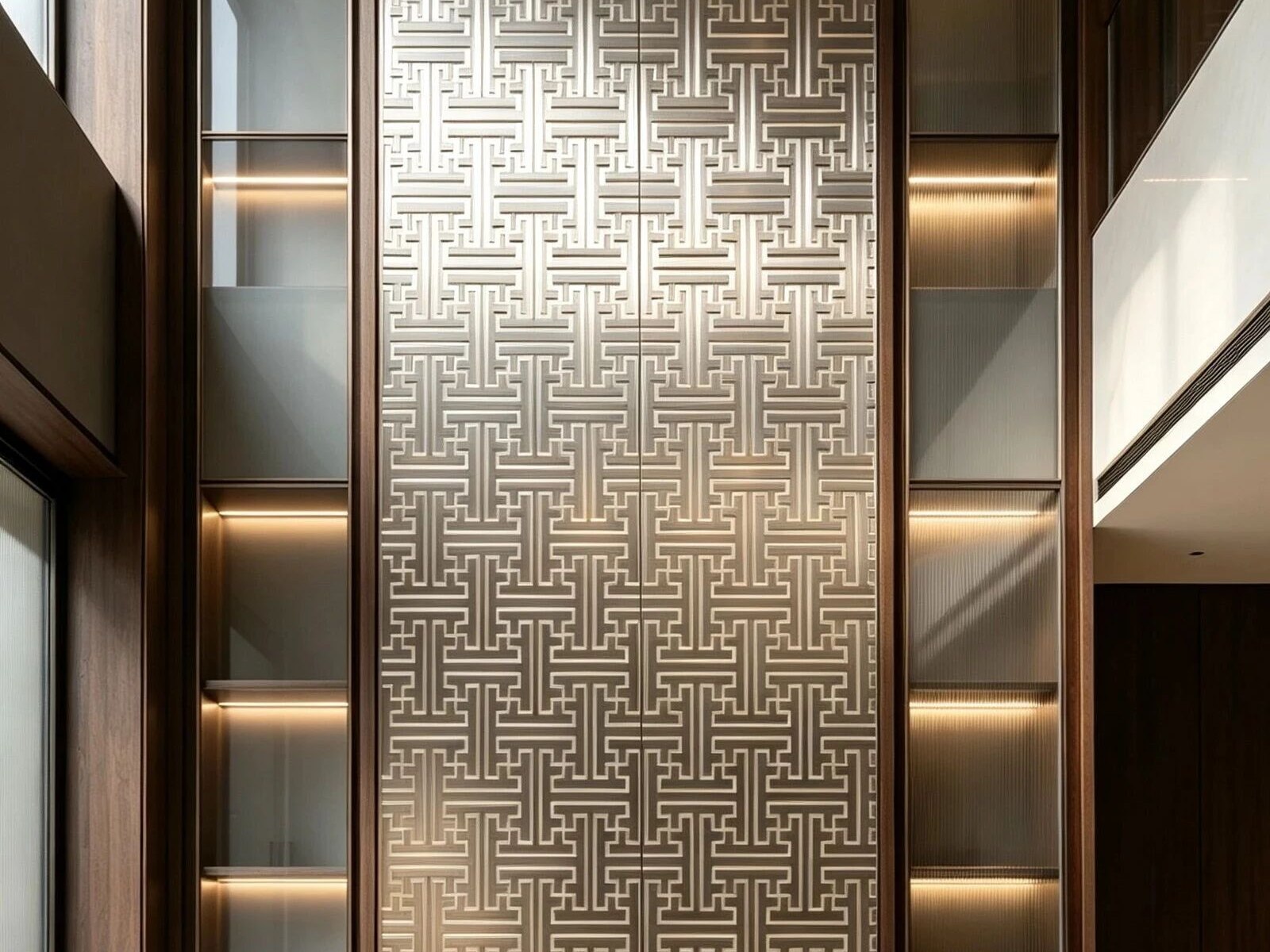
Graphic Plane
Larger etched surfaces transform pattern into part of the interior composition.
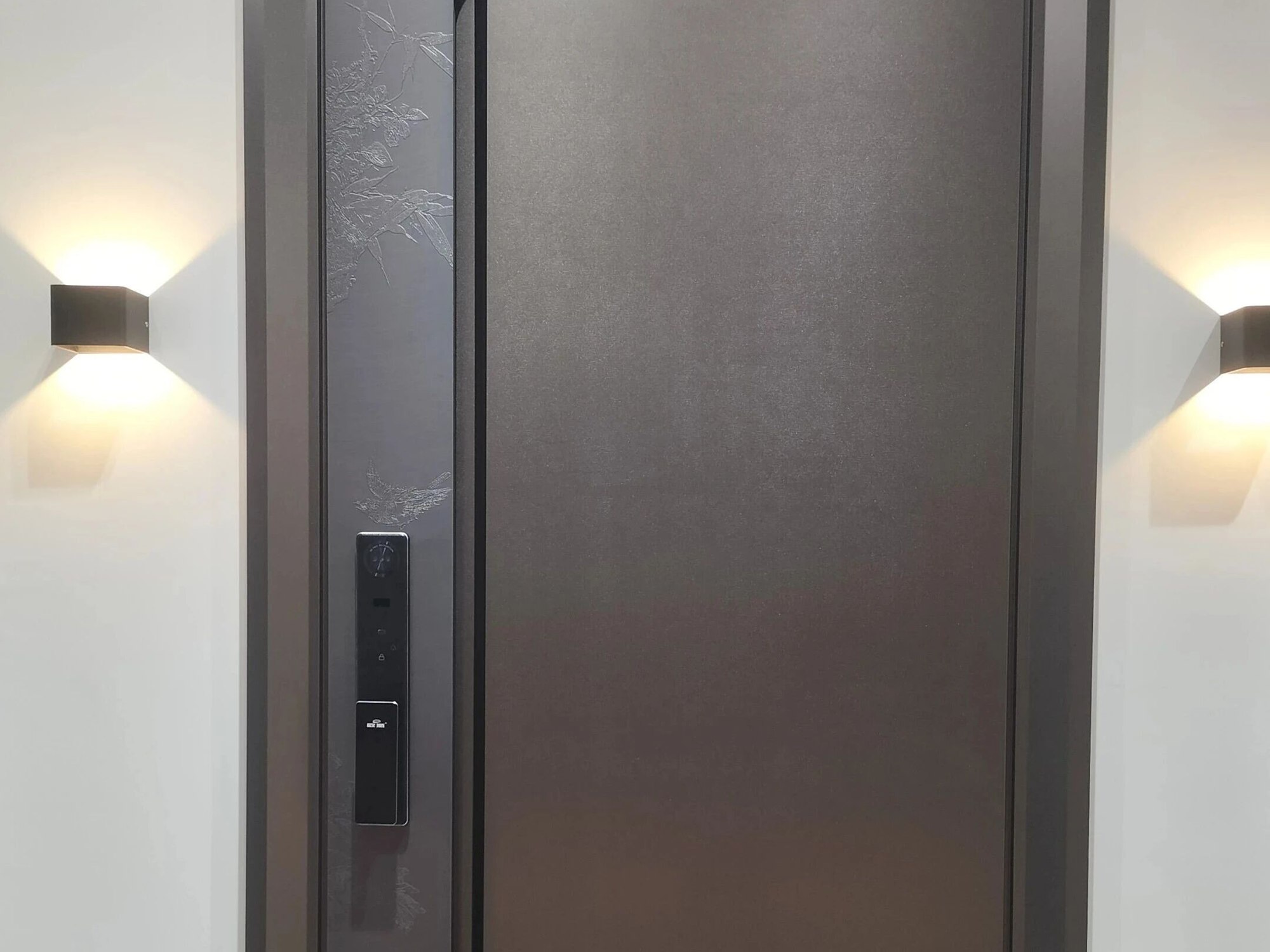
Architectural Signature
Custom geometry can introduce project identity into portal and entrance elements.

Project-Specific Expression
Reception counters, cabinetry, displays and feature components can incorporate custom graphic language.
Developing a Patterned Scheme?
Send the space, the panel scale and the graphic character you are aiming for, and we will help identify the appropriate etched surface.
How the Pattern Gets Into the Metal.
Etching is a subtractive process. The pattern is not printed onto the sheet — it is etched into the stainless steel surface itself, then reviewed across the full sheet before cut lines, panel joints and visible returns are set.
Etching
The pattern is etched into the prepared stainless steel surface under controlled conditions.
Full Sheet
The result is reviewed across a complete sheet, not on a small sample plate.
Into Fabrication
Cut lines, joints and returns are positioned relative to the etched pattern.
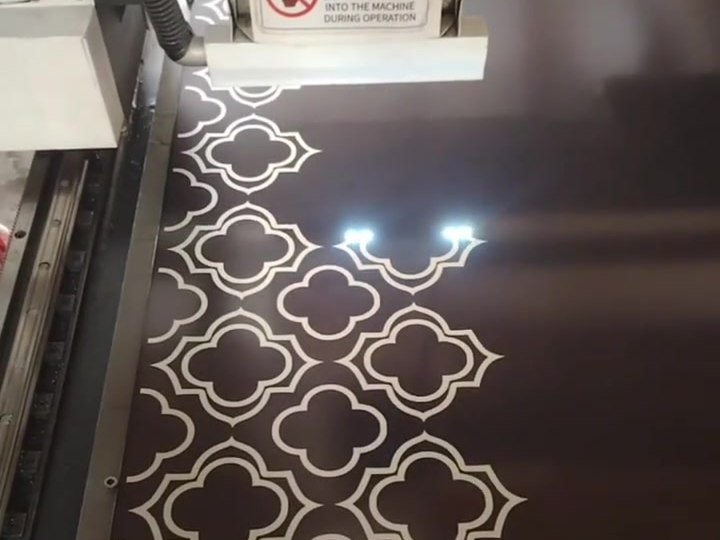
Pattern Into the Surface
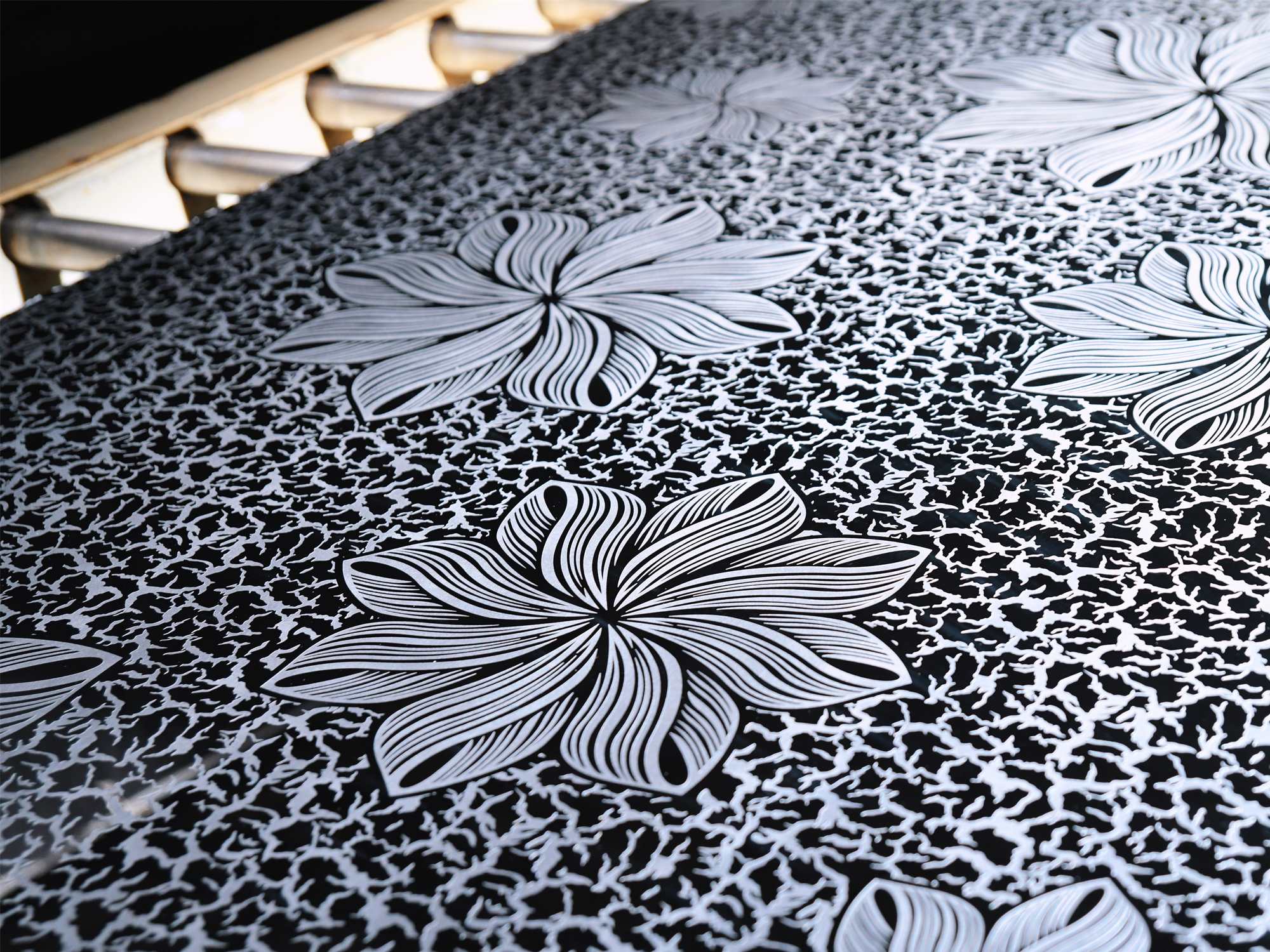
Pattern at Panel Scale
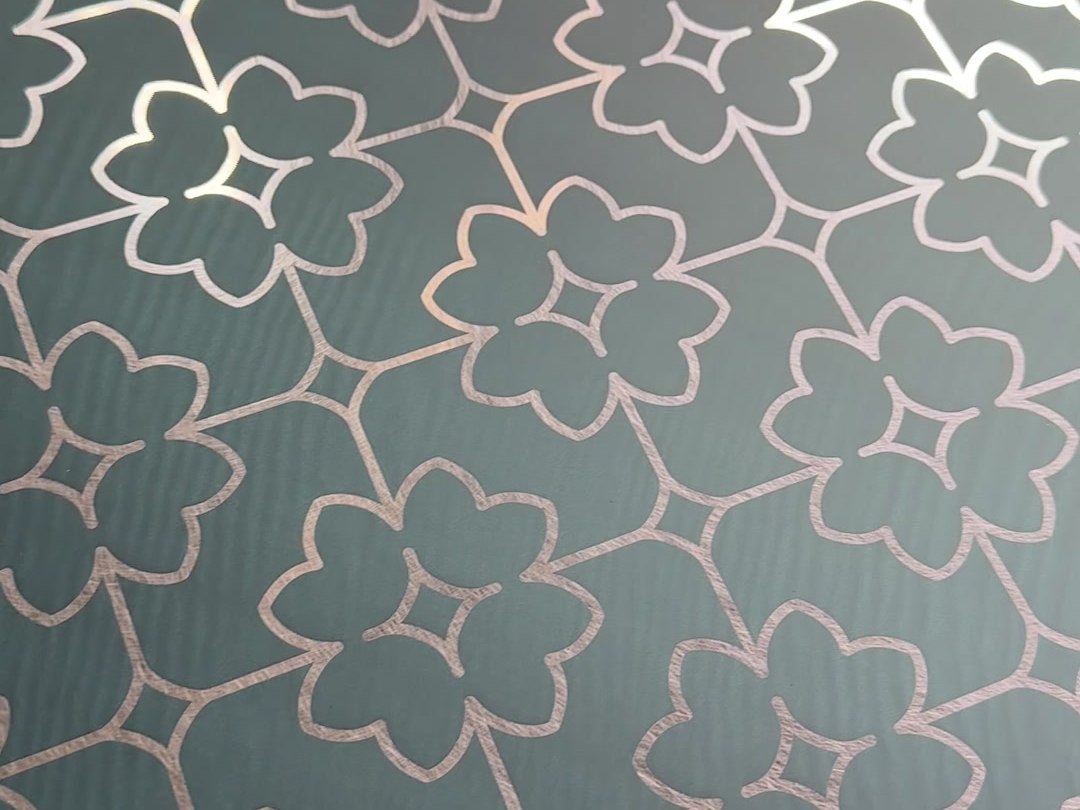
Pattern Through the Panel
Etching changes the surface, not the sheet — the pattern becomes part of the metal. Cut lines, panel joints and visible returns still have to be positioned relative to it, which is what decides whether the design survives fabrication.
Specification at a Glance.
| Specification | Etched Decorative Stainless Steel |
|---|---|
| Technique | Cold Rolled / Etched Decorative Pattern |
| Pattern | Custom Etched Patterns |
| Thickness | 0.3–3.0 mm |
| Width | 10–1500 mm |
| Length | 300–6000 mm |
| Recommended Grade | 304 / 316L / 201 |
| Flatness | 3 mm max |
| Thickness Tolerance | ±0.01 mm |
| Width / Length Tolerance | -0 / +0.2 mm |
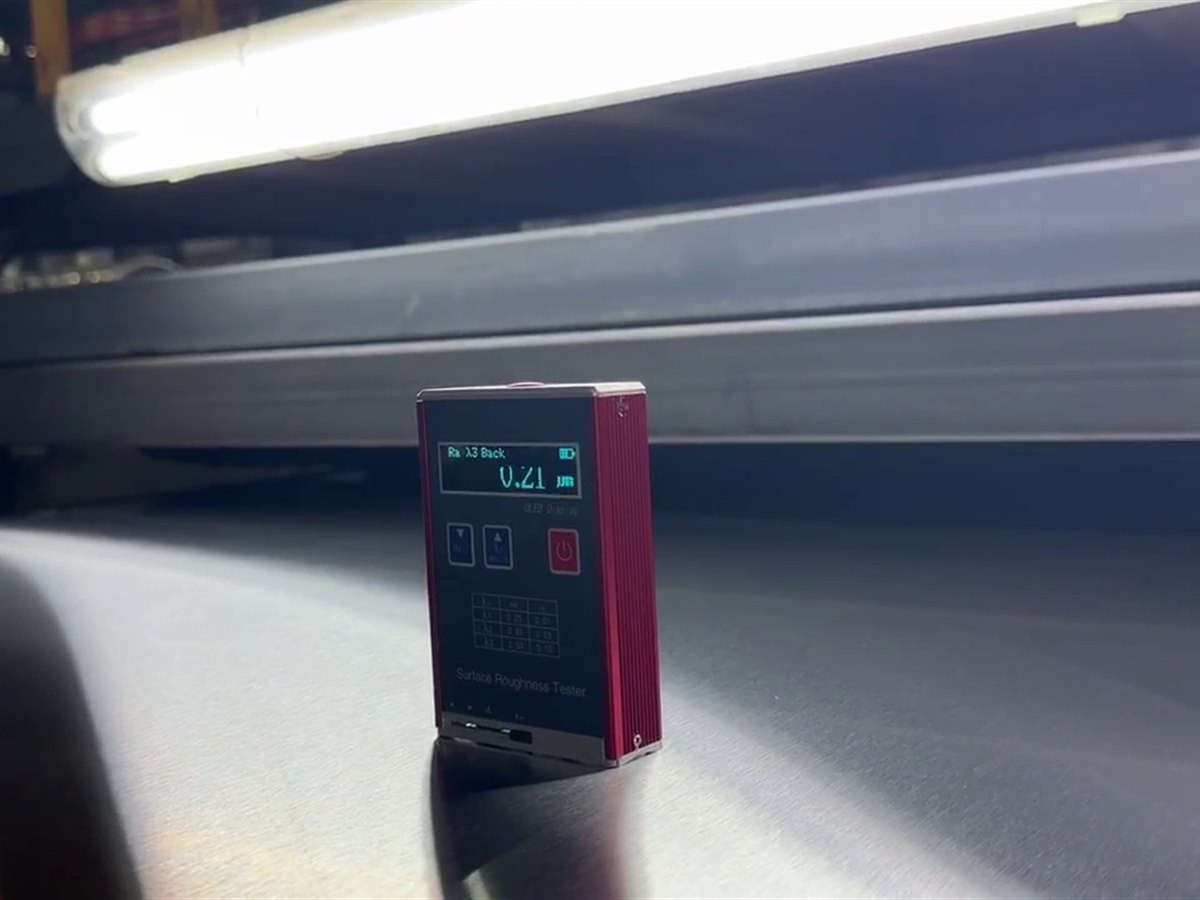
| Surface Roughness | N/M |
| Color Difference | N/M* |
| Fire Rating | A1 |
| Packing | PVC Film + Waterproof Paper + Wooden Box |
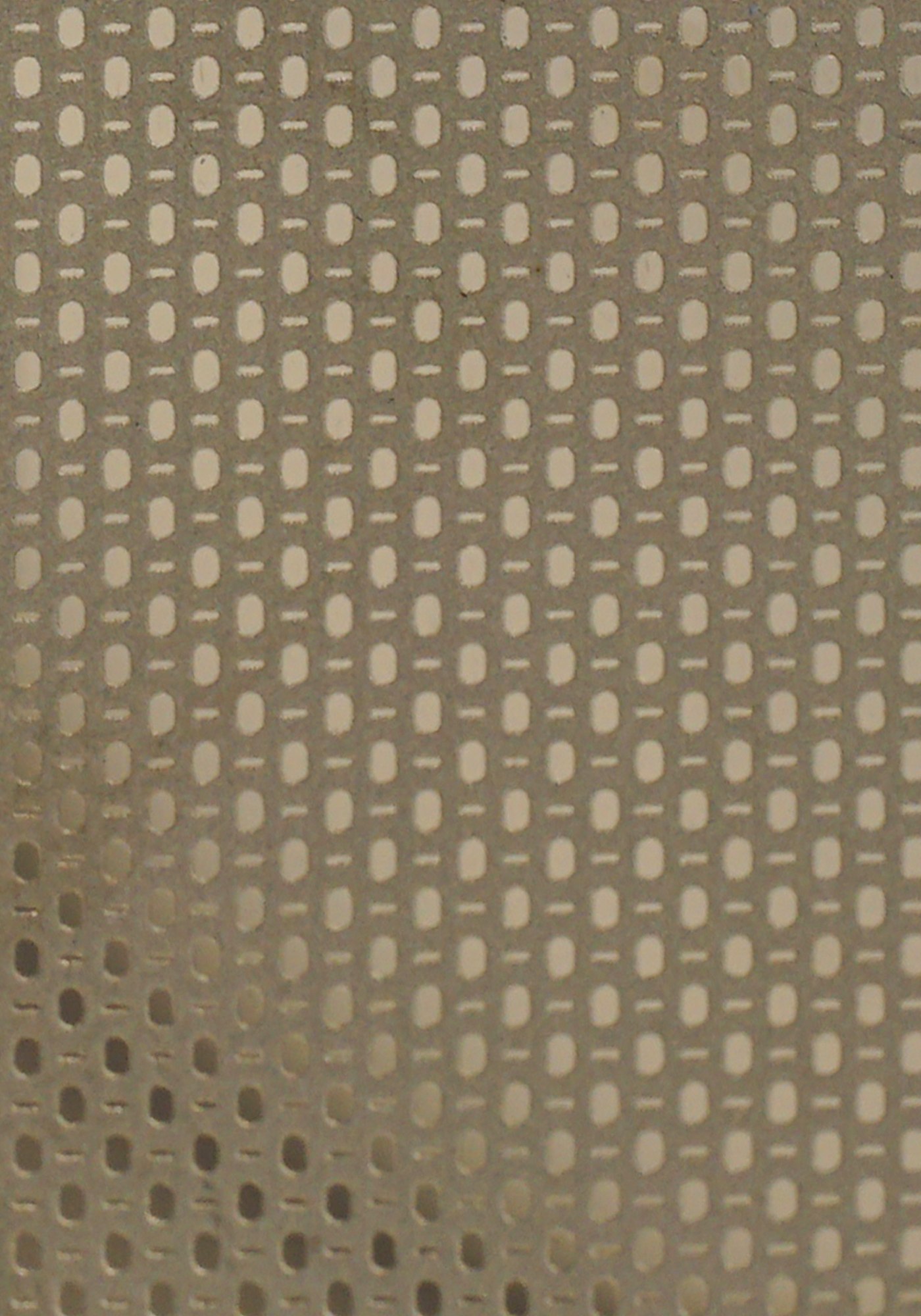
* Color difference is not applicable to natural uncoated etched stainless steel. For PVD-colored etched surfaces, color difference follows the confirmed PVD specification and the approved physical sample.
Etching produces a graphic pattern on a flat sheet rather than a physical relief, so flatness follows the mechanical finish standard of the base sheet rather than an embossed tolerance.
Technical note: final pattern, contrast and color appearance should be established through approved physical sample.
Guidance by Environment.
304 — Interior Architectural Applications
Commonly considered for interior decorative panels, elevators and feature elements.
316L — More Demanding Environments
Consider where higher corrosion resistance is required by the project environment.
201 — Project-Specific
Available for appropriate applications subject to project evaluation.
Approve the Pattern in Metal.
Pattern scale, line weight, contrast, surface finish and metallic color can appear different once translated from a digital drawing into stainless steel. Physical sampling allows these variables to be evaluated together before production.
Input
Drawing / reference.
Develop
Pattern / scale / contrast.
Sample
Evaluate in stainless steel.
Approve
Establish production reference.
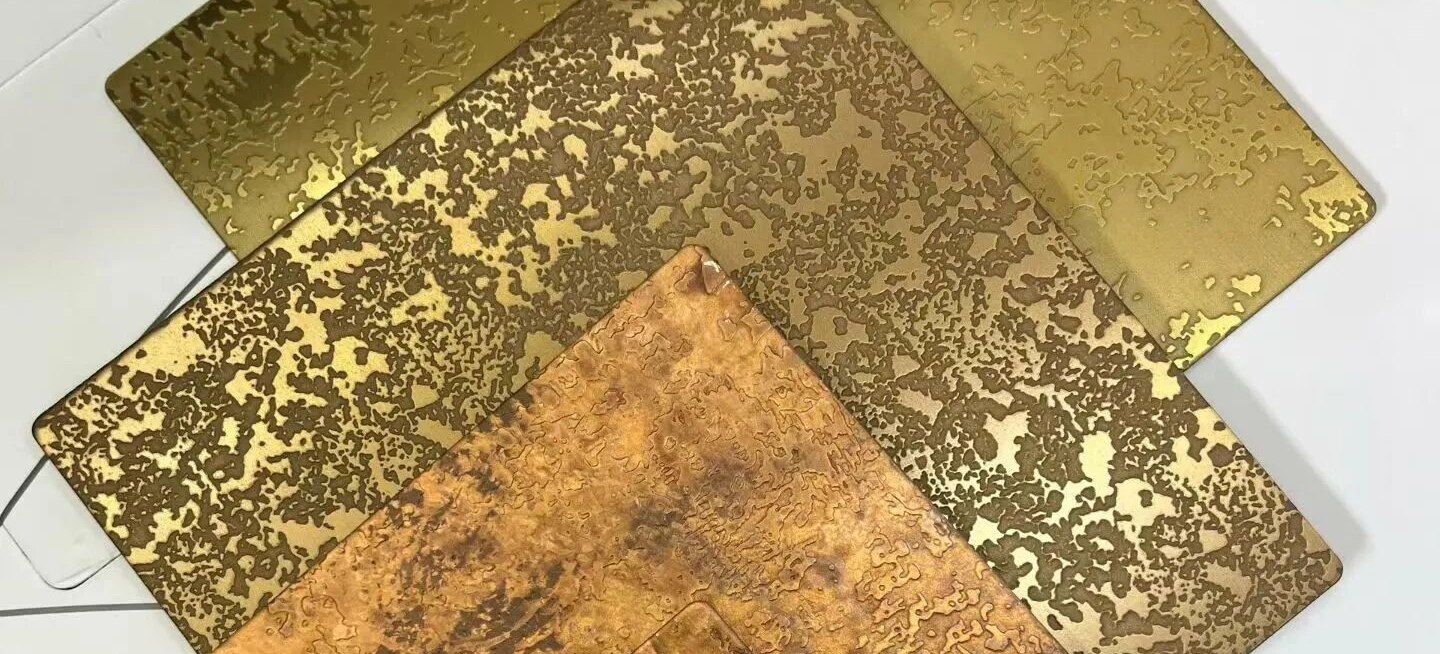
This is a design development sample, not a catalogue swatch. The approved plate becomes the visual reference for pattern scale, contrast and metallic tone in production.
Etched Stainless Steel FAQs
Etched stainless steel is a decorative metal surface in which controlled patterns are developed directly on the stainless steel, creating visual contrast between different areas of the surface. The pattern is read as a graphic layer rather than as physical relief.
Yes. Project drawings, artwork, geometric studies or visual references can be evaluated for custom pattern development. Pattern scale, repeat, panel dimensions and fabrication requirements should be considered before production. Custom Development →
Etched stainless steel primarily creates graphic pattern and surface contrast, while embossed stainless steel introduces physical relief and dimensional texture. The choice depends on whether the design intent is driven more by graphic expression or physical depth. Physical Embossed Textures →
Etched patterns can be coordinated with selected PVD color directions and surface combinations, subject to process compatibility and physical sample approval. PVD Color Coating →
Etched stainless steel is commonly considered for elevator interiors, elevator lobbies, feature walls, entrances and bespoke interior elements where decorative pattern forms part of the architectural identity. Interior Systems →
Etched stainless steel can be developed into fabricated components, but pattern position, cutting lines, bends, visible returns and panel joints should be coordinated with the final geometry before production. How the Pattern Is Etched →
Yes. Physical sampling is recommended to evaluate pattern scale, contrast, metallic color and surface character before the approved design is transferred into production. Request a Sample →
Explore Related Surfaces
Pattern can be produced many ways. What changes is how the pattern is created.
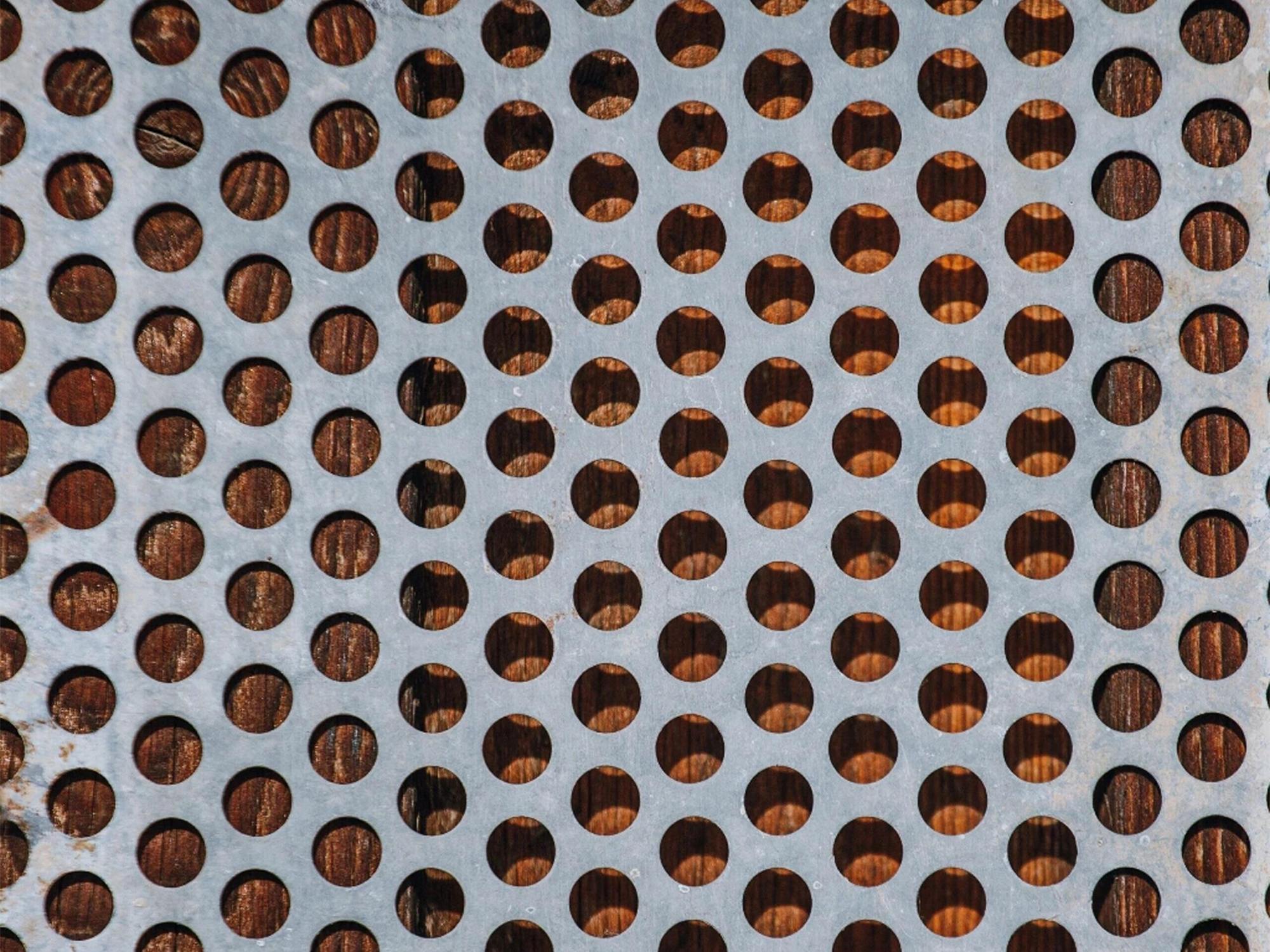
Pattern Through Transparency
The pattern is formed by openings that pass through the sheet. Explore Perforated →
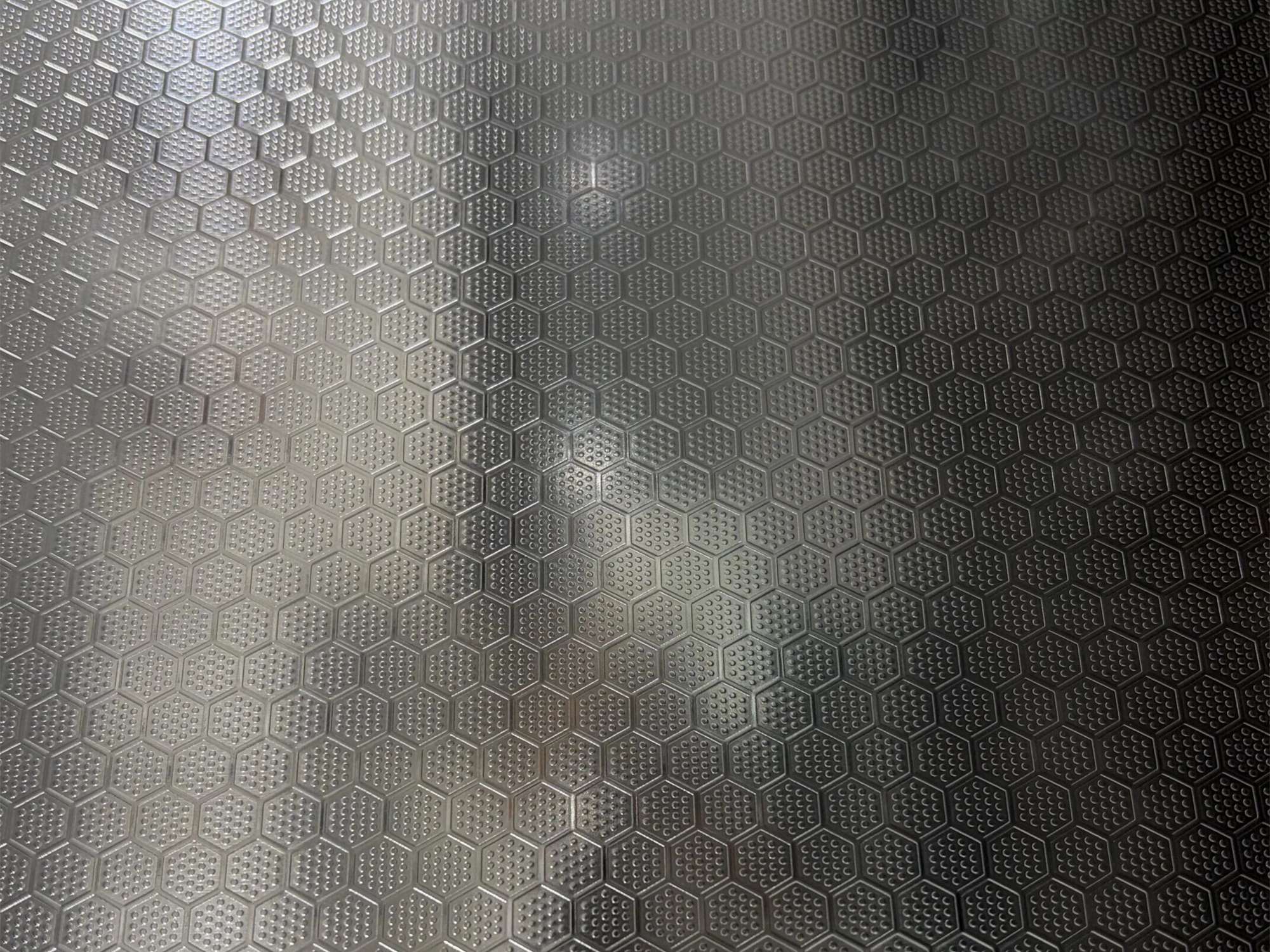
Pattern Through Depth
The pattern is formed by physical relief rolled into the surface. Explore Embossed →
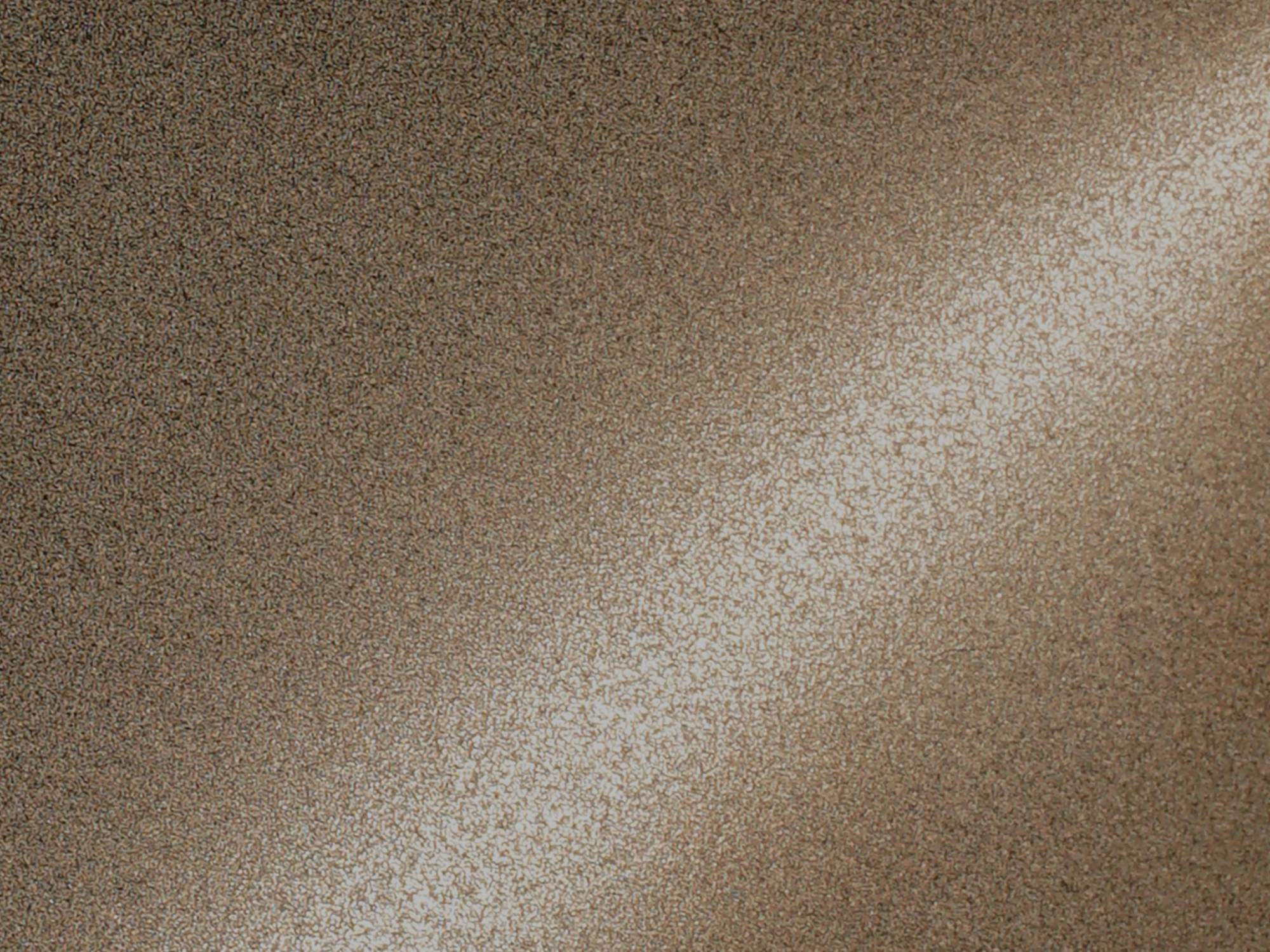
Pattern Through Color
Metallic tone is added across the surface to change how pattern and contrast read. Explore PVD Color →
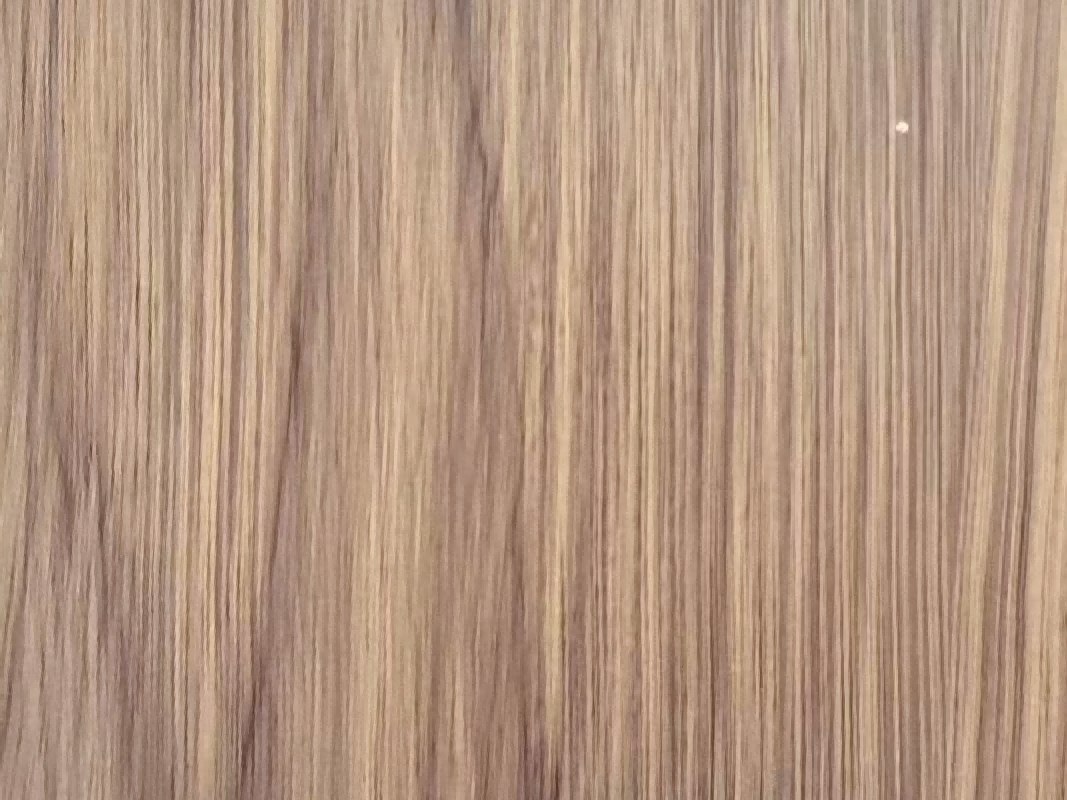
Pattern Through Image
Image, texture and visual transfer are applied to the surface rather than formed in the metal. View All Products →
Etched = contrast. Embossed = depth. Perforated = transparency. Printed = image. PVD = color. Five different ways of turning a graphic idea into architectural metal.
Bring Us the Pattern. We’ll Help Develop the Metal.
Share your drawing, rendering, pattern reference or architectural concept. Our team can help evaluate scale, surface, color and fabrication requirements before developing a stainless steel sample.
Send Your Pattern Request a Sample
Design → Material → Architecture
Pattern × Contrast × Precision