Hammered Stainless Steel — Texture You Can See. Depth You Can Feel.
- Share

Hammered Stainless Steel
Texture You Can See. Depth You Can Feel.
A dimensional stainless steel surface defined by irregular hammered texture, creating shifting highlights and shadows as light moves across the metal.
Texture Built Through Depth.
Hammered stainless steel introduces physical relief across the metal surface, transforming a flat reflective plane into a field of highlights and shadows.
Unlike directional brushed grain or smooth mirror polish, its visual character comes from dimensional variation across the surface.
As lighting and viewing angle change, different areas of the texture become visible — giving the material a tactile and continuously changing presence.
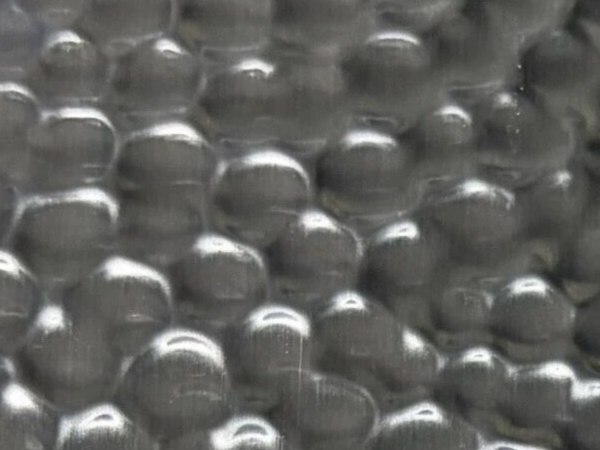
Physical Relief
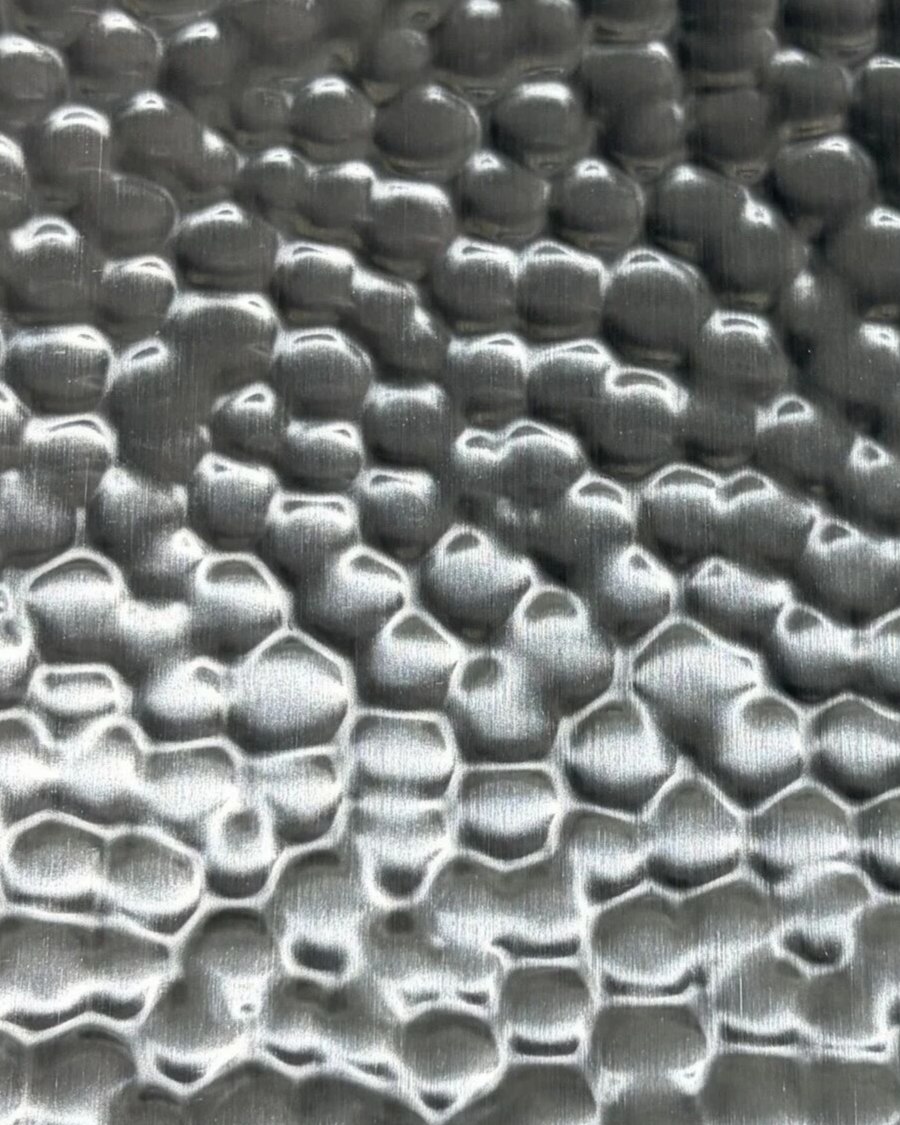
At close range the surface is defined by its raised and recessed areas and the way each one catches light.
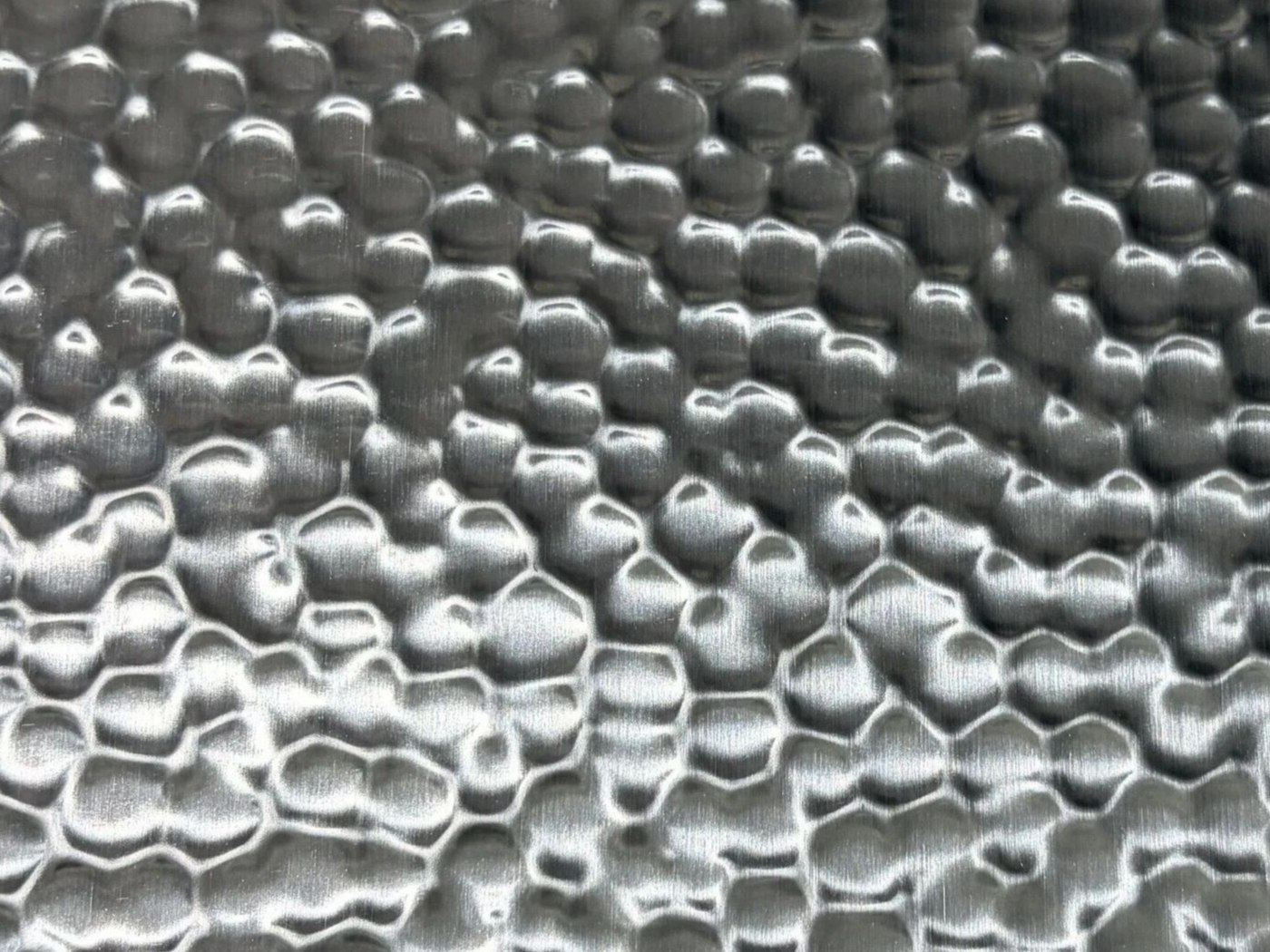
Texture Distribution
Across a full sheet, individual dents read as one continuous material texture.
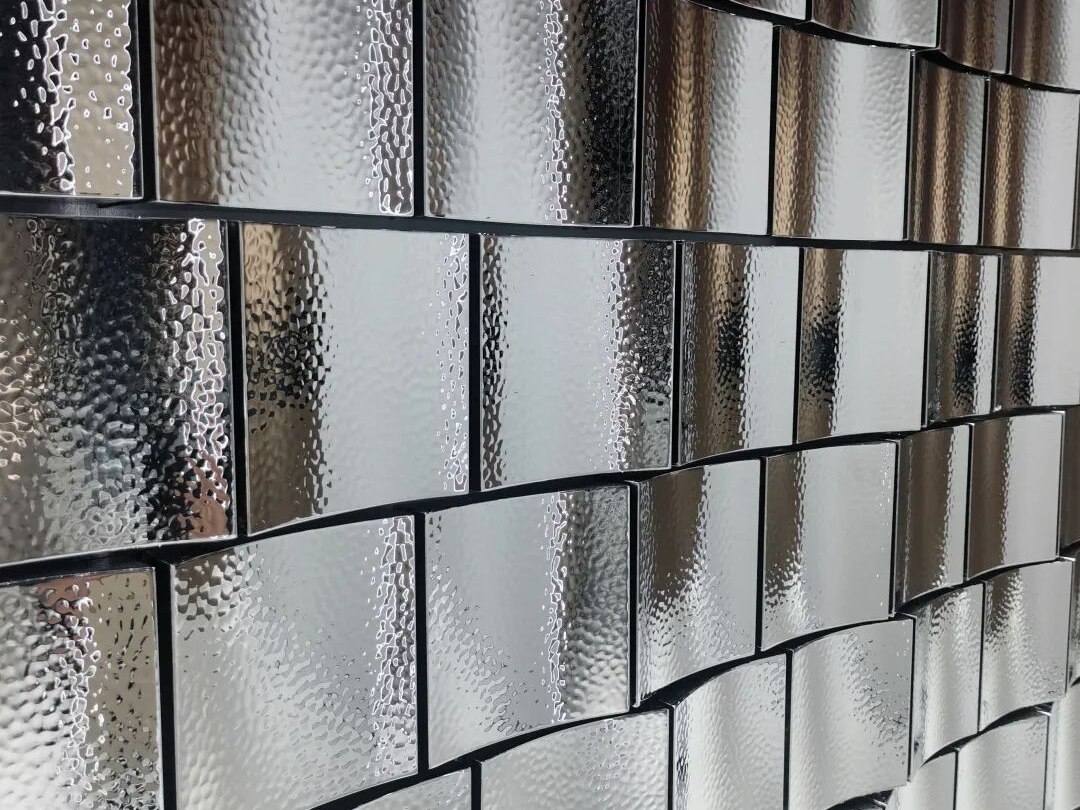
Texture in Space
At architectural scale the relief becomes part of the light and shadow of the room itself.
Irregularity Creates the Expression.
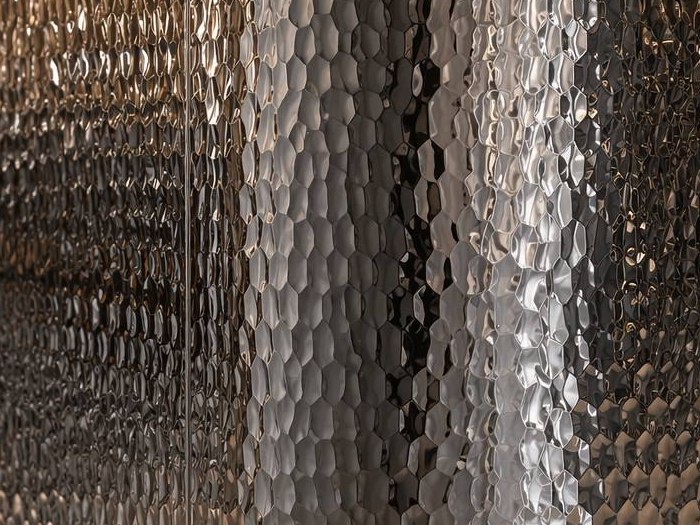
Physical Depth
Raised and recessed areas create a visibly dimensional stainless steel surface.
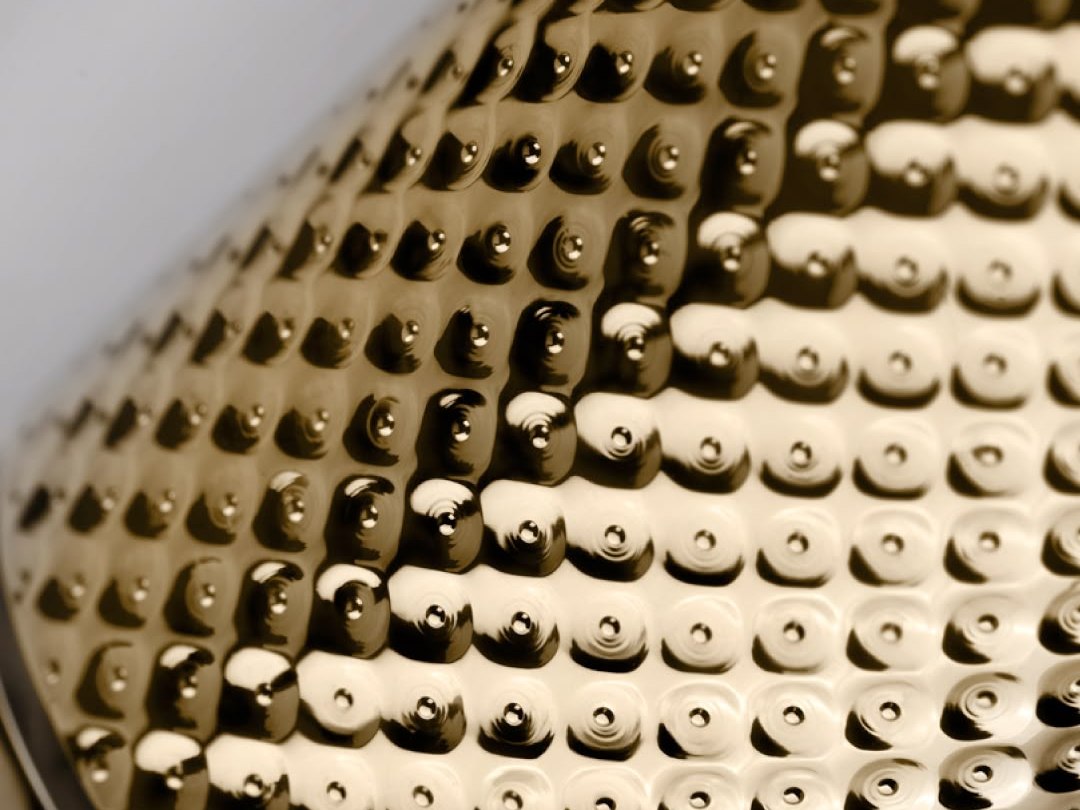
Irregular Rhythm
Variation across the surface prevents the texture from reading as a simple repeated graphic pattern.
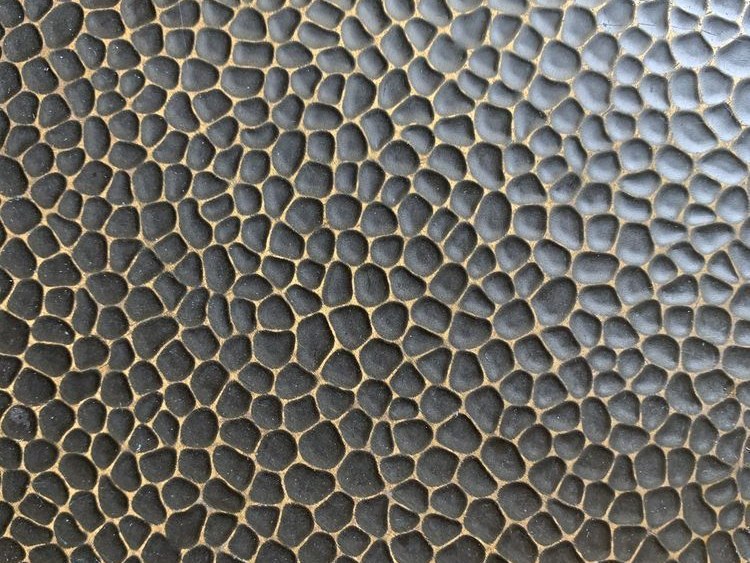
Fragmented Light
The textured plane breaks reflection into smaller highlights and shadows.
Texture, panel scale, color and architectural application can be evaluated together through project-specific sampling. Hammered surfaces are not offered as fixed named variants; the texture direction is confirmed against a physical sample for the project.
Every Relief Creates a Shadow.
Hammered texture becomes most expressive when light meets the surface at different angles. Each raised and recessed area redirects reflection, creating a changing field of brightness and shadow.
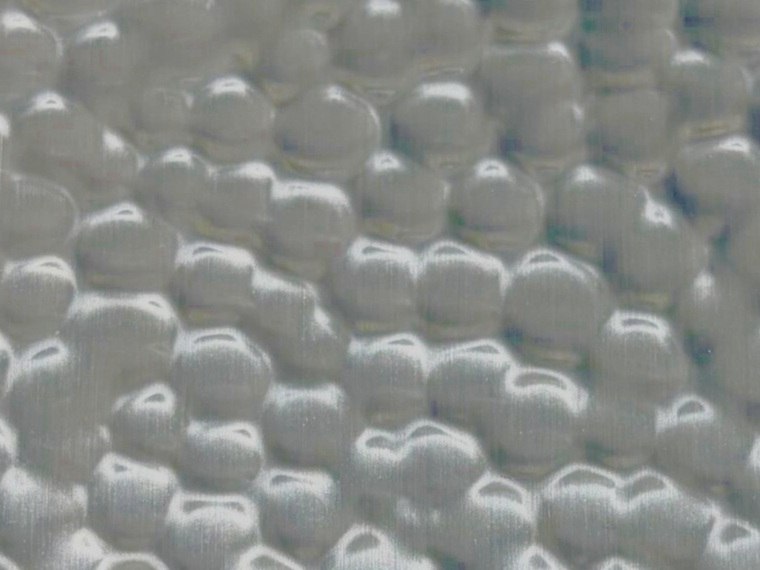
Balanced Texture
Frontal illumination creates a softer and more uniform reading of the surface.
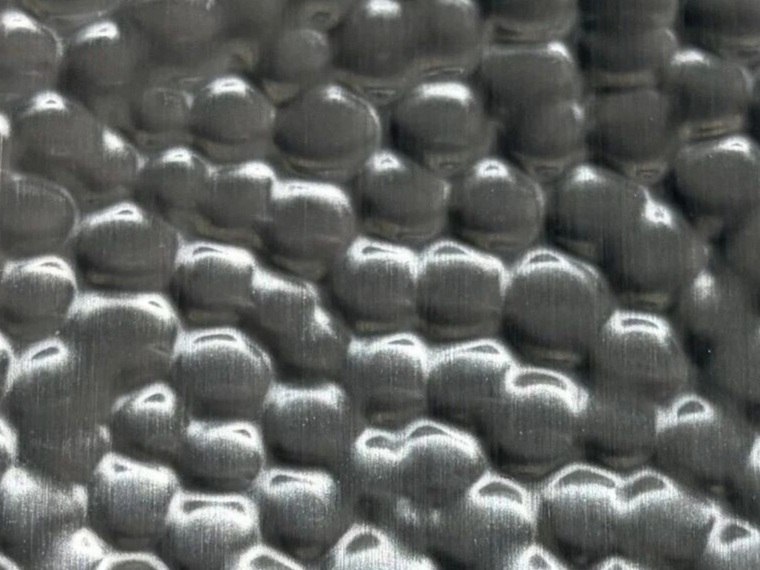
Maximum Relief
Low-angle light emphasizes peaks, recesses and shadow across the texture.
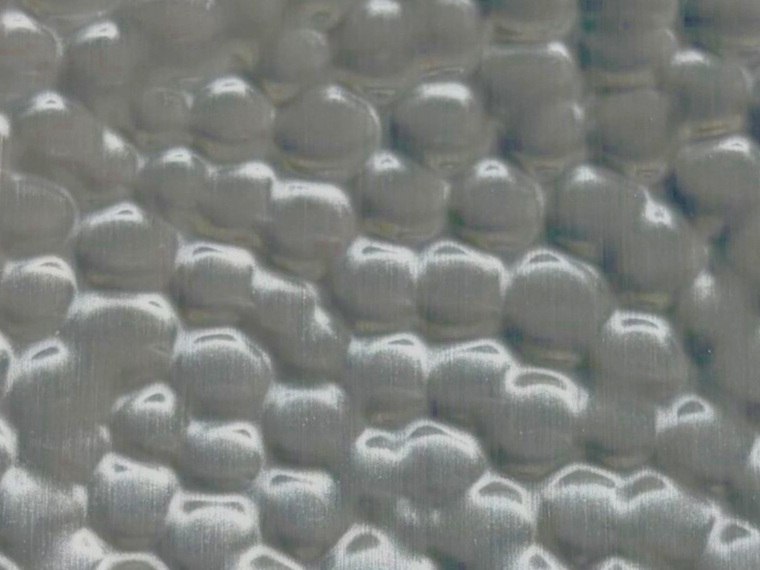
Quiet Movement
Diffused architectural light creates softer variation across the metal.
All three views above are the same hammered surface, seen under different lighting. On site, the texture will read differently again — relief is normally most pronounced under low-angle or grazing architectural light.
Color Gives Texture Another Dimension.
Metallic color works with physical relief to change how highlights, shadows and depth are perceived across the hammered surface.
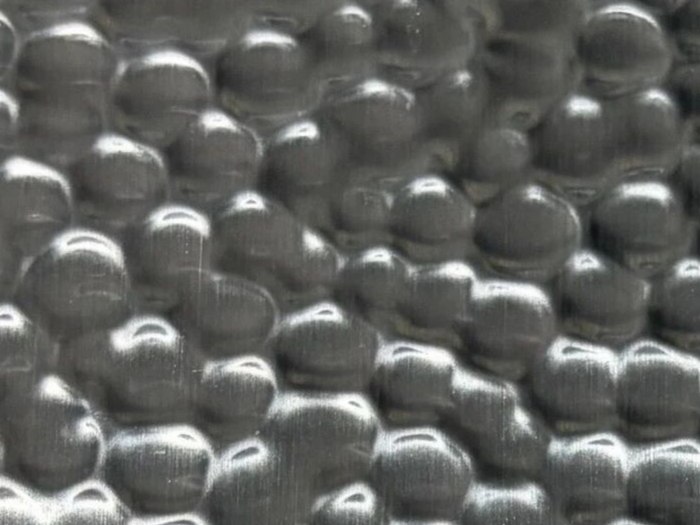
Pure Metallic Texture
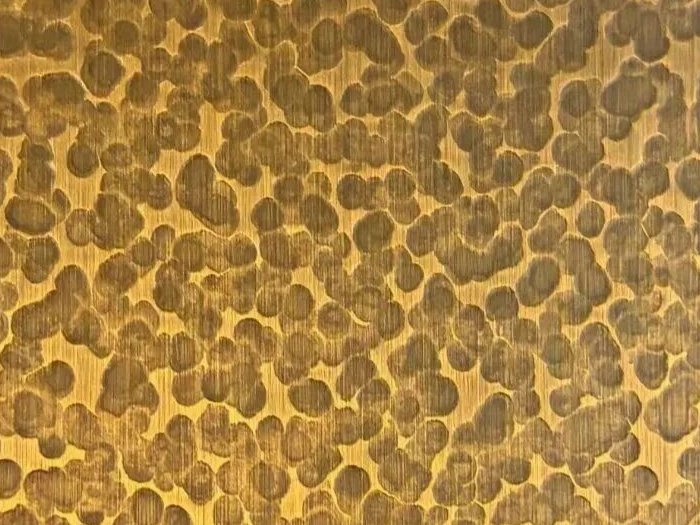
Warm & Refined
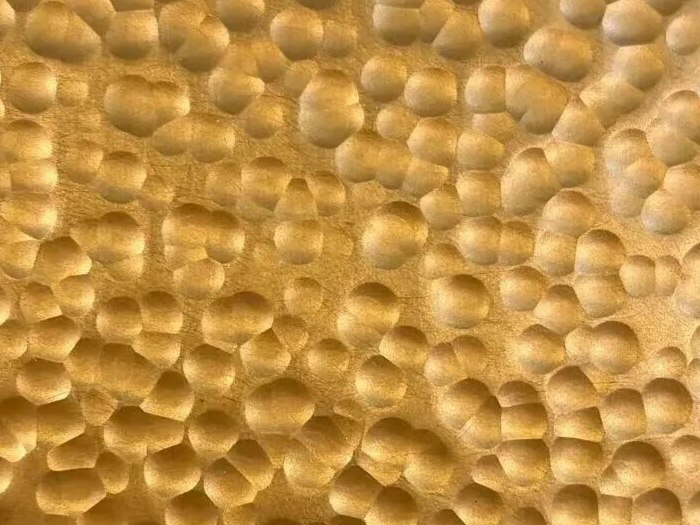
Rich & Luminous
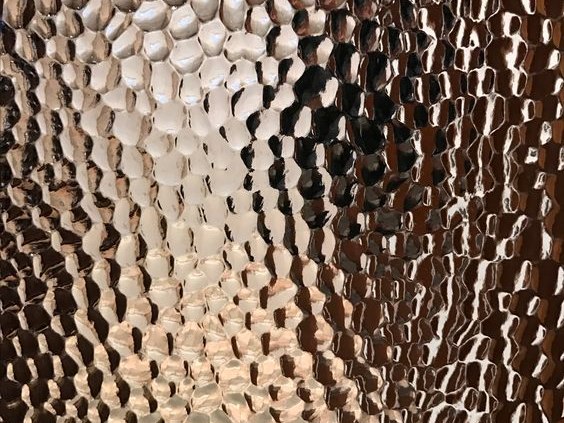
Deep & Architectural
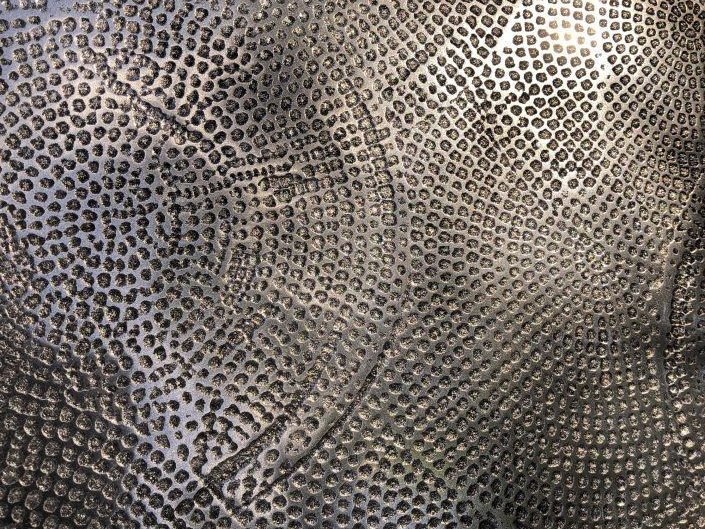
Low-Key & Dramatic
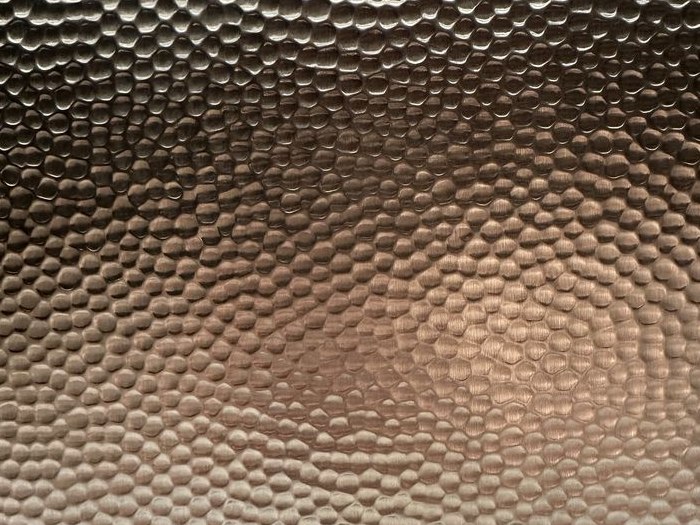
Project-Specific Development
Color directions are shown to indicate visual character, not to define fixed SKUs. Final color, texture and reflective appearance — including whether a specific direction can be produced with physical embossing and PVD together — should be confirmed by approved physical sample.
Texture Changes with Viewing Distance.
The same hammered surface reads differently depending on how far away it is seen from — which is why relief should be reviewed at real viewing distances, not only on a sample plate.
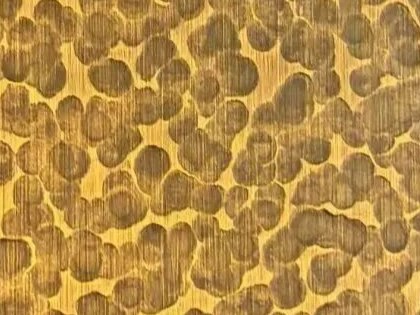
Tactile Detail
At close range, relief, edges and small changes in reflection become visible.
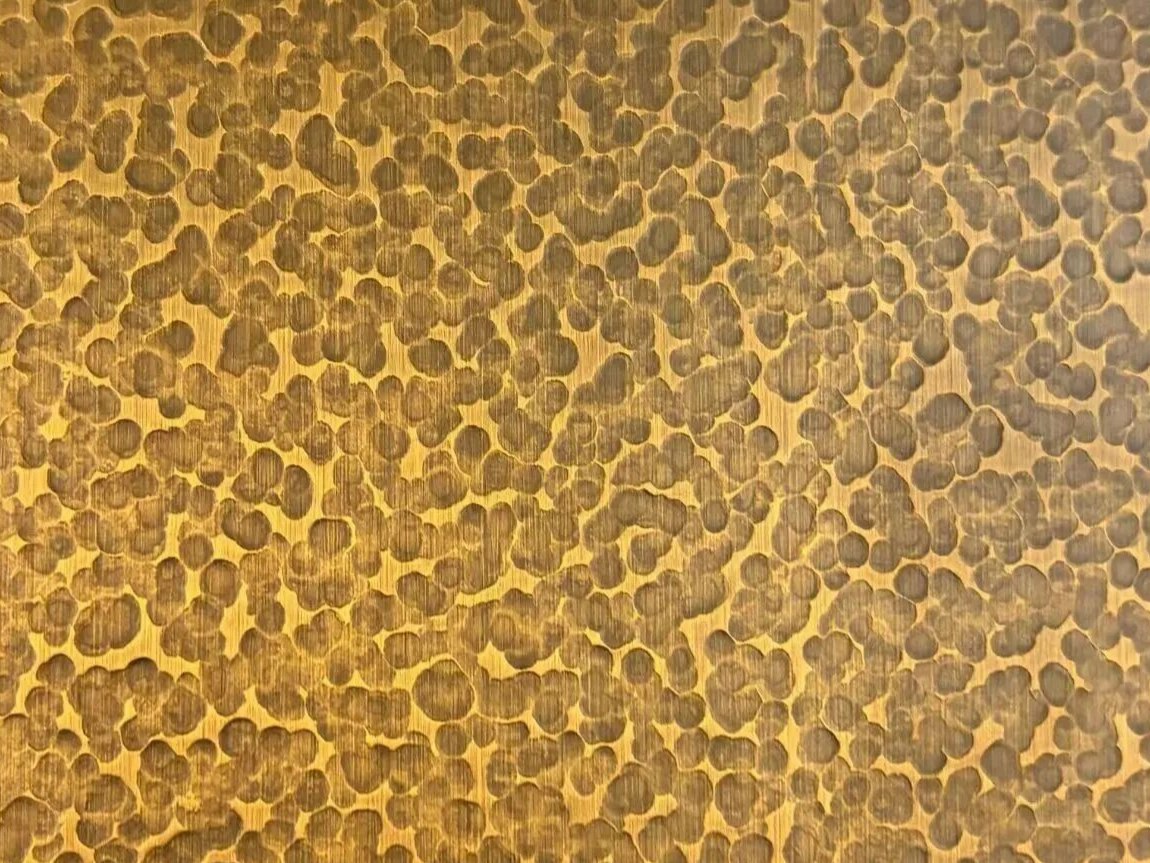
Surface Rhythm
Across a larger panel, individual relief begins to read as an overall material texture.
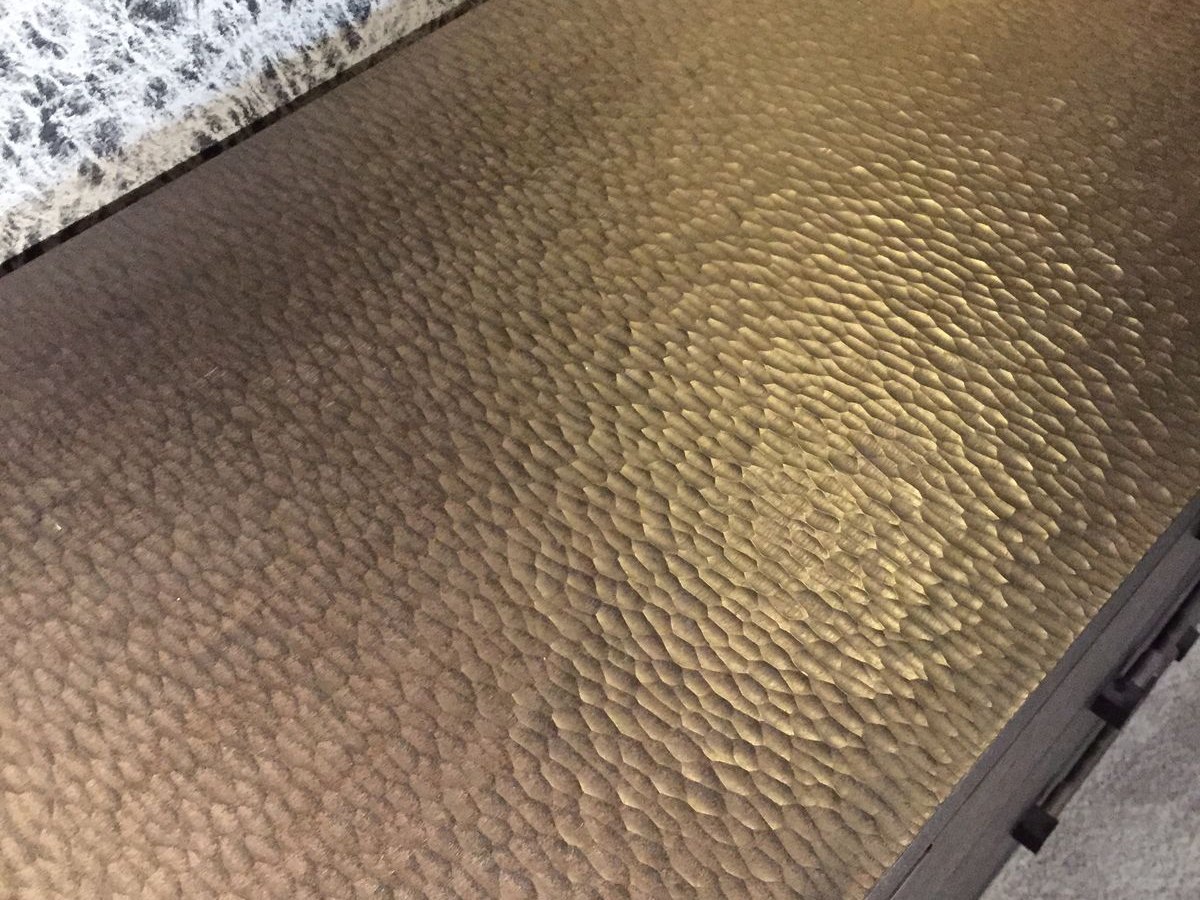
Light & Shadow
From greater viewing distances, perception shifts from individual details toward broader relationships between texture, light and tone.
Texture Becomes Part of the Space.
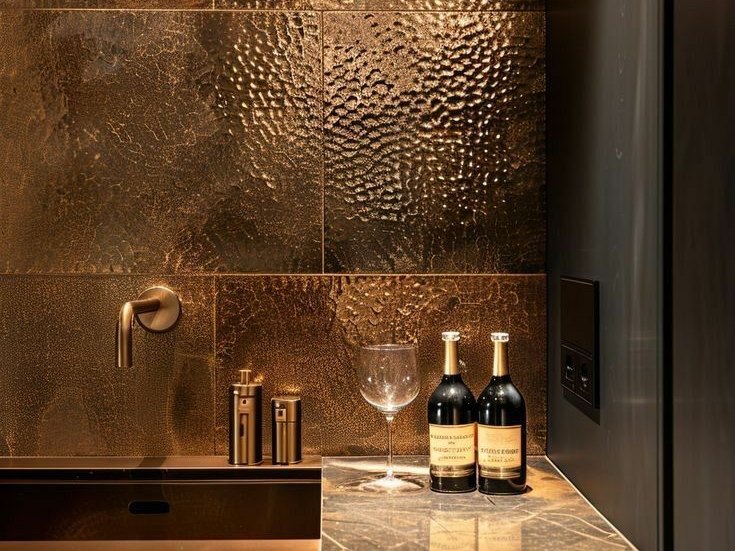
Material Depth
Physical texture transforms the wall from a flat plane into a more tactile architectural surface.
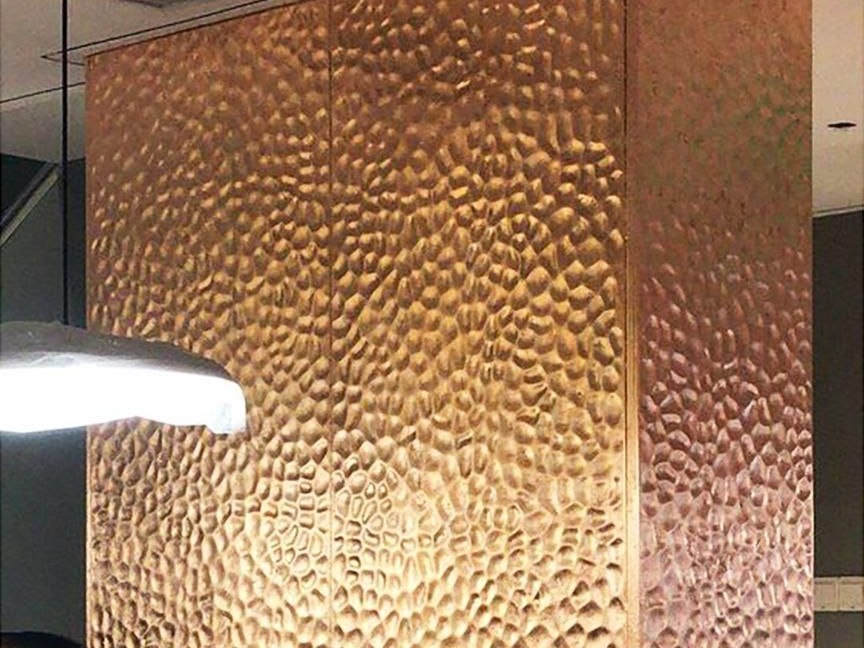
Crafted Presence
Textured metal gives reception counters and feature elements a stronger material identity.
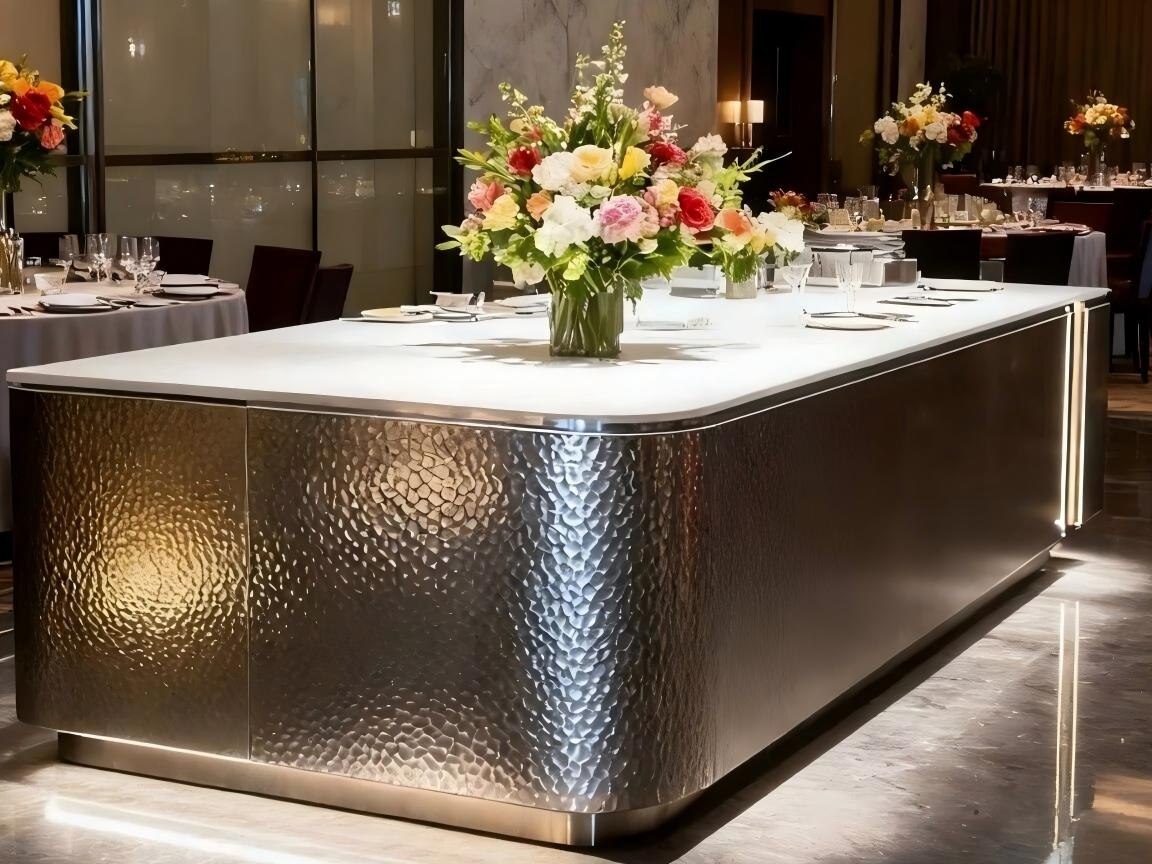
Close-Range Detail
Relief and metallic tone create visual richness in spaces experienced at close distance.
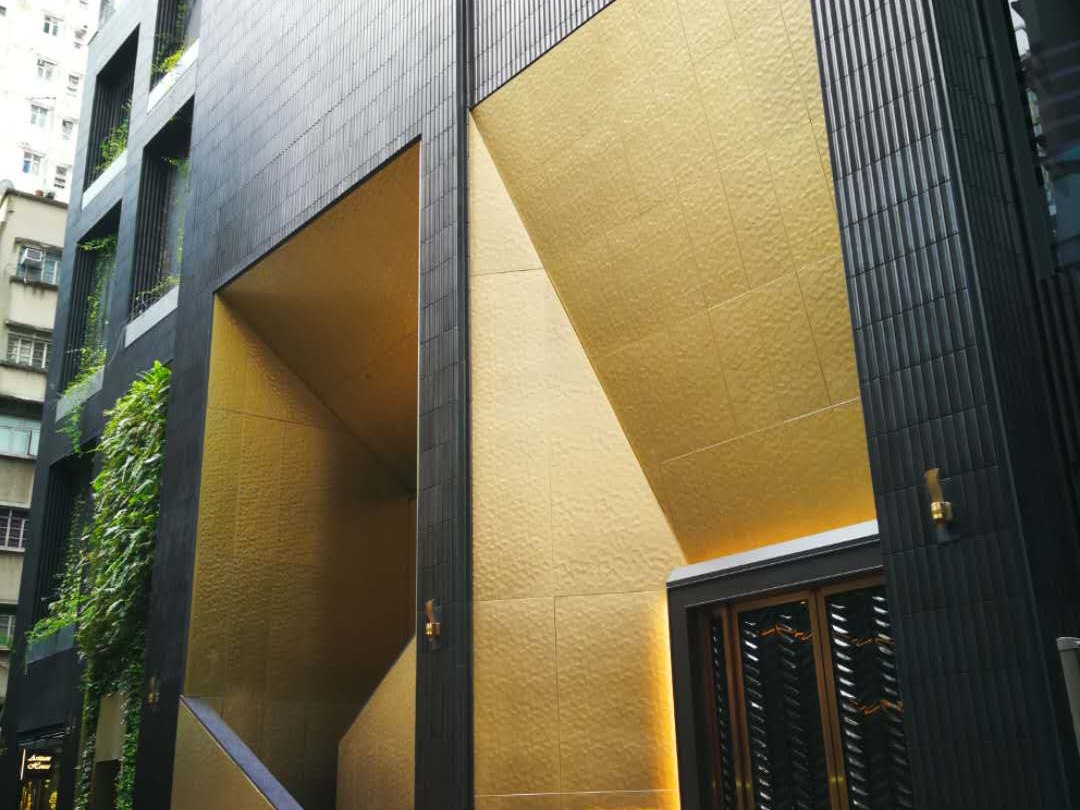
Textured Arrival
Hammered stainless steel can give portals and entrance elements a distinctive architectural character.
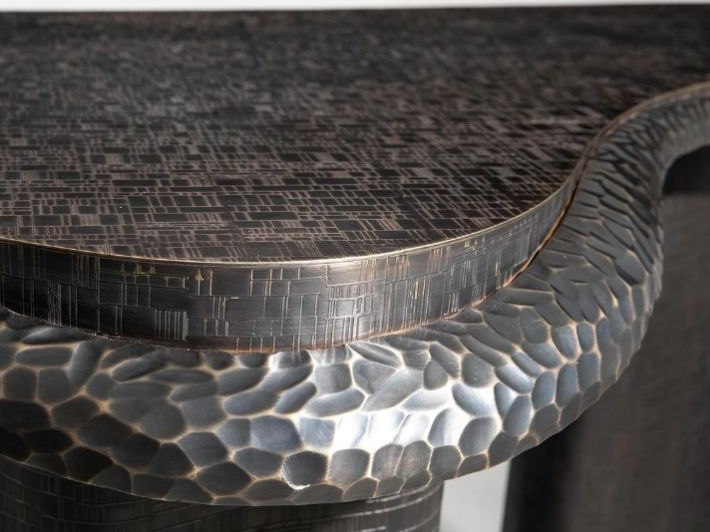
Sculptural Surface
Custom architectural elements can use texture as part of the form rather than as decoration applied afterwards.
Developing a Textured Scheme?
Send the space, the panel scale and the visual character you are aiming for, and we will help identify the appropriate textured surface.
Texture Has to Work Beyond the Flat Sheet.
Hammered stainless steel often becomes part of a fabricated architectural component. Coil, embossing, cutting, bending, visible edges and texture continuity should therefore be considered together.
Panel Planning
Scale, layout, joint position and cut sizes — coordinated around the visible architectural surfaces.
Embossing
The hammered pattern is rolled into the surface by engraved rollers, continuously along the coil.
Bending & Returns
Evaluate how relief behaves near folds, corners and visible returns.
Texture Continuity
Consider adjoining panels as part of one architectural composition.
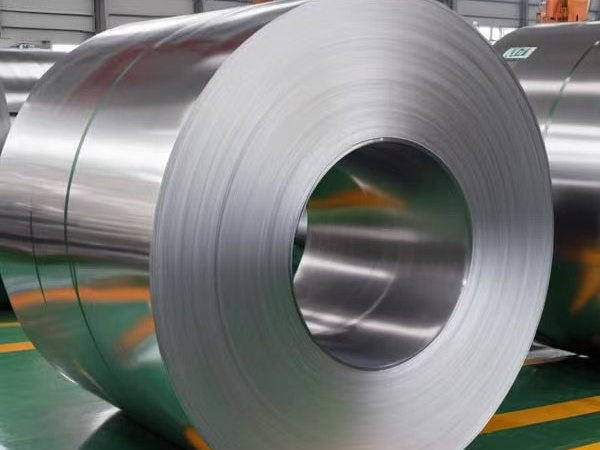
Coil & Sheet
Production starts from a plain coil or flat sheet, before any texture is applied.
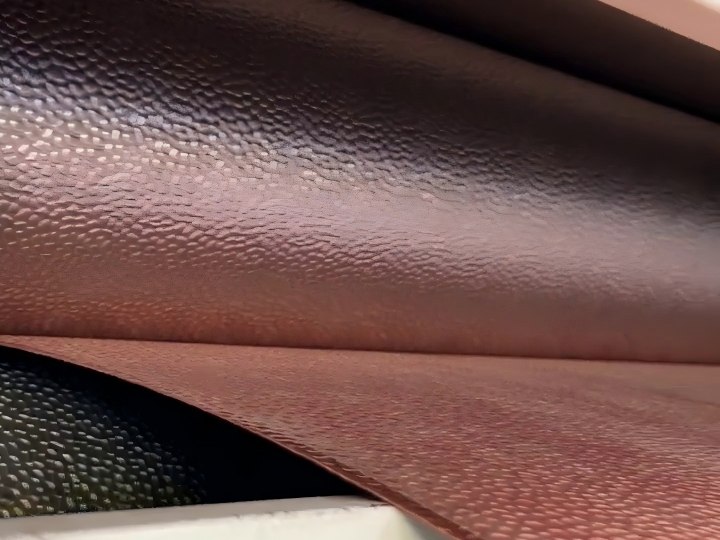
Texture Rolled In
The hammered pattern is rolled into the surface by engraved rollers.
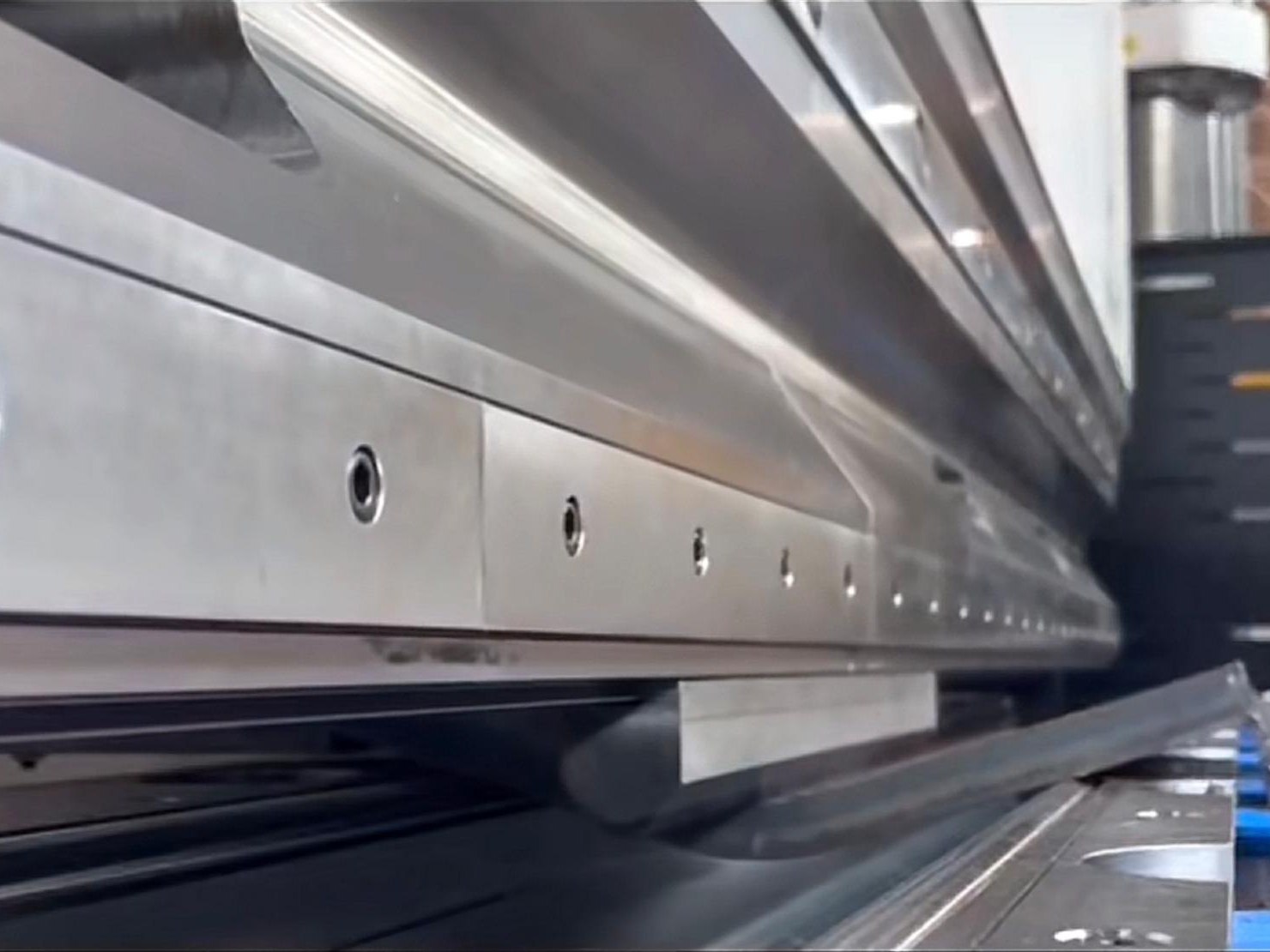
Through Geometry
How the relief behaves through folds, corners and returns.
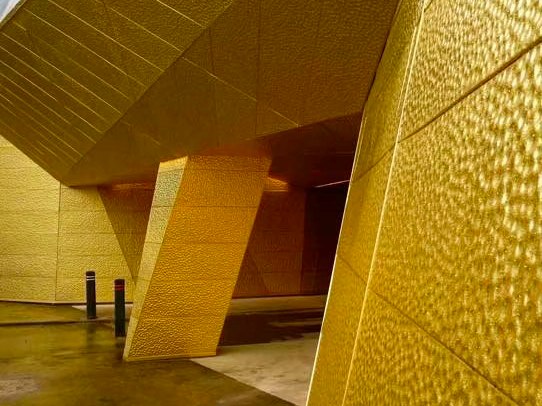
Component
Texture carried continuously into the finished architectural element.
Specification at a Glance.
| Specification | Hammered Stainless Steel |
| Technique | Cold Rolled / Physical Embossing |
| Surface | Hammered Texture |
| Thickness | 0.3–3.0 mm |
| Width | 10–1500 mm |
| Length | 300–6000 mm |
| Recommended Grade | 304 / 316L / 201 |
| Flatness | 10 mm max |
| Thickness Tolerance | ±0.01 mm |
| Width / Length Tolerance | -0 / +0.2 mm |
| Surface Roughness | N/M |
| Color Difference | N/M* |
| Fire Rating | A1 |
| Packing | PVC Film + Waterproof Paper + Wooden Box |
* Color difference is not applicable to natural uncoated hammered stainless steel. For PVD-colored hammered surfaces, color difference follows the confirmed PVD specification and the approved physical sample.
Flatness note: physically embossed surfaces are specified at 10 mm max flatness. This is a wider tolerance than a mechanical finish, and reflects the dimensional relief of the texture itself.
Guidance by Environment.
304 — Interior Architectural Applications
Commonly specified for interior walls, lobbies and bespoke architectural elements.
316L — More Demanding Environments
Consider where the project environment requires higher corrosion resistance.
201 — Project-Specific
Available for appropriate applications subject to project evaluation.
For PVD-colored hammered surfaces, final color and visual appearance should follow the confirmed PVD specification and approved physical sample.
See the Texture Before You Specify.
Hammered stainless steel changes with lighting, viewing distance and color. Physical samples help evaluate relief, reflection and material character before the finish is applied at architectural scale.
Select
Texture, color and application.
Sample
Evaluate relief and light.
Review
Consider viewing distance.
Approve
Establish production reference.
48h rapid sampling for standard directions · A4 project sample in 3 days · samples are supplied for physical touch and light evaluation, not for colour matching from a screen.
Hammered Stainless Steel FAQs
Hammered stainless steel is a physically textured stainless steel surface with raised and recessed areas that create changing highlights and shadows. It is used where a more tactile and dimensional metallic expression is required.
Water ripple stainless steel typically creates broader, flowing reflections across the surface, while hammered stainless steel produces more localized texture with fragmented highlights and shadows. The choice depends on the intended visual character, viewing distance and architectural application. Water Ripple Stainless Steel →
Hammered stainless steel can be considered for feature walls, reception areas, elevator lobbies, entrances and bespoke interior elements where physical texture forms part of the architectural expression. Interior Systems →
Hammered surfaces can be developed with selected PVD color directions, subject to process compatibility and physical sample approval. Color and texture should be evaluated together because the relief changes how metallic tone, highlights and shadows are perceived. PVD Color Coating →
Current material options include 304, 316L and 201 stainless steel. 304 is commonly considered for interior architectural applications, while 316L may be selected where the project environment requires greater corrosion resistance. Material grade should be confirmed according to the application and environment.
Hammered stainless steel can be developed into fabricated architectural components. However, bending, visible returns, texture position and edge details should be evaluated according to material thickness, geometry and the required finished appearance.
Yes. Physical sampling is recommended because texture, relief, color and reflection can appear different under changing lighting conditions and viewing distances. An approved sample can then serve as the visual reference for production. Request a Sample →
Explore Related Surfaces
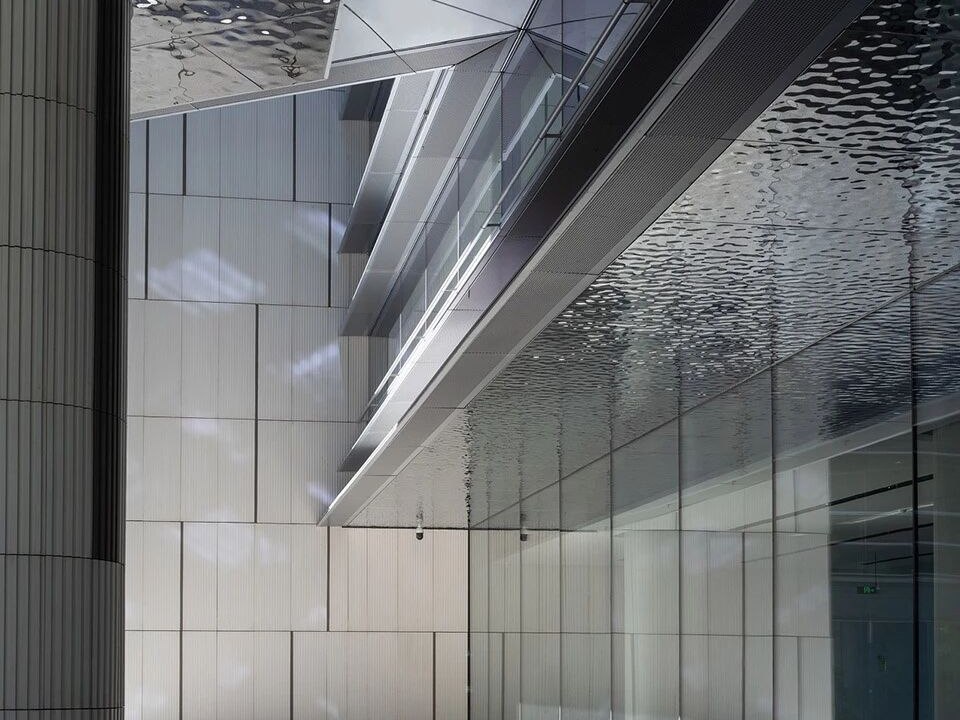
Fluid Reflection
Broader dimensional texture shaped around flowing light.
Explore Water Ripple →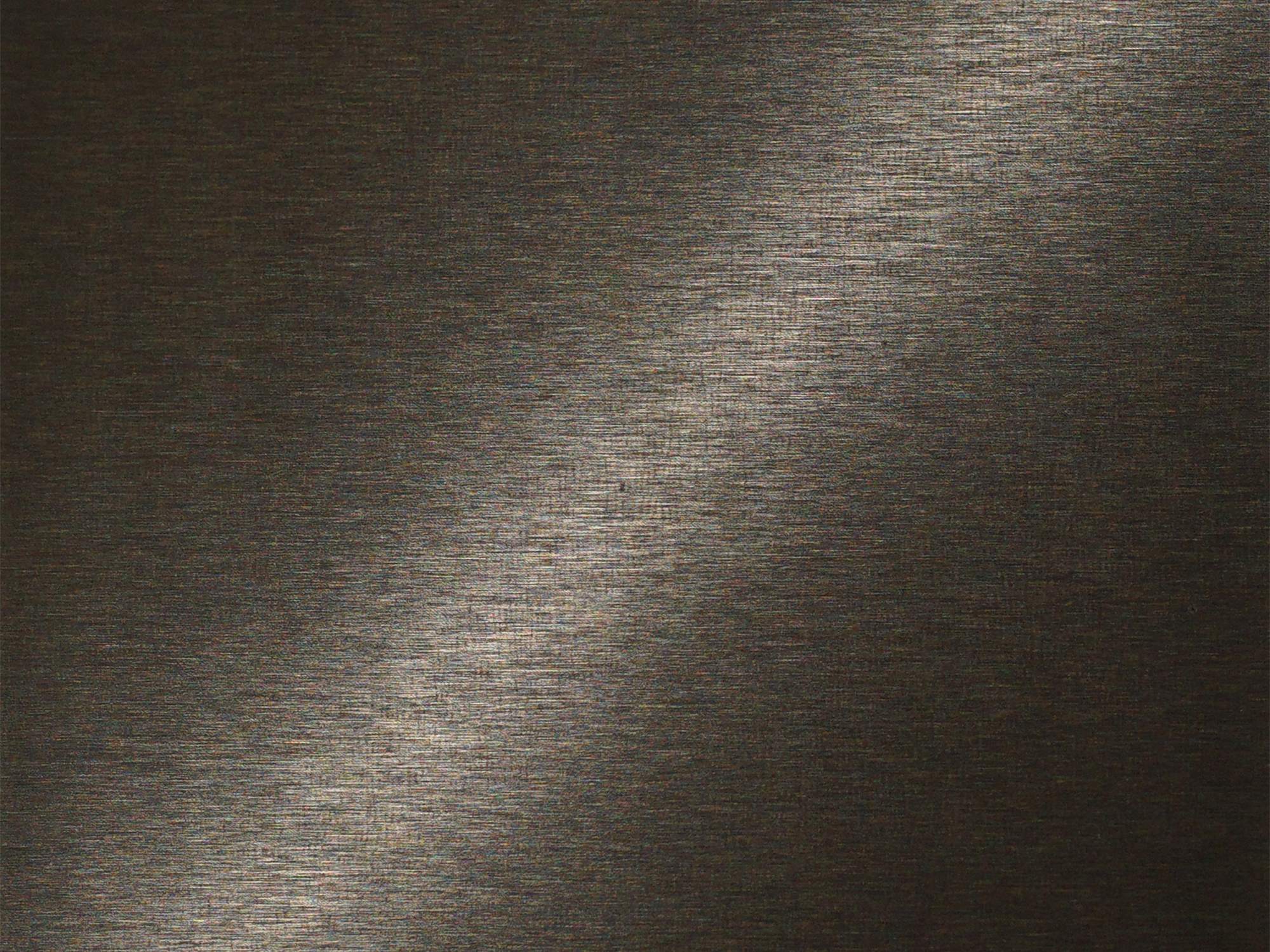
Metallic Color
Introduce controlled metallic tone across different stainless steel surfaces.
Explore PVD Color →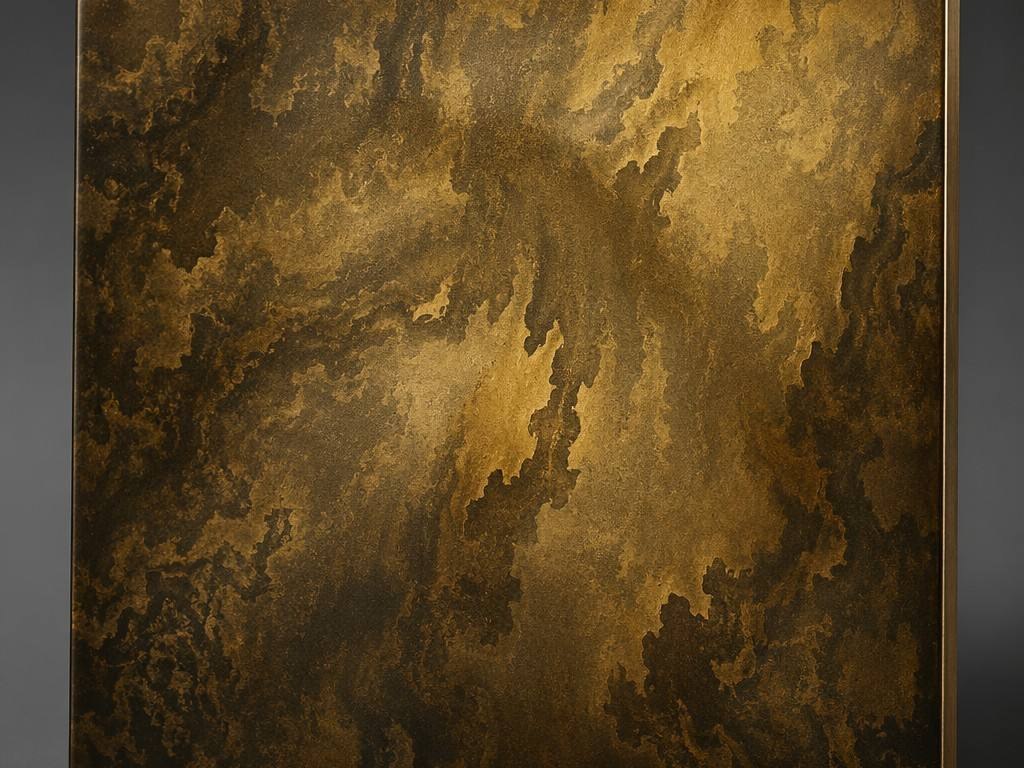
Tonal Character
Add layered variation and deeper material character.
Explore Antique & Patina →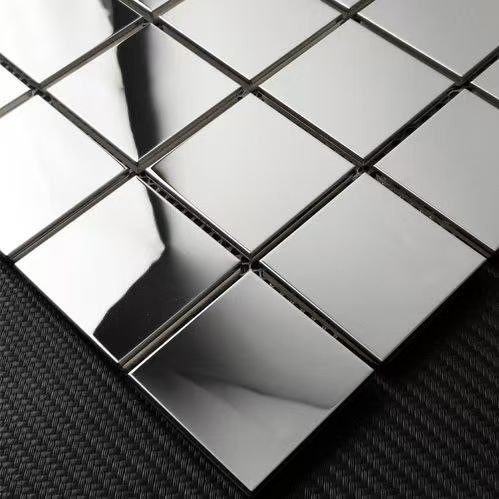
Maximum Reflection
Transform the surface through high-polished reflection.
Explore Mirror Polished →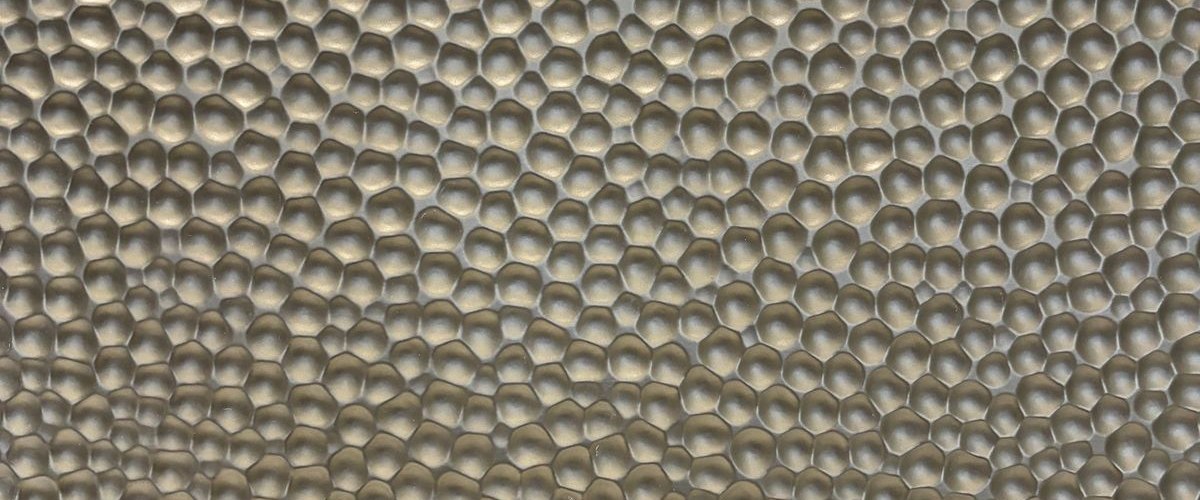
Give the Surface Physical Depth.
Tell us the application, panel size, material grade, color direction and visual character you are developing. Our team can help evaluate the appropriate hammered surface and prepare a physical sample.
Request a Sample Send Project Requirements
Natural · Champagne · Gold · Bronze · Dark Titanium · Custom
Texture you can see. Depth you can feel.