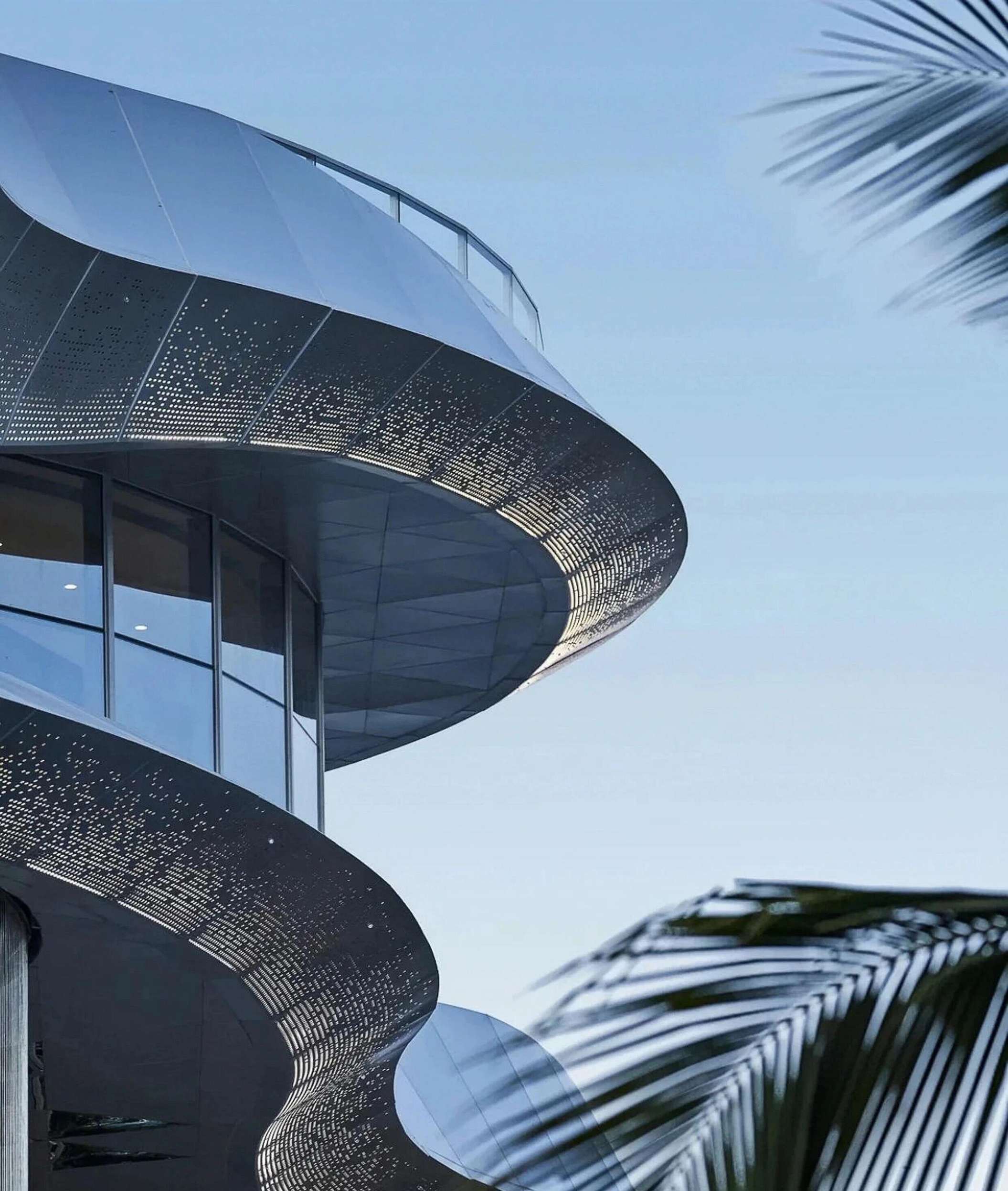
Perforated Stainless Steel That Shapes Light, Space and Architecture.
Custom perforated stainless steel panels designed to control light, privacy, airflow and visual rhythm across architectural facades and interior spaces.
From standard perforation patterns to project-specific artistic designs, MetalMagus combines stainless steel material preparation, perforation, surface finishing and fabrication into one connected manufacturing process.
What Is Perforated Stainless Steel?
Perforated stainless steel is created by forming a controlled pattern of openings across a stainless steel sheet. The size, shape, spacing and arrangement of the openings can be selected according to the intended visual and functional requirements.
For architectural applications, perforation can do more than create a decorative pattern. It can influence transparency, privacy, airflow, daylight and the visual weight of a building envelope.
A Metal Surface Defined by Pattern.
Unlike a solid stainless steel panel, a perforated panel introduces rhythm and visual depth through its openings.
More Than Decoration.
The right perforation pattern can help balance visibility, privacy, light transmission and airflow.
Designed for Architecture.
Perforated stainless steel can be fabricated into facade panels, screens, partitions, ceilings, balustrade elements and other architectural components.
Why Choose Perforated Stainless Steel?
Perforation creates an architectural surface that can perform visually and functionally at the same time.
Control Light
Openings allow daylight to pass through the panel and create changing patterns of light and shadow.
Balance Privacy & Visibility
The density and pattern of perforation can influence how much of the space behind the panel can be seen.
Create Visual Rhythm
Repeated openings create a controlled geometric rhythm across large architectural surfaces.
Support Airflow
Open areas can allow air to move through screens, enclosures and selected architectural applications.
Reduce Visual Mass
Perforation can make a large metal surface appear lighter and more transparent than a solid panel.
Build a Distinctive Facade
Custom patterns can turn a functional metal envelope into a recognizable architectural element.
Where Perforated Stainless Steel Becomes Part of the Architecture.
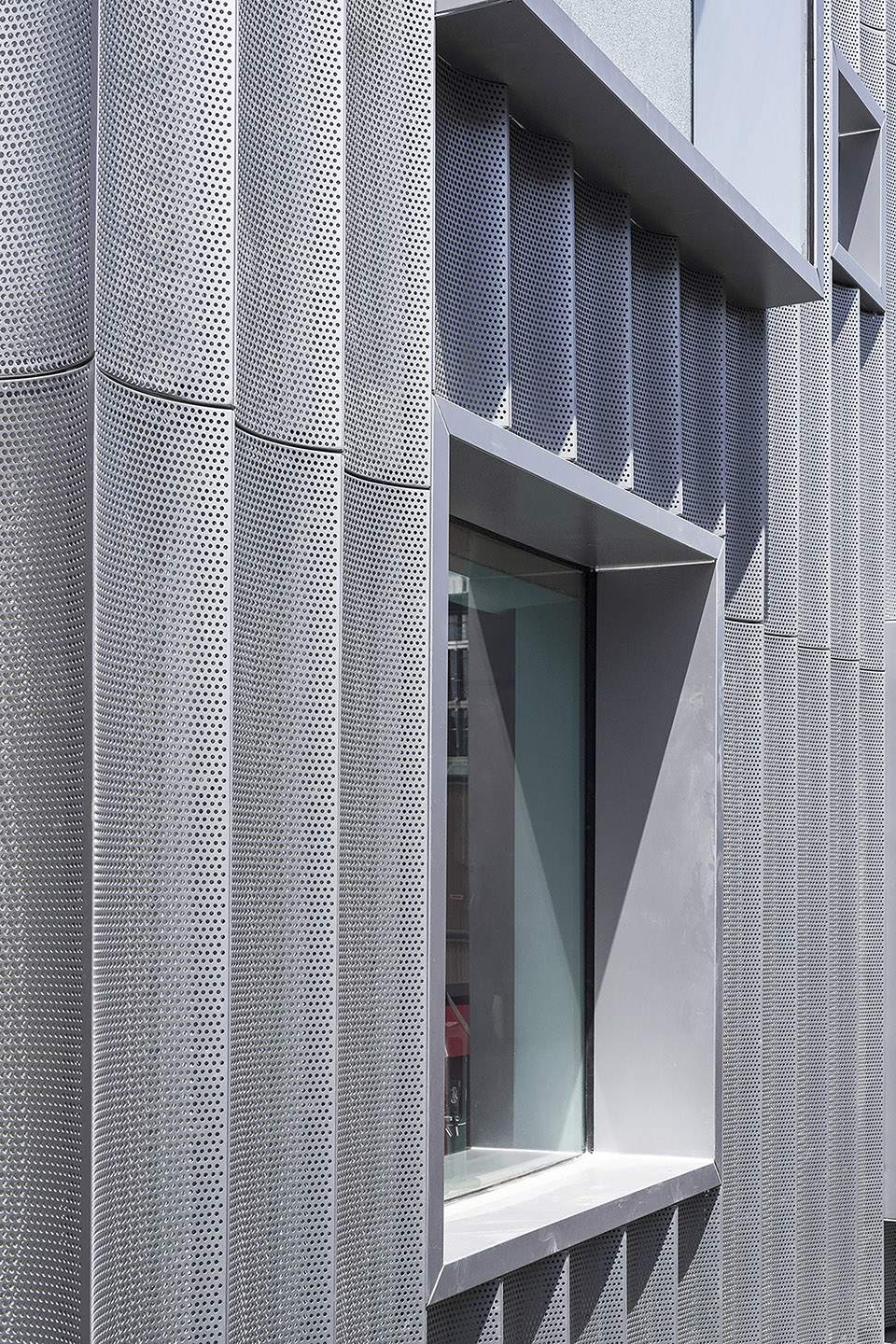
Architectural Facades
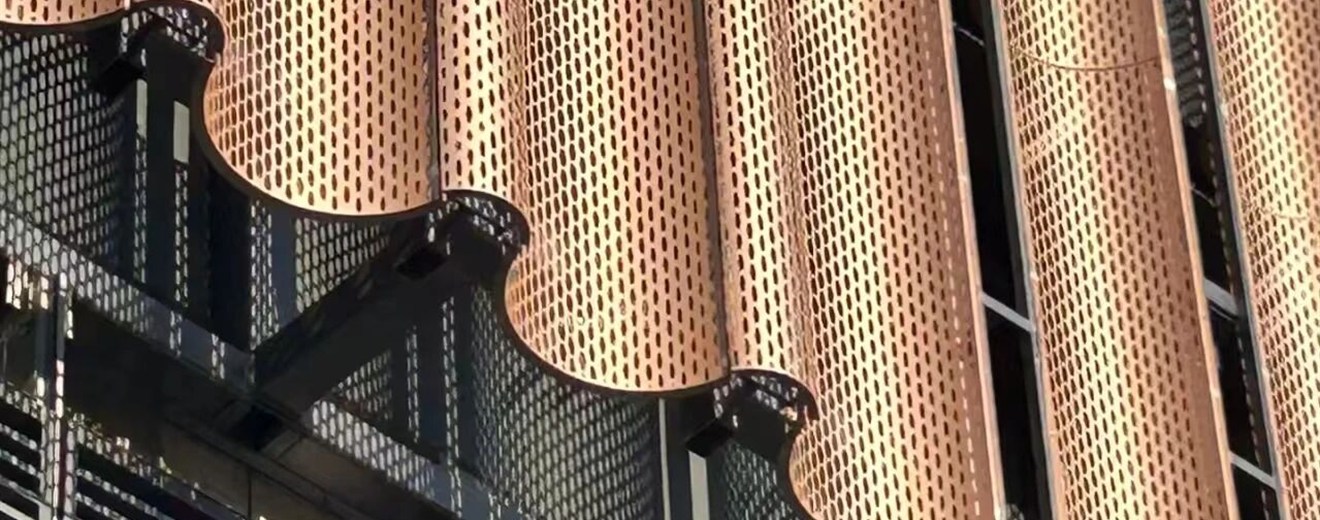
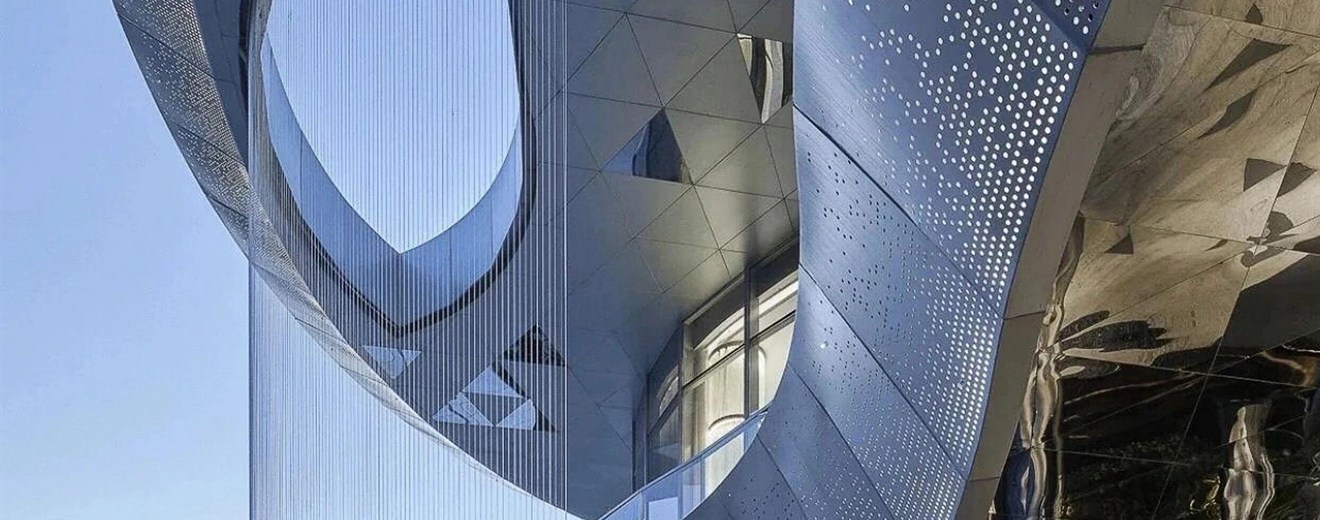
Create a second skin around a building, adding depth while controlling views, light and visual openness.
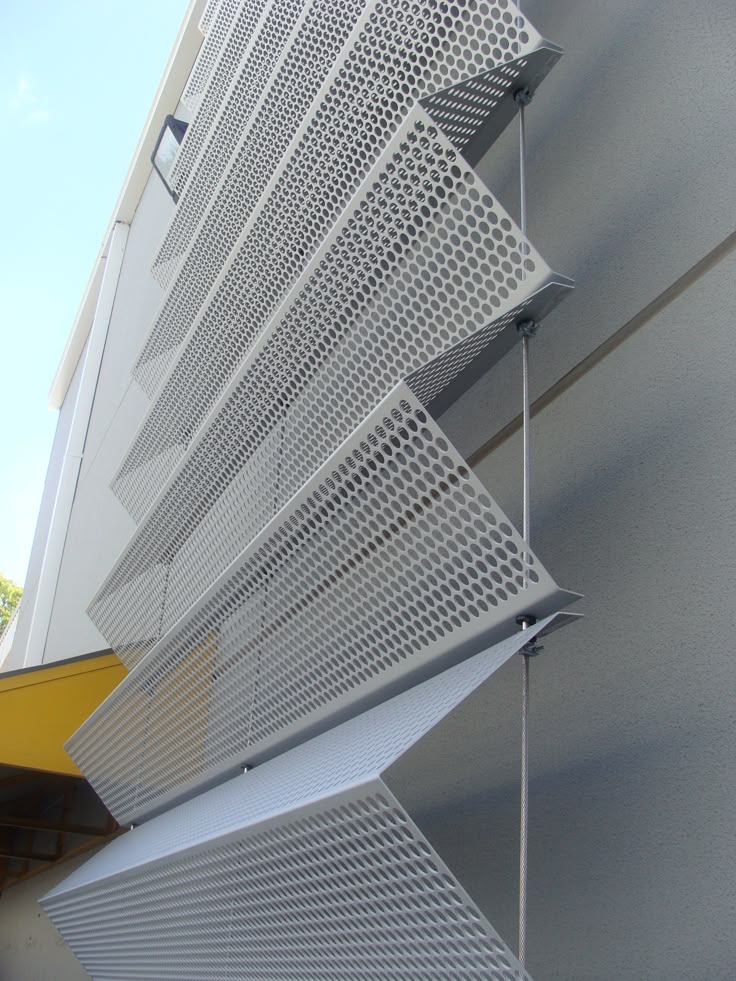
Sun-Shading Screens
Perforation patterns help create external shading elements while maintaining a sense of openness.
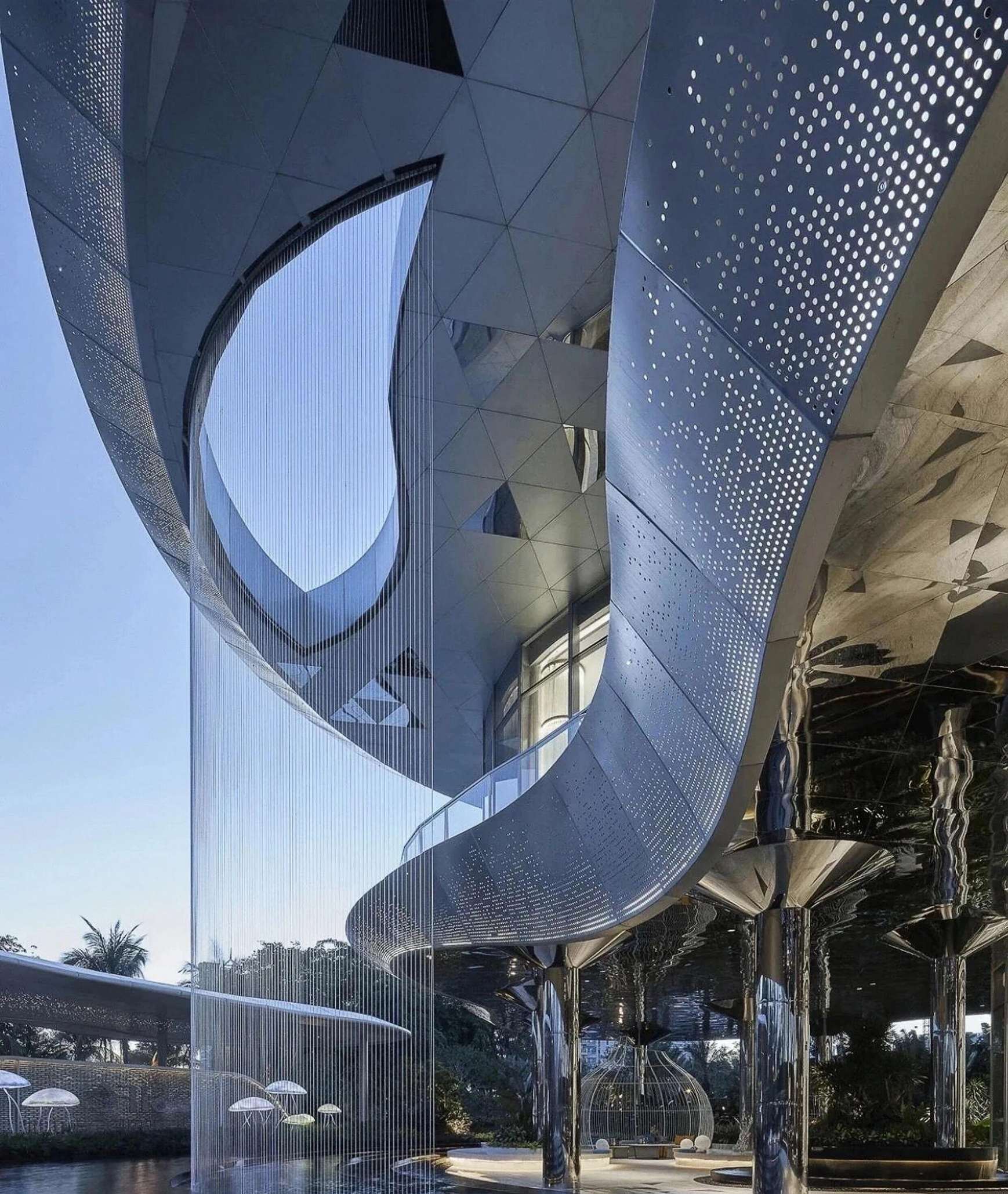
Entrance & Canopy Areas
Perforated panels around entrances and canopies create a recognizable architectural threshold.
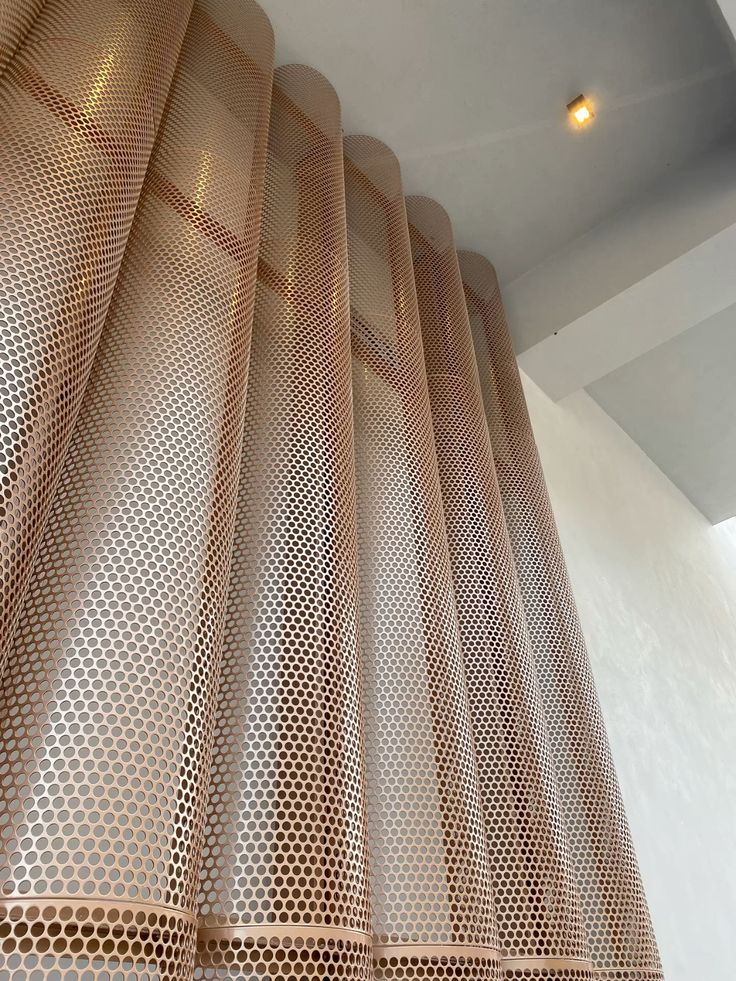
Interior Partitions
Create separation without completely closing a space, suitable for decorative screens and partitions.
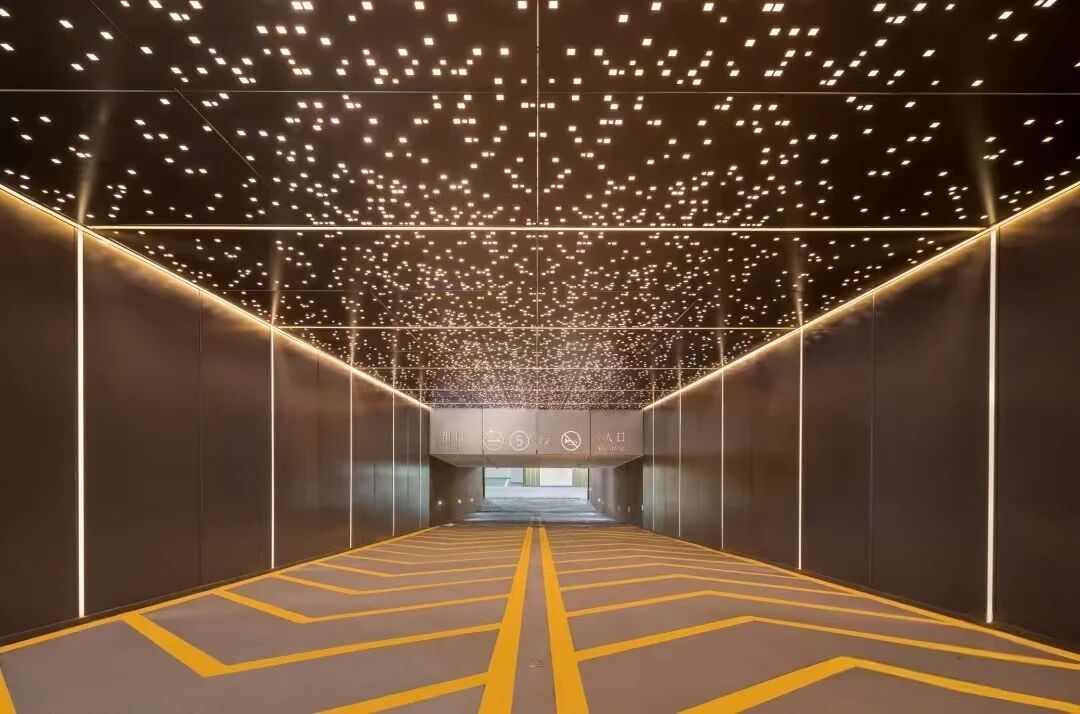
Ceiling Applications
Repeated perforation creates visual rhythm across suspended ceilings and decorative overhead elements.
Retail & Hospitality
Custom patterns reinforce brand identity and create distinctive spatial details in hotels, restaurants and retail.
One Sheet. Endless Pattern Possibilities.
The pattern is where perforated stainless steel becomes architectural. From simple geometric openings to custom artistic compositions, the perforation design determines how the panel looks, filters light and interacts with the surrounding space.
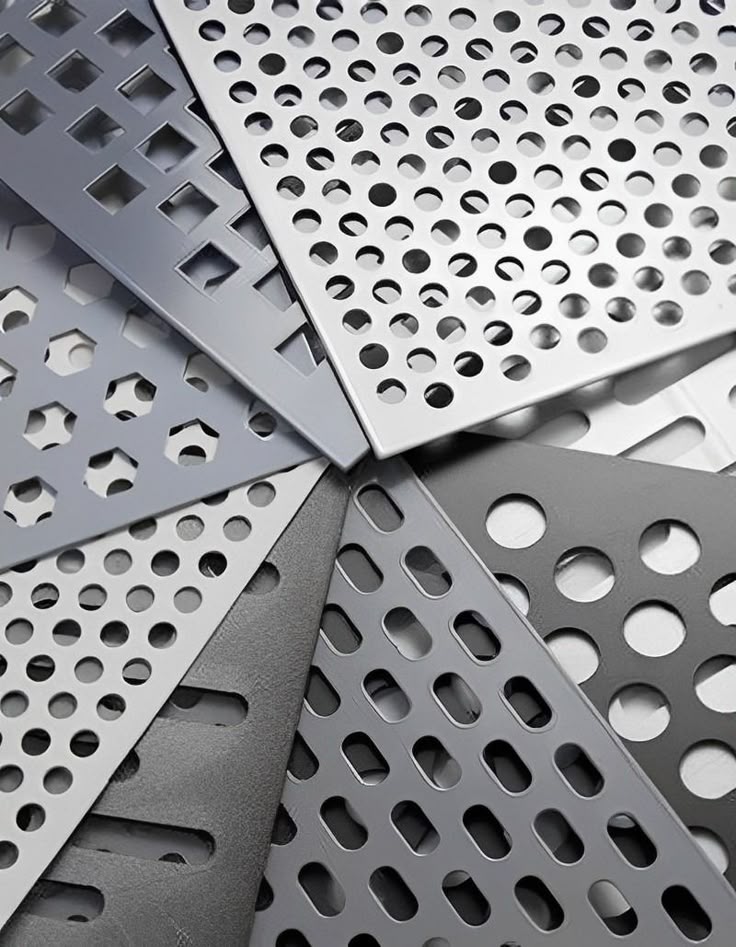
Round Holes
A classic perforation pattern with a clean and regular visual rhythm.
Square Holes
A stronger geometric language for modern architectural surfaces.
Slotted Holes
Elongated openings can introduce direction and movement across the panel.
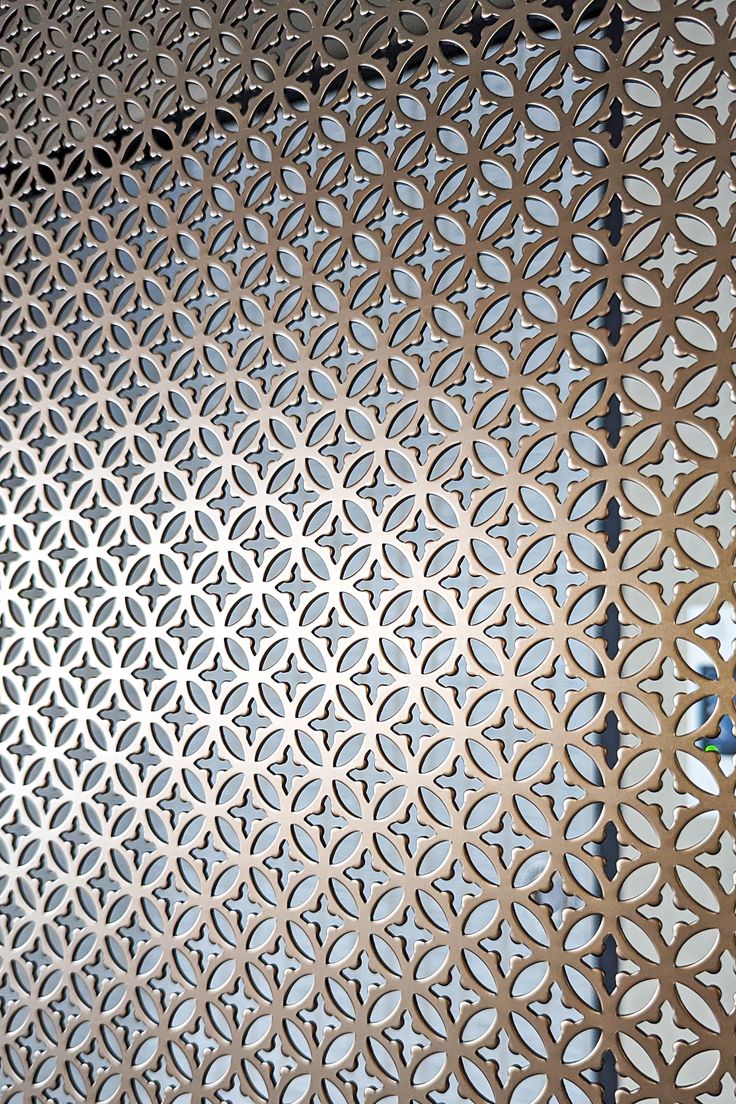
Decorative Geometric Patterns
Custom combinations of shapes and spacing create distinctive architectural compositions.
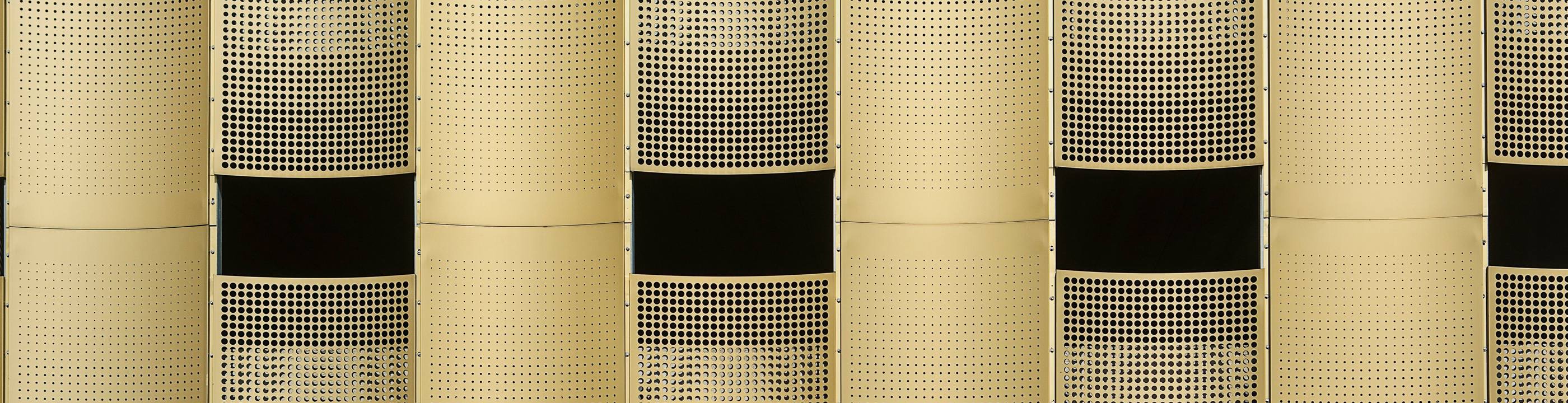
Gradient Perforation
Changing hole density across a panel creates gradual transitions between transparency and privacy.
Custom Artistic Patterns
Project-specific artwork, graphics or geometric compositions translated into perforation patterns.
The Pattern Changes When the Light Changes.
A perforated panel is never seen in isolation. Its appearance changes with sunlight, artificial lighting, viewing distance and the space behind it.
Front Light
The perforation pattern remains clearly visible as a geometric surface.
Back Light
Light passing through the openings creates a stronger contrast between metal and void.
Natural Daylight
Changing daylight creates dynamic shadow patterns across the surrounding architecture.
Night Lighting
Backlighting can transform the perforated surface into a luminous architectural screen.
Perforation Density & Visual Privacy
Perforation density influences how transparent or visually enclosed a panel appears. By adjusting opening size, spacing and pattern density, the same material can create very different spatial experiences.
Open Pattern
More visual transparency and a stronger connection between spaces.
Medium Density
A balance between openness and privacy.
Dense Pattern
A stronger visual screen with reduced visibility through the panel.
Gradient Density
A gradual transition from open to private areas within one design.
The Pattern Is Only Half the Design.
The perforation defines the geometry. The surface finish defines how the metal interacts with light. Combining both allows the same pattern to create very different architectural expressions.
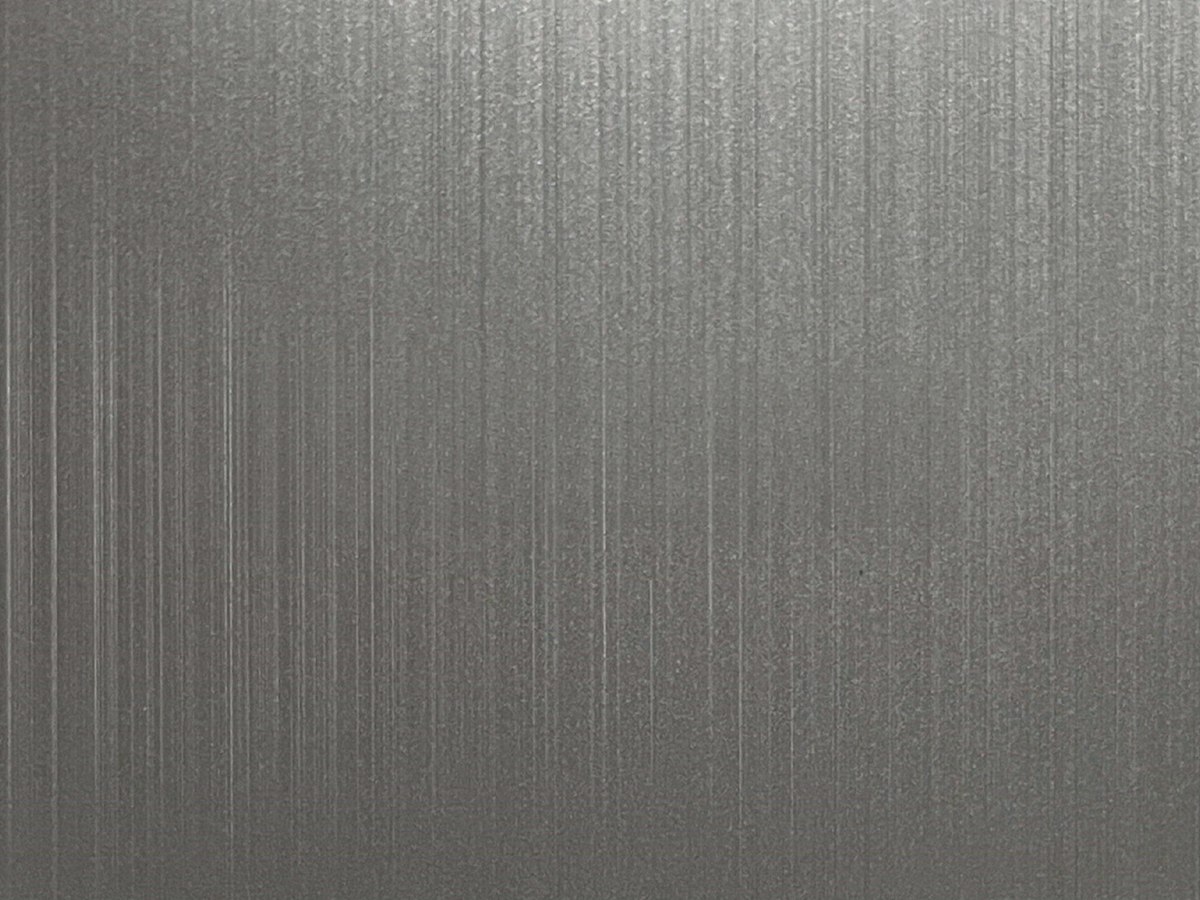
Hairline
Controlled linear texture with a refined architectural appearance.
Mirror
Highly reflective surface for stronger visual impact.
PVD Color
Colored stainless steel for a more distinctive architectural identity.
Sandblasted
A softer, more diffuse surface expression.
Custom Surface Treatment
Other surface processes can be considered according to the project design and manufacturing requirements.

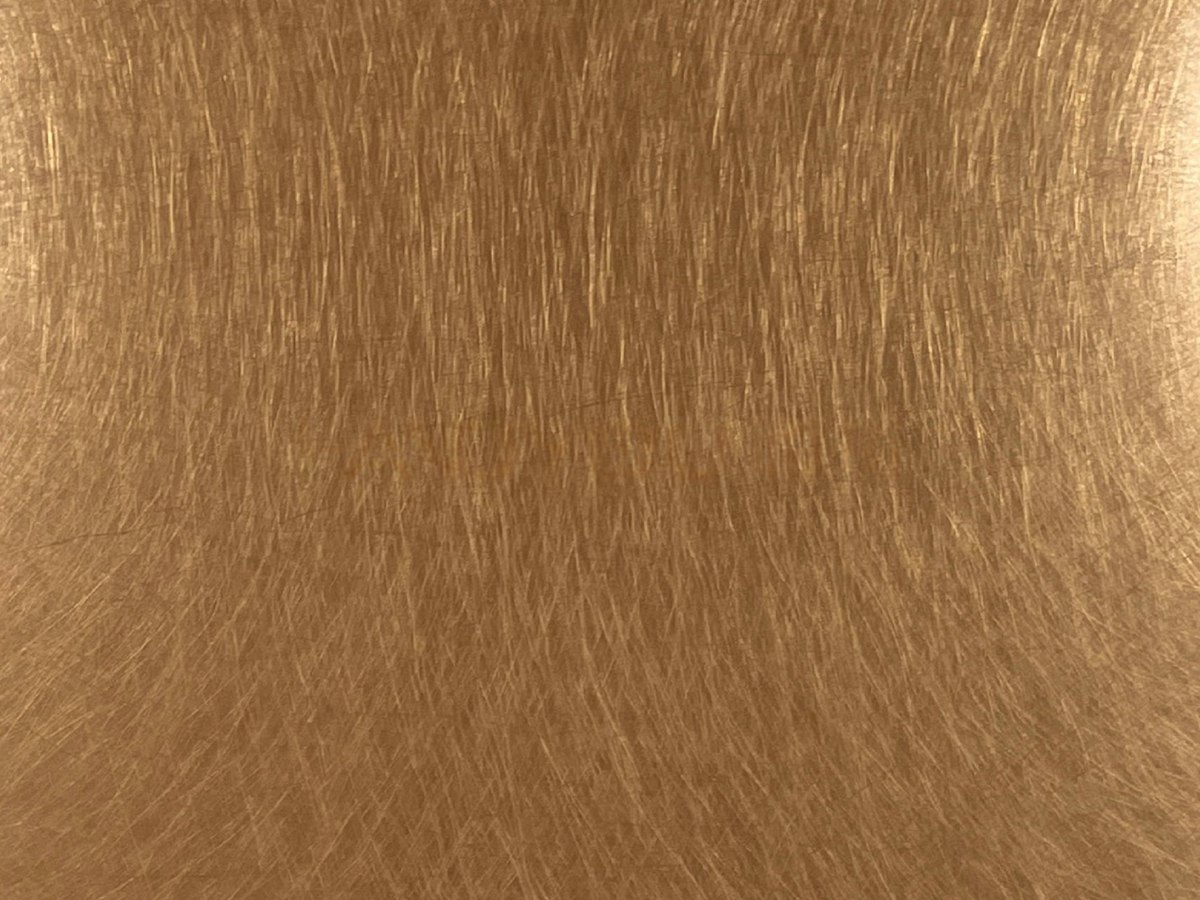
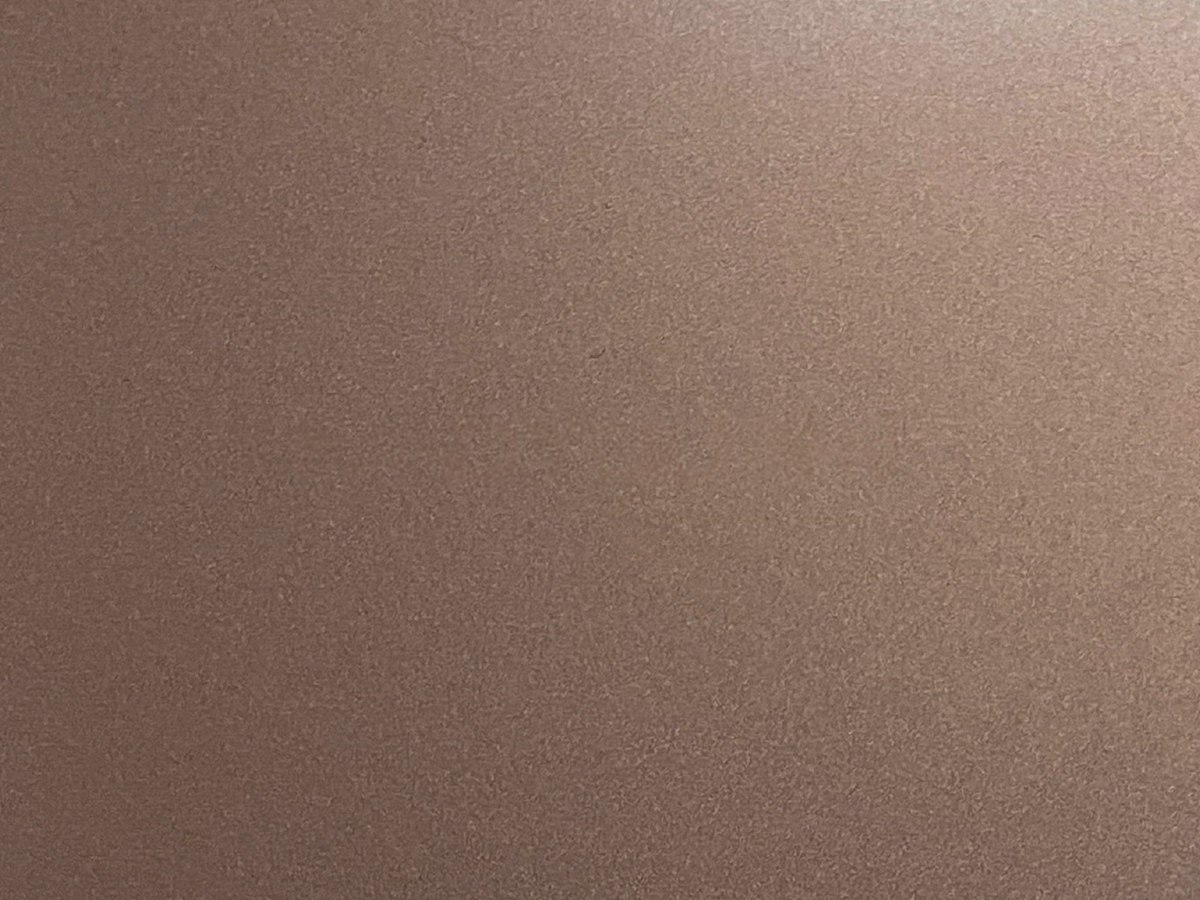
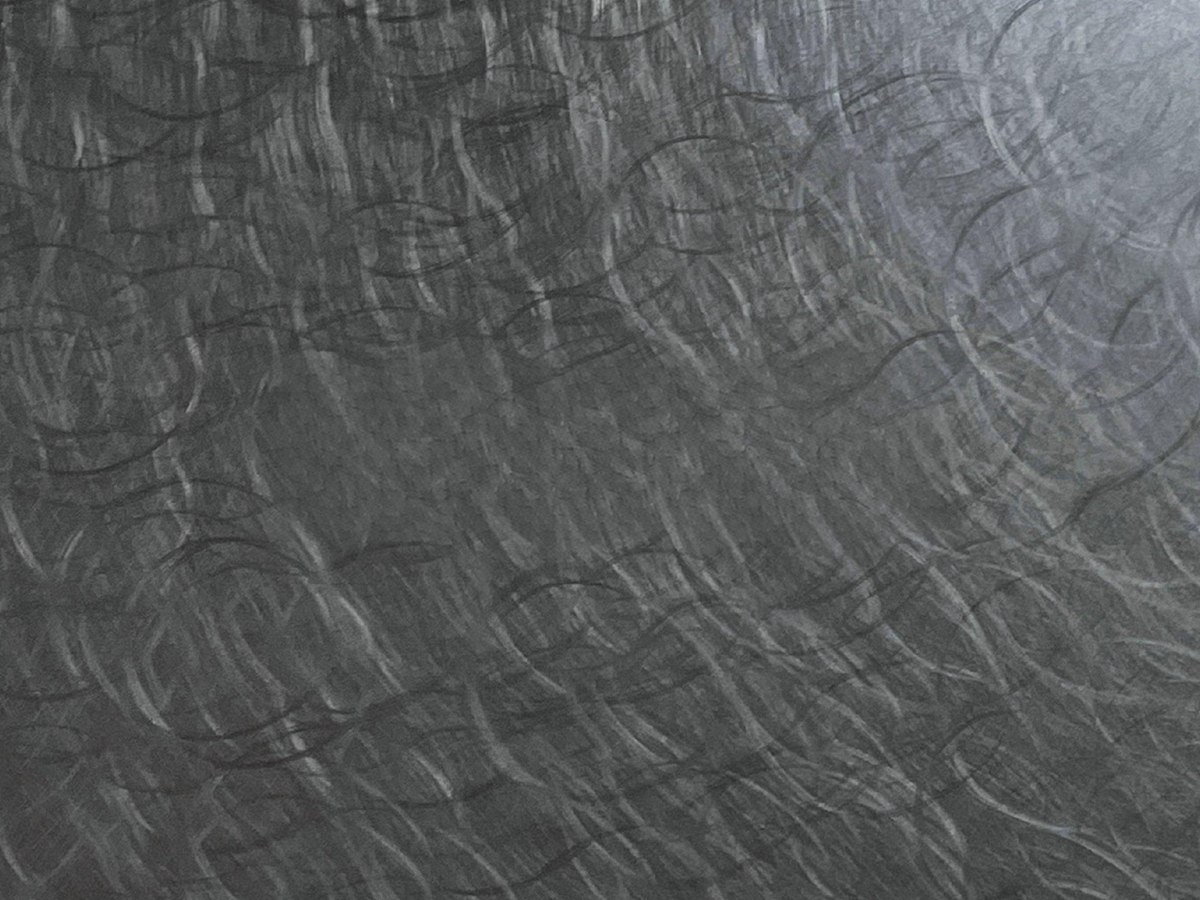
Swipe, or tap a thumbnail to move through the five surfaces
Our Standard Perforated Panel Spec
Panel specification is set by material, thickness, hole pattern and open area — coastal projects should use 316L, with panel size and flatness following the structure.
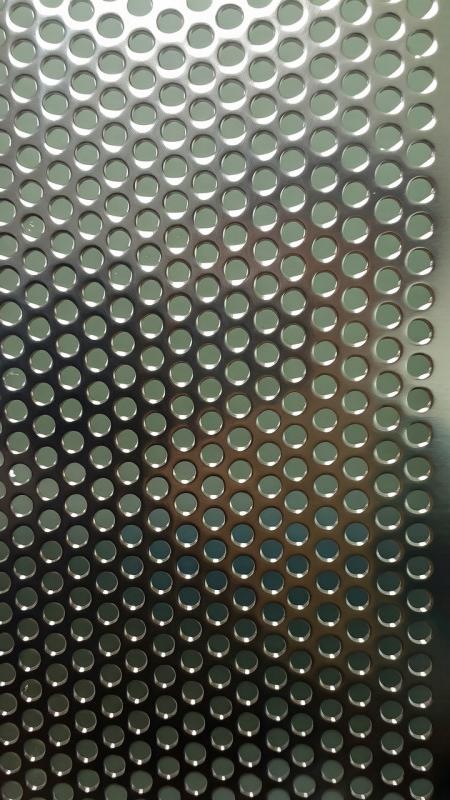
Need a specific perforation pattern? Send us your required hole shape, opening size, spacing, material grade or reference pattern — our team will review the design and manufacturing requirements with you.
From Graphic Pattern to Perforated Metal.
Your perforated panel does not have to start from a standard pattern. If you have a graphic, geometric concept, brand motif or architectural reference, we can review how it can be translated into a manufacturable perforation pattern.
Step 01 — Your Design
Send us a drawing, pattern, rendering, image, brand graphic or reference sample.
Step 02 — Pattern Development
We review hole size, spacing, density and pattern continuity.
Step 03 — Manufacturing Review
The pattern is checked against material thickness, fabrication limitations and intended application.
Step 04 — Sampling
A physical sample can be prepared for visual and technical confirmation.
Step 05 — Production
Once approved, the final pattern moves into production according to the confirmed specification.
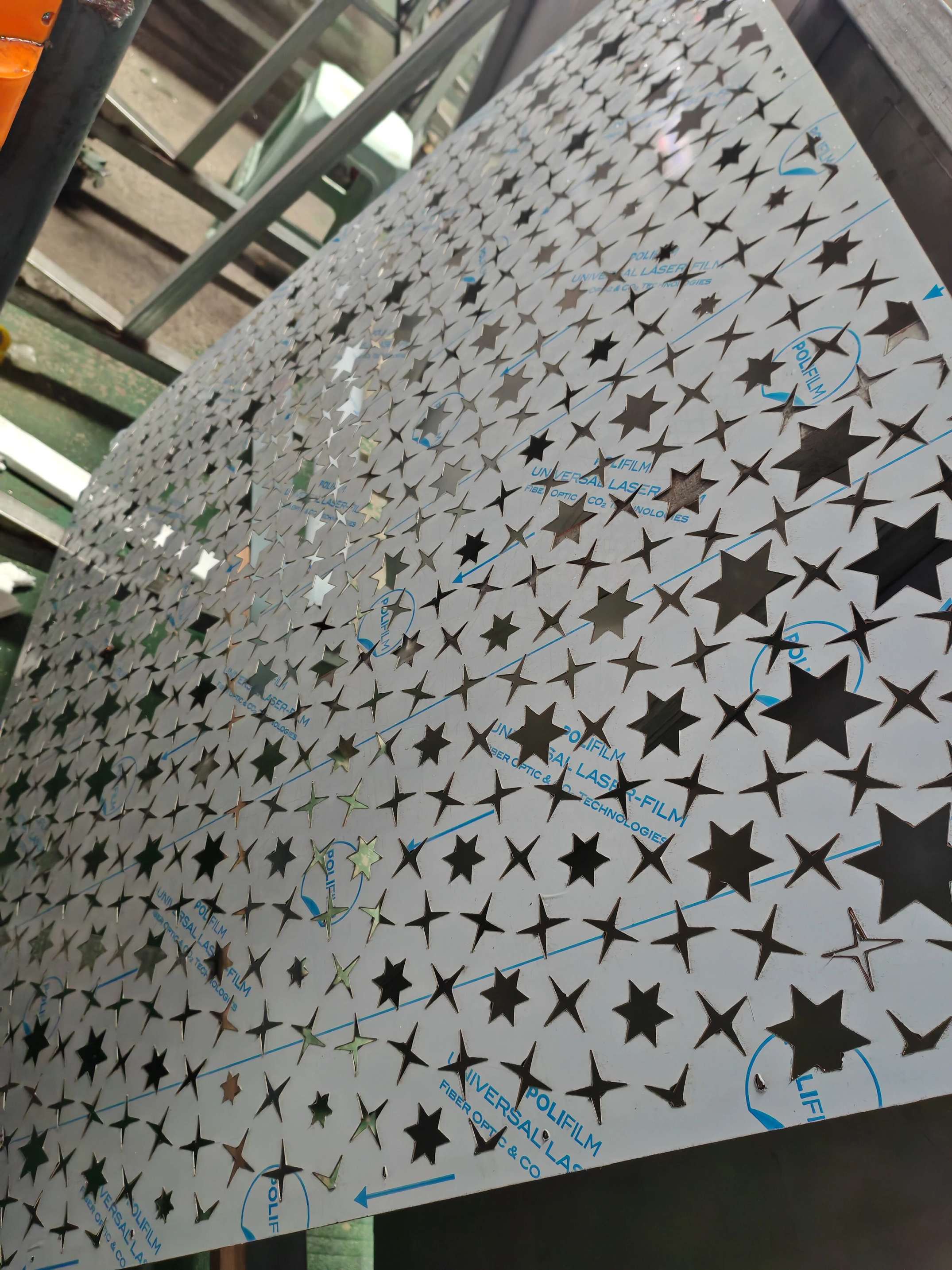
Perforation Is Only the Beginning.
A perforated stainless steel sheet often needs to become a finished architectural component. The panel can move from perforation into cutting, bending, welding and other fabrication processes according to the project design.
Cutting
Panels cut according to project dimensions and layouts.
Bending
Perforated sheets formed into selected architectural geometries.
Welding
Components assembled according to project construction requirements.
Framing & Assembly
Perforated panels integrated with supporting frames and systems.
A Beautiful Pattern Still Needs to Be Consistent.
For architectural perforated panels, visual consistency matters. Hole size, spacing, pattern alignment, surface appearance and finished dimensions all contribute to the final result.
- Pattern Accuracy — hole geometry and spacing checked against the approved specification.
- Pattern Alignment — consistent alignment across individual large panels.
- Surface Quality — inspected for visible defects and finish consistency.
- Dimensional Accuracy — checked against required dimensions and fabrication details.
- Sample-to-Production Consistency — the approved sample is the visual reference for production.
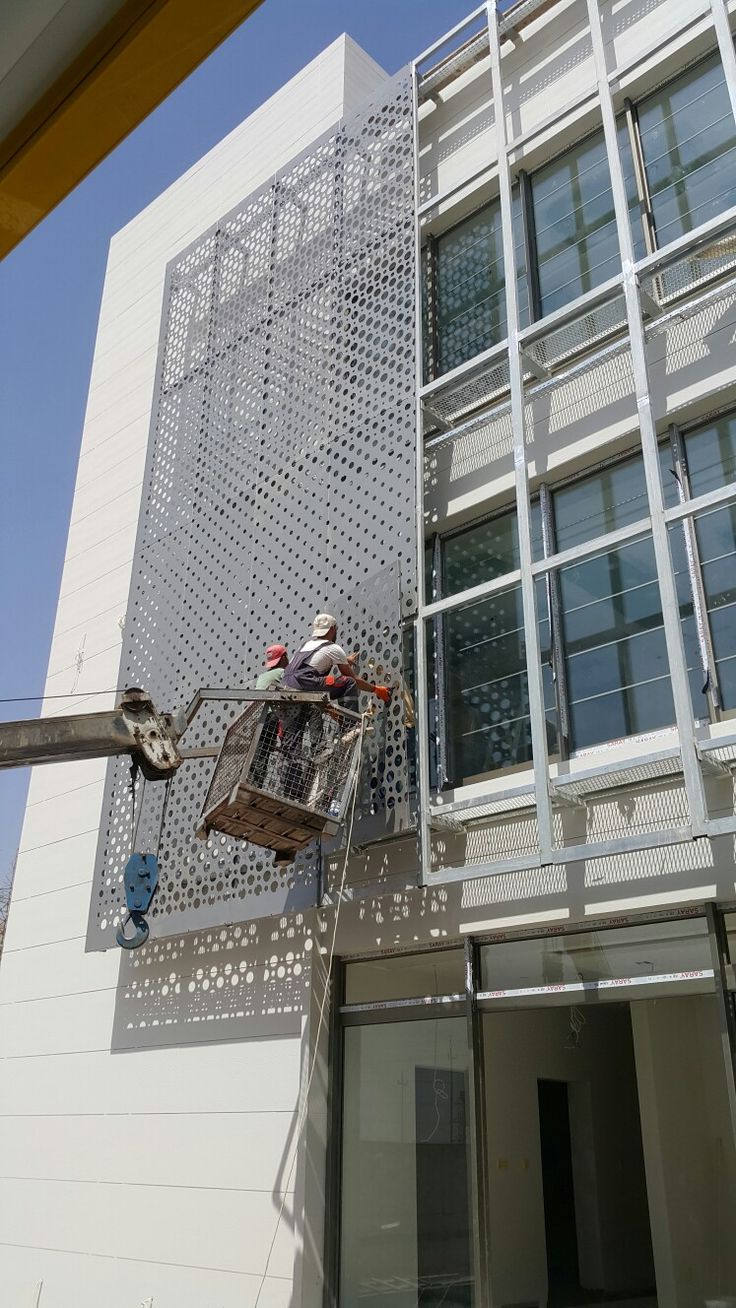
From Pattern to Finished Panel. One Connected Process.
A perforated architectural panel involves more than perforation itself. Material preparation, pattern development, surface finishing, fabrication, quality control and delivery all influence the final result.
Material Preparation
Stainless steel selected according to grade, thickness and application requirements.
Pattern Development
Standard or custom perforation patterns reviewed for production feasibility.
Surface Finishing
Hairline, mirror, PVD, sandblasted and other selected finishes.
Fabrication
Cutting, bending, welding and panel assembly under one roof.
Quality Control
Pattern, dimensions and surface appearance checked throughout production.
Delivery
Finished components packed and prepared according to project requirements.
See the full manufacturing system behind this product on our Factory Capabilities page.
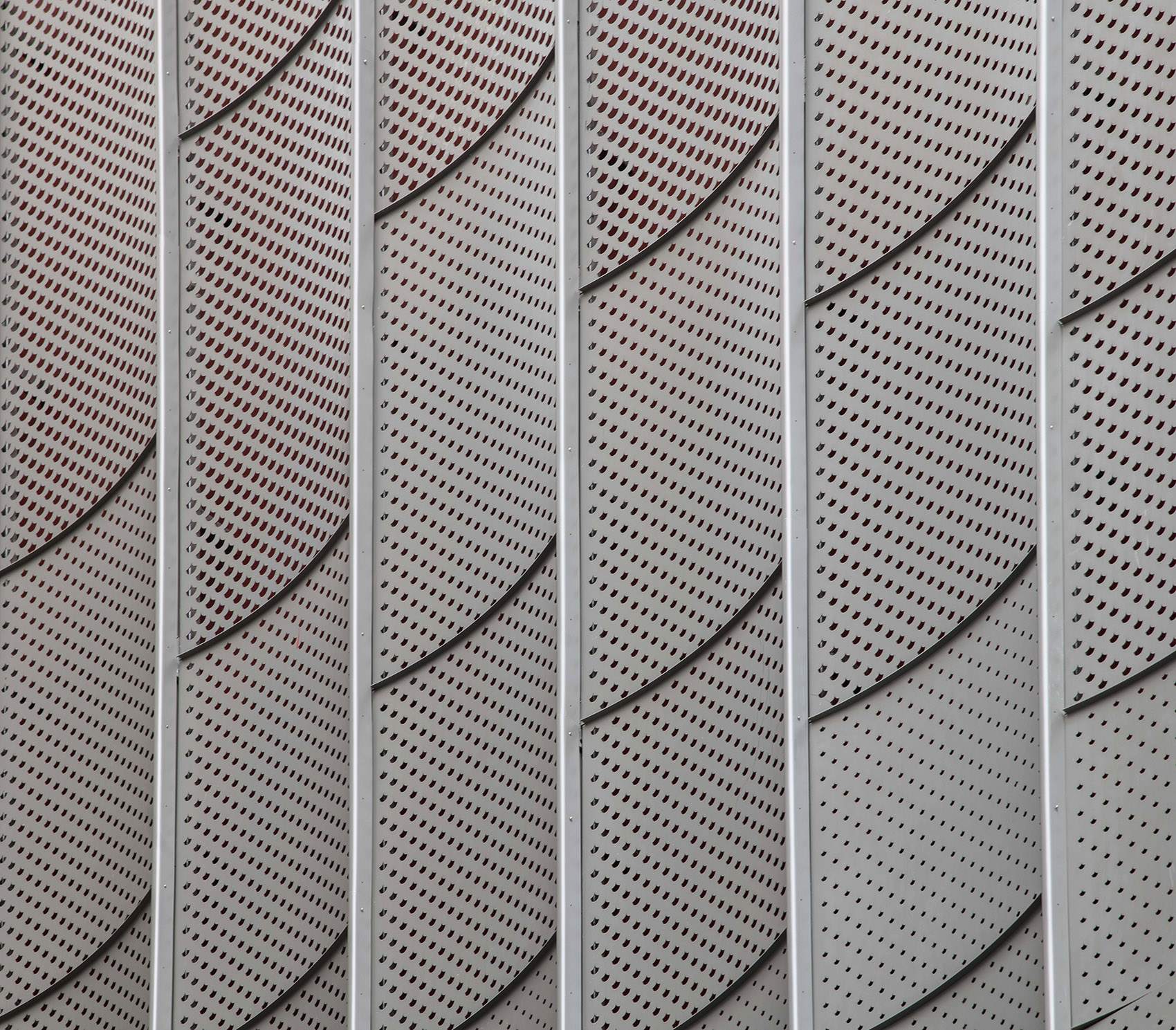
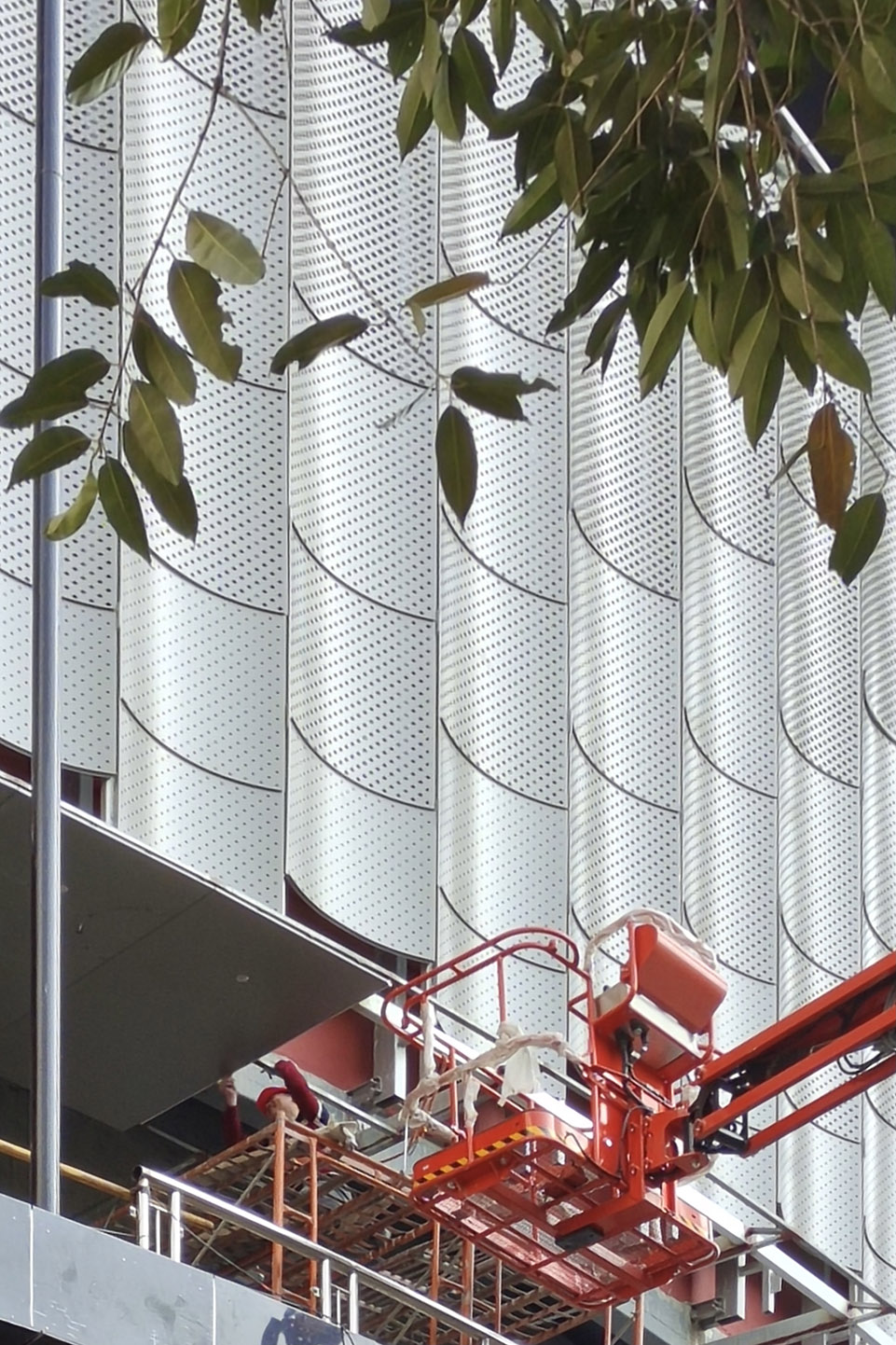
Perforated Stainless Steel in Real Architecture.
See how perforated stainless steel changes from a material specification into a complete architectural element.
Perforated Stainless Steel FAQ
Perforated stainless steel is stainless steel sheet processed with a controlled pattern of openings for architectural, decorative or functional applications.
Yes. Hole shape, size, spacing, density and overall pattern can be customized according to project requirements and manufacturing feasibility.
Yes. Custom geometric, graphic and artistic patterns can be reviewed and developed into manufacturable perforation layouts.
Yes. It can be incorporated into selected facade and architectural screen applications depending on material grade, thickness, structural design and project requirements.
Yes. Hairline, mirror, PVD, sandblasted and other surface treatments can be considered according to the project.
Yes. You can provide drawings, 3D files, renderings, samples or reference images.
Yes. Samples can be prepared for pattern and surface confirmation before production, subject to project requirements.
Have a Pattern in Mind?
Send us your drawing, pattern, rendering, sample or simply an idea. We can review the perforation pattern, material, finish and fabrication requirements with you.
Standard pattern or completely custom — start with what you have.
Ready to start? Send your pattern and request a custom quote.