304 vs 316L Stainless Steel: How to Choose the Right Grade for Your Project
304 vs 316L Stainless Steel: How to Choose the Right Grade for Your Project
Share
publisher
MetalMagus (HANDYOU Stainless Steel)
Issue Time
Sep 1,2026
Summary
304 and 316L are both austenitic stainless steels, but 316L's 2-3% molybdenum makes it far more resistant to chloride pitting (typical PREN ~25 vs ~19). This guide compares composition, corrosion resistance, strength and cost - with an application-by-application table, coastal and high-pollution guidance, and an order checklist. From MetalMagus (HANDYOU Stainless Steel), exporting to 60+ countries since 2001.
304 vs 316L at a Glance
304 and 316L are both austenitic stainless steels, and the practical difference between them comes down to two numbers: 316L adds 2–3% molybdenum (Mo) and limits carbon to 0.03% max, which roughly doubles its resistance to chloride pitting compared with 304 (typical PREN ~25 vs ~19, calculated as Cr + 3.3Mo + 16N). The buying rule: specify 316L where chlorides, salt air or pollution are present — coastal facades, marine environments, chemical and high-humidity applications; specify 304 for interior, general atmospheric and most food-processing use, where the lower cost is fully justified. Choose by service environment, not by "which is more expensive, therefore better."
What Are 304 and 316L Stainless Steel?
304 (EN 1.4301) is the most widely used stainless steel grade in the world — the default choice for sheet, coil, tube and architectural profiles. 316L (EN 1.4404) is its "marine-grade" relative: the same austenitic family, but with molybdenum added to resist the one failure mode 304 cannot handle well — pitting and crevice corrosion in chloride environments.
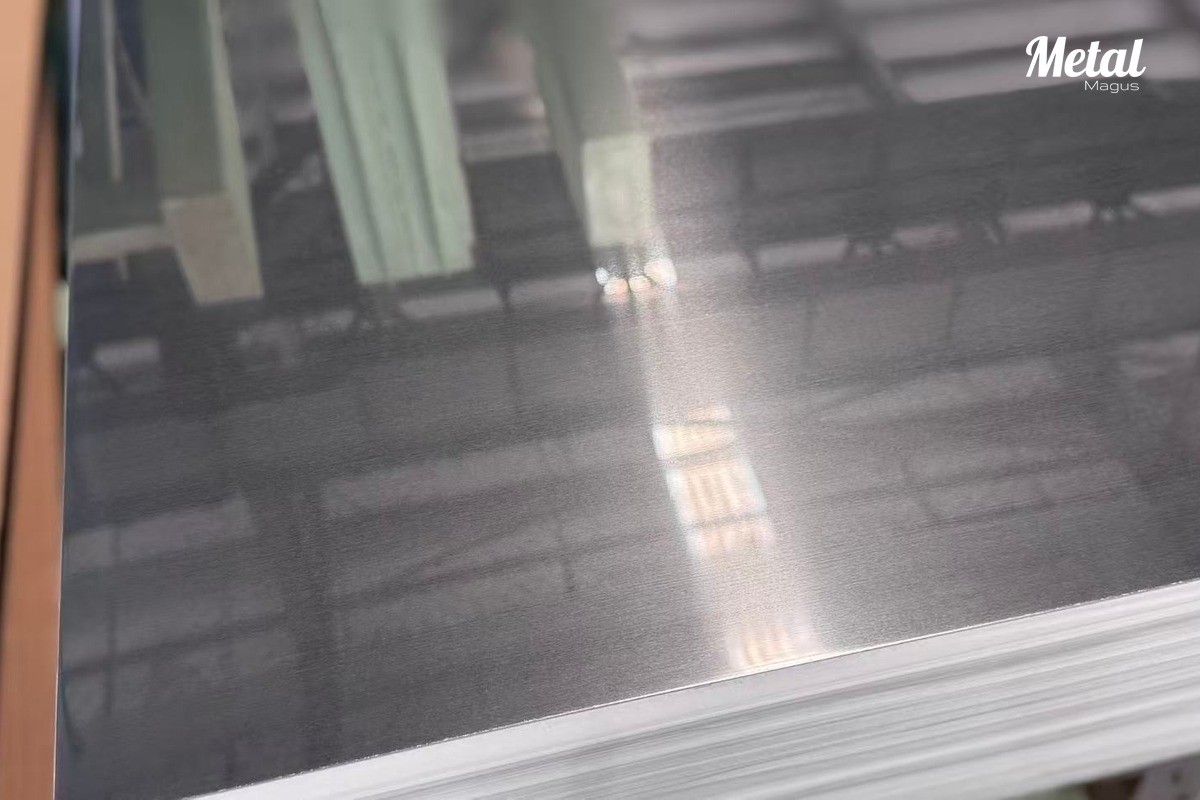
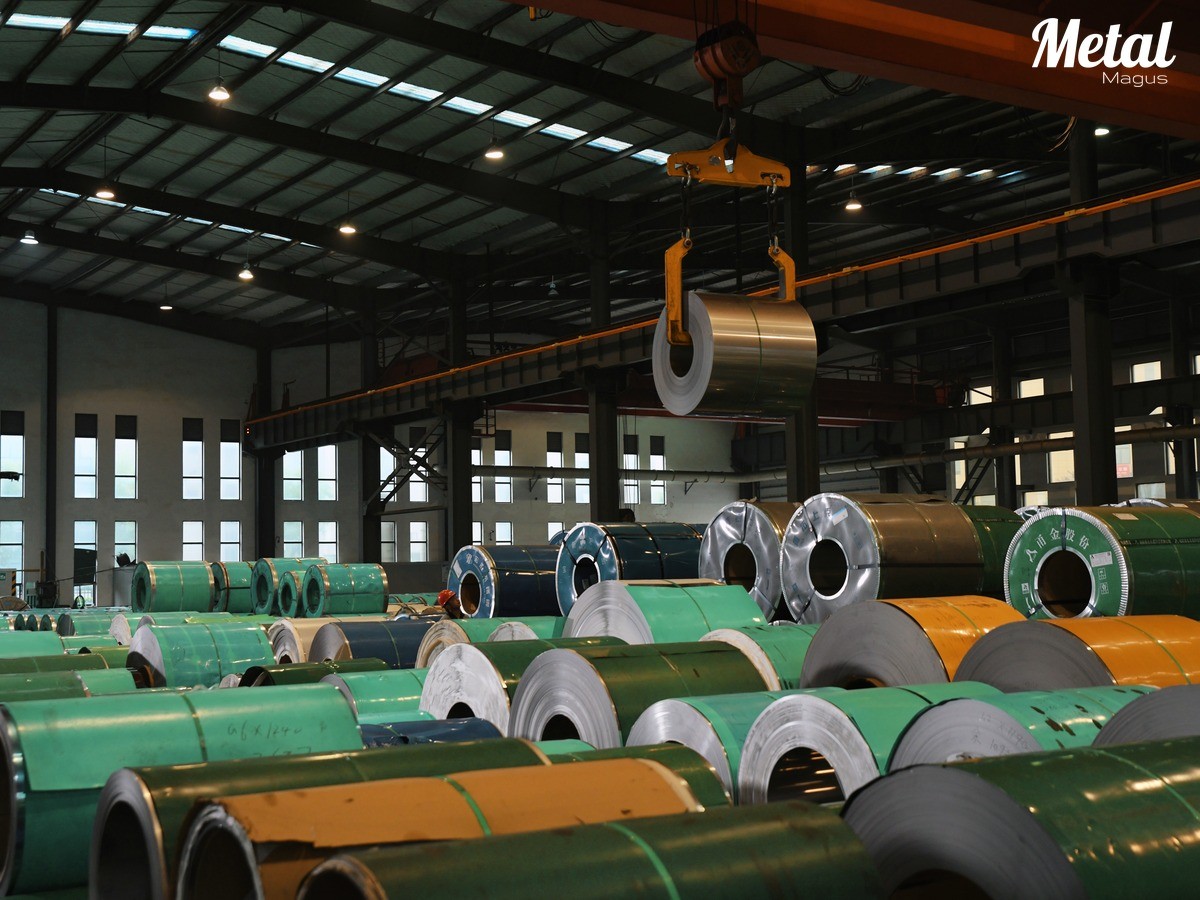
Factory photo: 2B cold-rolled stainless steel sheets in stack.
Both grades are part of the 18/8 family of austenitic stainless steels (roughly 18% chromium, 8% nickel for 304), they are both non-magnetic in the annealed condition, and both are classified A1 non-combustible, which is why stainless steel in general is so widely used in building cladding. The grade you choose does not change the finish options — 2B, BA, No. 4, HL, mirror, PVD colors, sandblasting and embossing are all available on either grade — but it does change how the panel behaves in a specific environment.
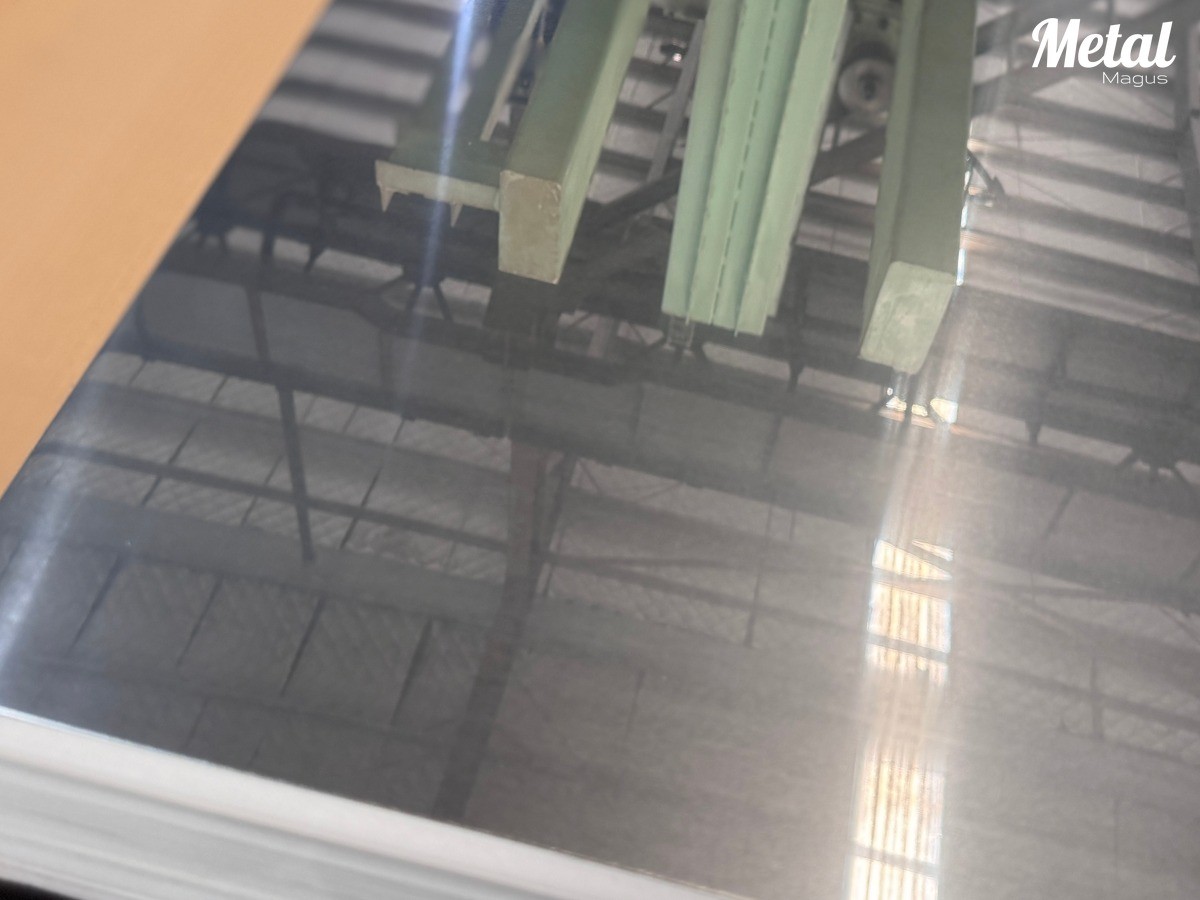
BA bright-annealed stainless steel — the same finish range is available on both 304 and 316L.
Composition: The Two Differences That Matter
Chemical composition is set by standard. For sheet and plate, ASTM A240 gives the following ranges (weight %):
Element
304
316L
Why it matters
Chromium (Cr)
18.0 – 20.0
16.0 – 18.0
Forms the passive oxide film; the basis of corrosion resistance
Nickel (Ni)
8.0 – 10.5
10.0 – 14.0
Stabilizes the austenitic structure; ductility and toughness
Molybdenum (Mo)
—
2.0 – 3.0
The key difference: resists chloride pitting and crevice corrosion
Carbon (C)
≤ 0.08
≤ 0.03
Lower carbon in the L grade reduces weld sensitization
Manganese (Mn)
≤ 2.00
≤ 2.00
Deoxidizer; strength
Silicon (Si)
≤ 0.75
≤ 0.75
Deoxidizer
Nitrogen (N)
≤ 0.10
≤ 0.10
Strength and pitting resistance
Source: ASTM A240/A240M chemical composition limits (wt %). EN equivalents: 1.4301 (304), 1.4404 (316L). Always request a mill certificate for the actual batch.
The table hides a subtlety buyers should know: 316L has slightly less chromium than 304 (16–18% vs 18–20%), yet is far more corrosion resistant. That is the entire point of molybdenum — it compensates for the chromium reduction and adds protection where 304 fails.
What Molybdenum Does — and What the "L" Means
Pitting Resistance and PREN
Pitting resistance is usually expressed with the Pitting Resistance Equivalent Number (PREN = %Cr + 3.3 × %Mo + 16 × %N). Because molybdenum carries a weight of 3.3 in the formula, a 2–3% Mo addition lifts 316L to a typical PREN of about 24–26, versus roughly 18–20 for 304. In plain terms: in salt air, coastal spray, de-icing salts or chlorinated process environments, 316L pits and corrodes far more slowly than 304 — often lasting years longer in the same location.
Crevice and Intergranular Corrosion
Two other failure modes matter in fabrication. Crevice corrosion occurs in tight gaps (under gaskets, overlapping panels, bolted joints) where chlorides concentrate — 316L is the standard answer for such joints in aggressive environments. Intergranular corrosion can occur in welded 304 near the heat-affected zone if carbon precipitates at grain boundaries. The "L" in 316L means low carbon (≤0.03% C), which virtually eliminates this sensitization, so welded 316L structures generally do not require post-weld solution annealing for standard section thicknesses.
Mechanical, Forming and Welding Performance
For architectural use, the two grades are close in everyday performance. ASTM A240 minimums:
Property (annealed, min)
304
316L
Tensile strength (MPa)
515
485
Yield strength (MPa)
205
170
Elongation (%)
40
40
316L is slightly softer — marginally easier to form and deep-draw, marginally more prone to surface marking in handling. In practice, for panels, cladding and profiles, the difference is negligible; both weld well, and both accept the full range of surface finishes. The one genuine differentiator is that 316L's low carbon makes it the safer choice wherever welding is followed by exposure to a corrosive environment.
Cost and Procurement Reality
316L is more expensive than 304. The premium varies with market conditions because both nickel and molybdenum prices move with global supply, so it is pointless to quote a fixed percentage here — expect 316L to cost noticeably more per ton, and request a current quotation for your specification, quantity and finish.
Cost factor
304
316L
Base material cost
$ (reference)
$$ (clear premium)
Availability
Stock, all finishes
Stock in common sizes; longer lead for specials
Fabrication cost
Same
Same (slightly easier forming, no weld penalty)
Two procurement points to keep in mind: first, confirm the grade is written on the mill certificate before payment — 304 vs 316L is invisible to the naked eye and cannot be verified by a magnet, so documentation is the only practical control. Second, if your application genuinely needs 316L only in specific zones (e.g., coastal facade lower levels exposed to salt spray), discuss hybrid specification with the supplier — it can save a meaningful share of the project budget.
How to Choose: Application-by-Application
Application
Recommended grade
Why
Coastal facades & marine exposure
316L
Chloride pitting and crevice resistance (PREN ~25)
Hygienic, easy to clean; 316L for brine/sanitizer exposure
Chemical & pharmaceutical
316L
Media resistance plus weld-friendly low carbon
Medical devices & instrumentation
316L
Corrosion resistance and cleanability (implant-grade has its own ASTM F138 spec)
Interior architecture, elevators, trim
304
Appearance is the driver; 304 is cost-effective
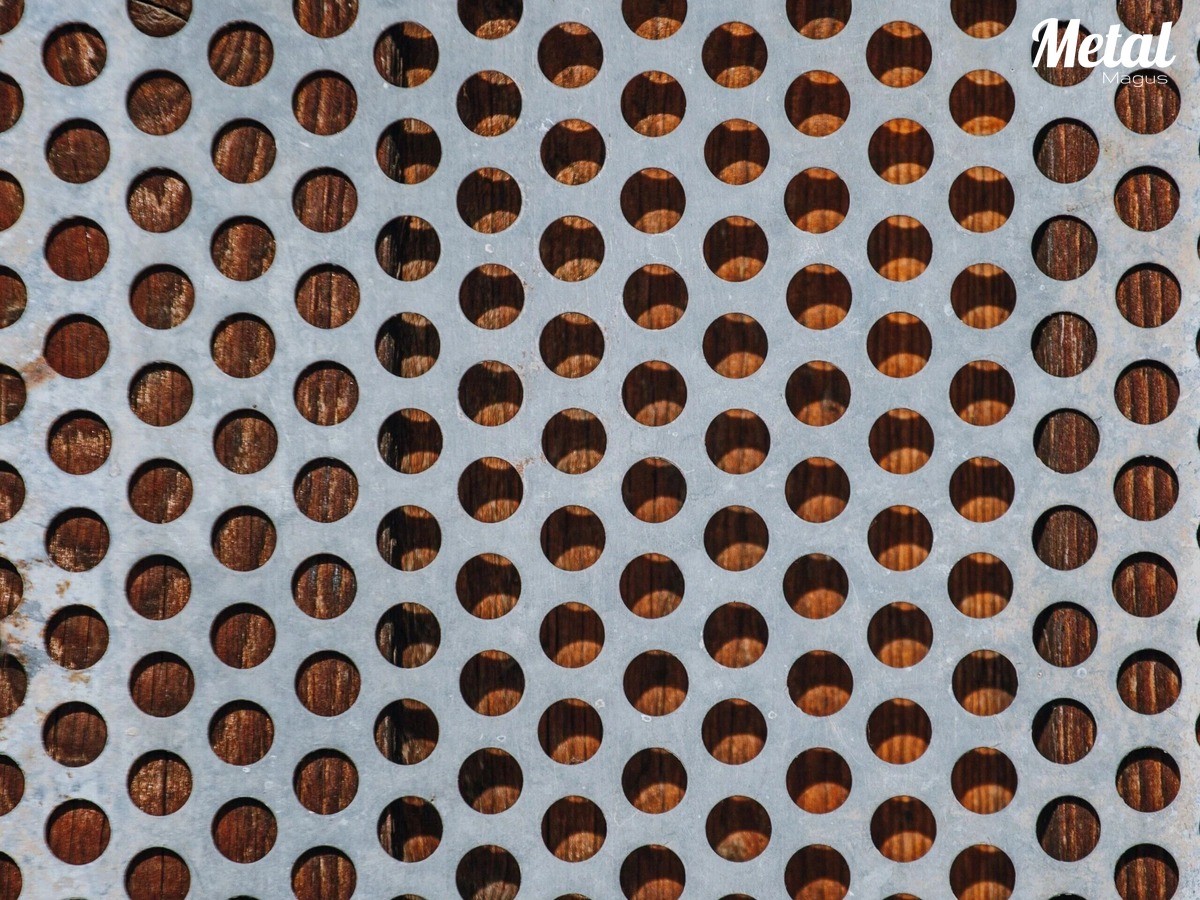
Perforated stainless steel panel — decorative applications accept both grades.
Coastal and High-Pollution Projects: Why 316L Gets Specified
The most common question from facade and curtain-wall teams in the Gulf, Southeast Asia and Mediterranean markets is whether 304 is "good enough." The honest engineering answer: in coastal and high-pollution locations, 316L is the safer specification, for three concrete reasons:
Salt-laden air. Within a few kilometers of the sea, airborne chlorides deposit on facades. Combined with humidity and temperature cycling, they concentrate on panel edges, fastener zones and any micro-scratches — precisely where pitting starts. 316L's molybdenum buys years of additional service life in these zones.
Maintenance economics. A panel that stains or pits early is expensive to replace on a completed facade — scaffolding, labour, logistics. Paying the 316L premium at purchase is almost always cheaper than replacing panels after a few years.
Finish interaction. Corrosion undercuts decorative finishes: pitting beneath a PVD color coated stainless steel layer or a sandblasted surface destroys the panel's appearance long before the coating itself fails. The substrate grade is part of the finish system, not a separate decision.
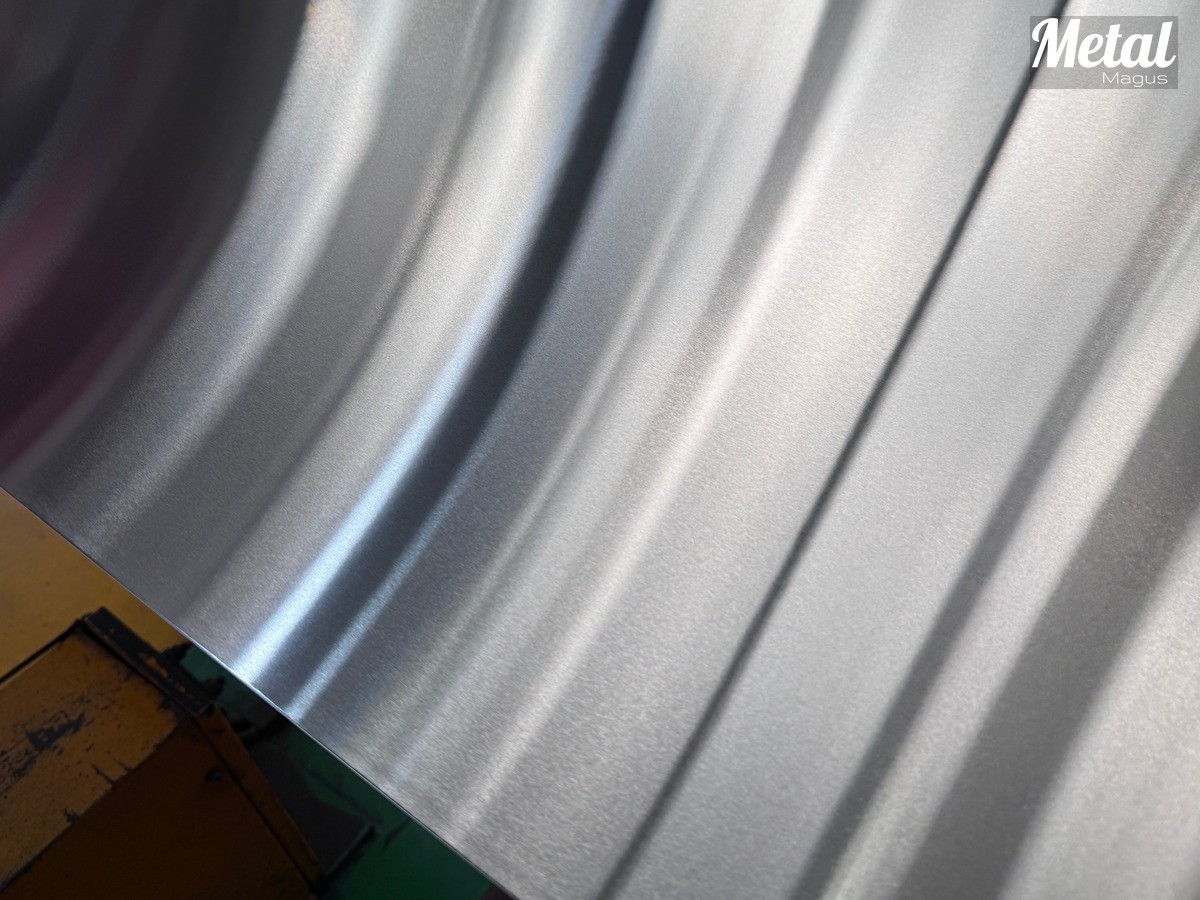
Sandblasted matte panel — a common finish for facade applications.
That said, many inland and interior applications genuinely do not need 316L. The discipline is to match grade to environment — 304 for interior architecture and inland facades, 316L for anything facing salt, humidity, chlorides or industrial pollution. Grade selection pairs with finish selection: once you have decided the grade, the next decision is the surface — our guide to how to choose stainless steel surface finish covers 2B, BA, No. 4, HL, mirror, PVD and specialty finishes, and for colored facades, PVD color consistency explains how to keep color uniform across panels.
Order Checklist: What to Verify Before You Buy
Mill certificate with the grade stated — 304 vs 316L cannot be identified by eye or magnet; the certificate is your only evidence.
PMI (Positive Material Identification) spot checks — for high-value or safety-critical batches, a handheld spectrometer test confirms the grade on the actual material.
Surface finish and Ra confirmed on the same material — at MetalMagus, brushed surfaces are held to Ra ≤ 0.3 μm; confirm the target Ra against an approved sample.
Physical sample before mass production — approve the real panel, not a photo.
Grade-appropriate lead time — 316L specials may add lead time; our standard delivery is 10 days from order confirmation on common specifications.
Production line at our 58,000 m² facility — documentation and quality control apply to both grades.
Frequently Asked Questions
Which is better, 304 or 316L stainless steel?
Neither is universally "better" — they are specified for different environments. 316L resists chloride pitting far better (typical PREN ~25 vs ~19 for 304) and is the right choice for coastal, marine, chemical and high-pollution exposure. 304 is the economical, fully adequate choice for interior and general atmospheric applications.
What does the "L" in 316L mean?
"L" stands for low carbon (≤0.03% C, vs ≤0.08% for standard 316). Lower carbon prevents chromium carbide precipitation during welding, which protects against intergranular corrosion — that is why 316L is preferred for welded structures.
When is 304 stainless steel good enough?
For most inland building interiors and general atmospheric exposure, 304 is the industry default and fully adequate — elevators, interior cladding, trim, food processing, household and commercial products. Upgrade to 316L only when chlorides, salt air or pollution are part of the service environment.
Can 316L stainless steel rust?
No stainless steel is "stainless forever." 316L can still corrode under severe conditions — chloride concentration in crevices, aggressive chemicals, or mechanical damage to the passive film. It simply has a much higher resistance threshold than 304, which is exactly why it is specified for harsh environments.
How much more expensive is 316L than 304?
The premium varies with nickel and molybdenum markets; it is generally noticeable but far smaller than the cost of replacing corroded panels on a completed facade. Request a current quotation for your specific grade, size, quantity and finish.
Can I tell 304 and 316L apart by appearance or a magnet?
No. Both are austenitic and non-magnetic in the annealed condition, and both look identical after the same finish. Grade verification requires documentation (mill certificate) or PMI spectrometer testing.
Is 316L required for coastal facades?
"Required" depends on your risk tolerance and maintenance budget. For facades within kilometers of the sea, or in high-pollution industrial zones, 316L is the standard professional recommendation because early pitting in 304 is common in those conditions and panel replacement is disproportionately expensive.
Get a Quote
Specifying stainless steel for a coastal or harsh-environment project? Tell us your application, environment, grade preference and finish — our sales team will confirm availability, Ra ranges, documentation and lead time for your project. Standard delivery is 10 days from order confirmation, and we can arrange physical samples and mill certificates before you commit.